Autograph Authentication: PSA/DNA, JSA, and Card Company Autos
Autograph Authentication: PSA/DNA, JSA, and Card Company Autos
Autograph authentication verifies that a signature is genuine, and PSA/DNA and JSA are the two dominant third-party authenticators, each issuing a numbered certificate and, in most cases, encapsulation. Card companies instead authenticate autographs on their own products through witnessed signings and label them with an autograph grade. For retailers, distributors, and importers building a signed-card assortment, the practical question is not which logo looks best on a label, but which authentication route matches the inventory you plan to buy, hold, and resell at a margin your buyers will accept.
Why Autograph Authentication Matters
A signature is the cheapest thing in the hobby to fake and one of the most expensive things to prove. That gap is exactly what an independent authenticator exists to close. When a third party with no stake in the sale examines the item, compares it against known exemplars, and issues a numbered certificate, the buyer is no longer relying on the seller's word. That single shift — from seller assurance to independent opinion — is what allows a signed card to trade at a premium instead of sitting unsold.
For a retail buyer, authentication also changes shelf economics. Signed inventory without documentation has to be priced defensively, because every customer who doubts the signature negotiates. Documented inventory can be priced on the certificate, displayed with confidence, and returned far less often. Auction houses, marketplaces, and dealer networks consistently treat a recognized third-party letter or encapsulated slab as a resale accelerant; the same item with only a seller-printed certificate typically stalls. The premium is not a fixed percentage, and any figure quoted without a dated source is an industry estimate at best.
There is a second reason authentication matters more than it used to: the market has stratified. Graders now score the signature as a separate line item, manufacturers ship autographs inside packs with their own guarantee, and witnessed signing programs have turned an opinion-based service into something closer to a chain of custody. Buyers who cannot tell which of these three systems they are looking at will misprice inventory in both directions.

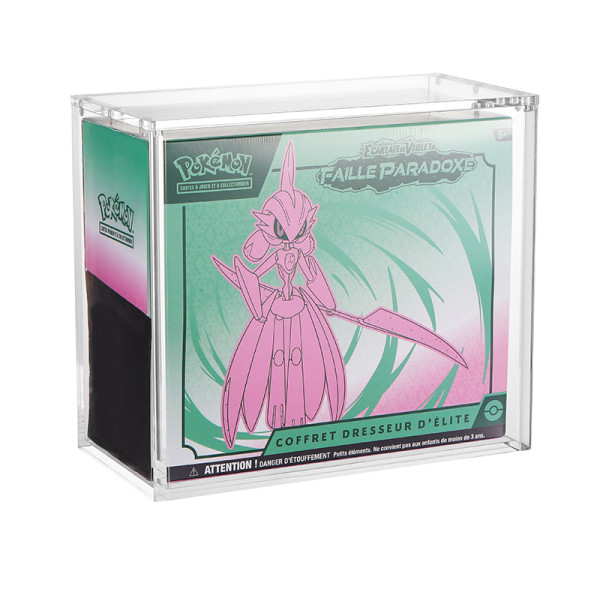
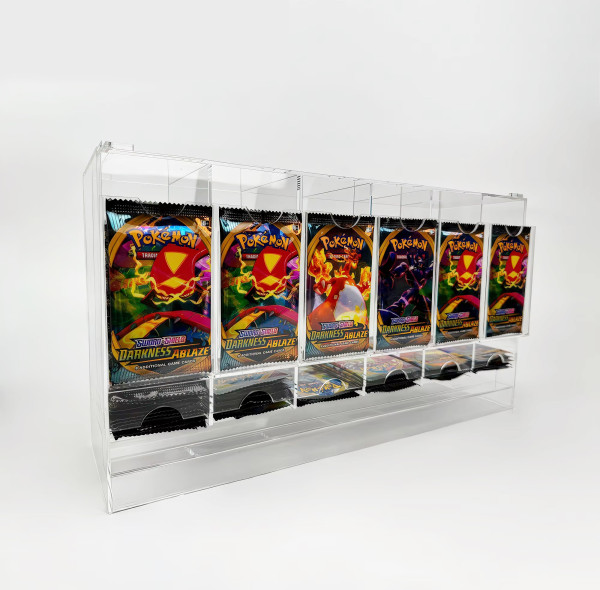
A signed card with a fresh certificate still needs physical protection: UV-blocking rigid holders keep ink and surface free of fading and handling marks while the paperwork is verified.
How Authentication Works: Experts, Ink, and Database Review
Third-party authentication is a documented opinion, not a laboratory certainty. A trained examiner studies the signature's structure, stroke order, pressure, letterform proportions, and placement on the item, then compares it side by side with known authentic exemplars for that signer, in that era, on that type of object. Ink behavior matters as much as shape: the way a marker bleeds into a card's stock, or fails to, tells an examiner whether the signature is period-consistent with the card. Some services use forensic equipment such as video spectral comparison to examine ink layers, but the core method is trained human comparison.
Once the opinion is formed, the service issues a certificate with a unique number and, where applicable, encapsulates the item. The certificate number is the part buyers should actually use: every major authenticator publishes a lookup tool where the number can be checked against the record. A certificate that cannot be looked up, or whose description does not match the item in hand, is worse than no certificate at all, because it looks like assurance while providing none.
The independence of the examiner is the whole basis of the value. An authenticator that also sells the item has a conflict; a company grading its own manufactured product is making a warranty claim, not an independent judgment. Both can be legitimate, but they answer different questions — know which one before setting a cost basis.
Autograph Authentication Compared: PSA/DNA vs. JSA vs. Card Company Autos
The three routes below cover almost all signed card inventory a retailer will encounter. PSA/DNA is the autograph and memorabilia division of PSA, established in 1998 in response to a wave of forgery in the market. JSA is James Spence Authentication, a long-standing independent authenticator of already-signed items; it was acquired by the Certified Collectibles Group, the parent of CGC, in 2024, and CGC now offers combined CGC x JSA authentication services alongside its own witnessed Signature Series program, which dates to 2001 and was extended to cards. Card company autos are signatures the manufacturer itself placed or witnessed on its own product and guarantees as part of the pack.
| Criterion | PSA/DNA | JSA | Card company autos |
|---|---|---|---|
| Primary role | Third-party authentication plus grading and encapsulation | Third-party authentication of already-signed items | Manufacturer guarantee on its own released product |
| Who submits | Collector, dealer, or retailer sends the item in | Collector, dealer, or retailer sends the item in | Nobody — the autograph arrives in the pack |
| Output | Numbered certificate or letter, usually with a slab | Numbered certificate or letter, with optional encapsulation | Printed autograph guarantee and, increasingly, an on-card label |
| Witnessed option | Yes — witnessed and after-market submissions are handled separately | Yes, through witnessed signing programs and partner services | Inherent — signing is witnessed by the brand by definition |
| Autograph grade | Available on request, on a 1–10 scale | Authentication first; grading where offered | Not graded as a signature; the card grade carries the value |
| Verification | Certificate number lookup on the authenticator's site | Certificate number lookup on the authenticator's site | Checklist, pack odds, and the brand's published autograph guarantee |
| Best fit | Signed cards and memorabilia bought after the fact | Signed cards, photos, and entertainment or historical pieces | Sealed product and pack-fresh hits sold at retail |
| Main risk | Turnaround time and per-item cost | Counterfeit certificates and mismatched numbers | Value tied to the brand's reputation, not an independent opinion |
Note what the table does not say: none of these three is universally "more trusted" than the others. Preference splits by signer, by category, and by the venue where the item will be resold. A retailer stocking for auction-channel resale and a retailer stocking for a local shop counter may rationally prefer different labels.
Witnessed Signings vs. After-Market Signatures
The single biggest quality gap in signed inventory is between witnessed and unwitnessed signatures. A witnessed autograph means a representative of the authenticator or brand was physically present when the pen touched the item, creating an unbroken chain of custody from signer to encapsulation. That removes the hardest question — was this signed by the person named — and leaves only condition to evaluate. An after-market signature is examined purely on its merits, after the fact, with no witness; a correct opinion is still valuable, but the assurance tier is lower.
Practical consequence for buyers: witnessed inventory is worth paying up for when the signer is high-value or heavily forged, and when the item will be resold to a buyer who cannot inspect it in person. Unwitnessed inventory can be perfectly good business, but the margin has to absorb the extra scrutiny, and the listing has to be explicit about which tier it is. Do not blur the two in a product description; that is how returns and disputes start.
Programs have converged here. CGC's Signature Series, established in 2001 and extended to cards, runs show-witnessed, facilitator, and private signings, and prints the autograph grade on the label when requested. PSA/DNA maintains a separate witnessed track. Manufacturers witness their own signings and issue a guarantee with the product. On a retail shelf all three now say "witnessed" — the difference is who witnessed it and what recourse exists if the signature is later disputed.
What an Autograph Grade Actually Means
An autograph grade is a condition score for the signature, not a probability that it is genuine. Authentication answers "is this real"; grading answers "how good does it look". A signature can be authentic and still grade low because it is faded, smeared, off-center, or partially cut off by the card's edge. Conversely, a clean, bold, well-placed signature can grade high while the card itself grades mid-range, which produces the split-grade slabs that confuse first-time buyers.
Signature grading follows a 1–10 scale: a 10 indicates a strong, complete, well-positioned autograph with no visible defects, while lower numbers reflect fading, streaking, or placement problems. The scale is ordinal and partly subjective — examiners score visible quality, not ink chemistry, and two authenticators can reasonably land one grade apart on the same signature.
For a retailer writing copy, the rule is to describe the signature and the card separately. "Authentic autograph, grade 9, card grade 8" tells a customer something precise. "High-grade signed card" tells them nothing and invites a complaint. For a distributor setting a price ladder, split-grade inventory should sit below equivalent dual-high-grade inventory, and the gap widens as the card grade rises.
How to Choose the Right Authentication Route
Start from the exit, not the entrance. Where will the item be sold — an auction house, an online marketplace, a local case, a trade show table? Then work backward to the label that venue's buyers recognize and verify most readily. Auction-channel buyers tend to default to the long-established third-party names; local retail buyers often respond better to pack-fresh manufacturer autos with a visible guarantee, because the story is simpler to explain at the counter.
Second, price the submission honestly. Authentication is a per-item cost with tiered turnaround, and it only works when the expected uplift exceeds the fee, the shipping, and the idle capital. Low-value signatures on low-value cards frequently do not clear that bar; sell that inventory as-is with an honest description rather than marking it up. High-value signers, especially where forgery is common, almost always clear it.
Third, buy the certificate, not the story. A signed card sold with a certificate that cannot be looked up, a letter that describes a different item, or a sticker whose number does not match the database is a red flag regardless of how convincing the seller sounds. Verify before paying, not after. Sellers who resist verification are telling you something useful.
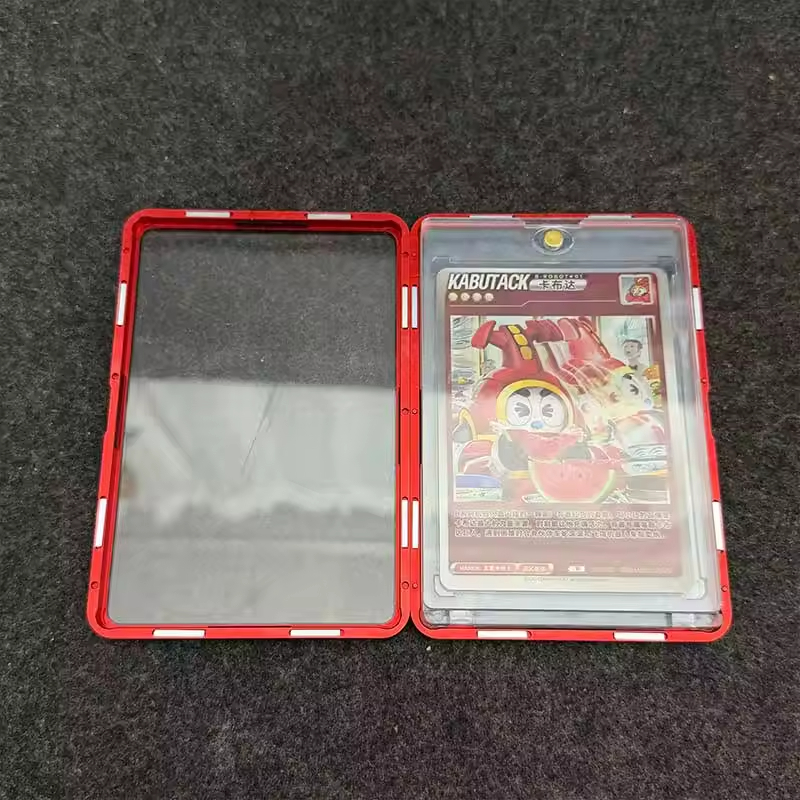
Aluminum one-touch frames give signed cards a rigid, retail-ready presentation without hiding the label or certificate details.
Storing, Displaying, and Verifying Signed Slabs
Once a signature is authenticated and encapsulated, the slab becomes the product. That changes the storage brief: you are no longer protecting only a card, you are protecting a plastic case whose label is part of the value. Scratched, chipped, or UV-yellowed slabs lose resale appeal even when the card inside is untouched, and a damaged label can complicate verification at the point of sale.
Keep signed slabs out of direct sunlight and away from heat sources; UV exposure fades both ink and label printing. Store them vertically in rigid boxes rather than stacking under weight, which is where most corner chips come from. For display, use a holder sized to the slab rather than a card-sized case, so the case does not flex the edges. If you handle inventory frequently at shows, a bumper-style graded card case reduces the cosmetic wear that accumulates from repeated handling.
Verification should be a routine, not an exception. Before listing, pull the certificate number, look it up, and confirm the signer, the item description, and the grade all match. Photograph the slab front, back, and label. Those three images settle most post-sale disputes before they become returns, and they cost nothing to produce.

A rigid graded-card case shields the slab, the label, and the certified signature from handling wear during shows and transit.
Common Mistakes That Destroy Signed-Card Value
The most expensive mistake is re-encapsulating or cleaning a signed item. Wiping a signature with solvent, trimming a border, or transferring a card into a different holder can void the authentication entirely, and no authenticator will re-certify an item whose original state has been altered. Leave certified items exactly as they were returned.
The second is documentation drift: certificate stored in a drawer, card stored in a binder, and the two separated within a season. Once separated, the certificate proves nothing about that specific card. Keep them together, and record the certificate number in your inventory system alongside the SKU. The third is buying on label recognition alone — a well-known logo on a certificate that fails lookup is still worthless, and counterfeit certificates do circulate.
The fourth is over-grading in marketing copy. Calling an unwitnessed, authenticated-only signature "guaranteed authentic" invites a dispute you will lose, because the authenticator's own language is an opinion. Use the authenticator's terminology precisely; it protects both the sale and the relationship.
Wholesale and Retail Notes for Buyers (MOQ, Packaging, Lead Time)
Authentication is a service cost; protection is a product cost, and the two need to be planned together. Retailers buying signed inventory typically need a holder program that fits their shelf and their shipping method, because a certified card that arrives with a cracked slab is an automatic margin loss. Budget the holder as part of landed cost, not as an afterthought.
On supply: GUARD TCG manufactures protective holders, sleeves, binders, and display cases at MOQ 100 pieces per style, with OEM and ODM options covering logo, color, and packaging. Custom printed sleeves and branded cases are commonly paired with signed-card programs, because authenticated inventory with consistent presentation commands a higher shelf price than a mixed assortment of mismatched holders. Sampling runs before bulk, and artwork or logo files are confirmed at that stage.
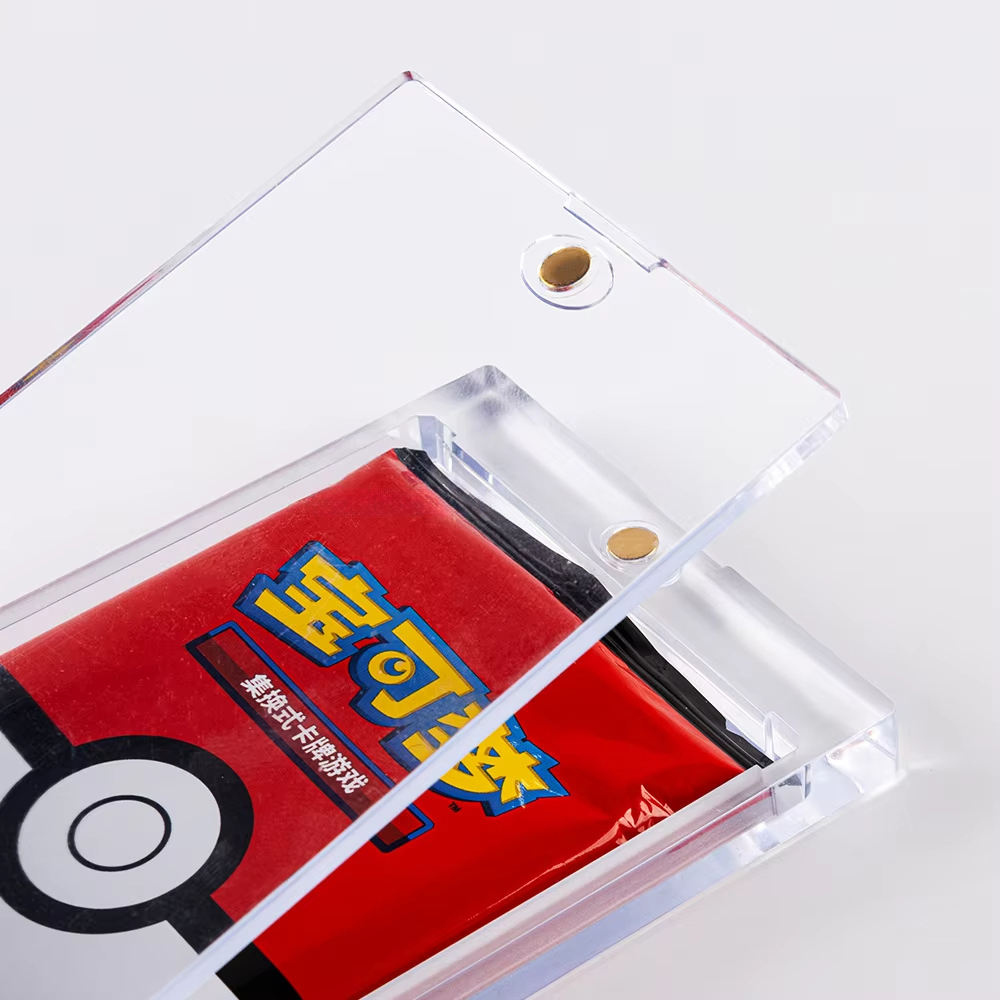
Pairing signed singles with pack holders keeps a mixed retail assortment merchandised consistently, which is what protects the price premium in-store.
Lead time runs 5–12 days by DHL, FedEx, or UPS for air shipments and 25–35 days by sea for volume orders, with every batch inspected before it leaves the factory. For retailers timing a signed-card launch around a show or a Q4 promotion, the air route is usually the deciding factor; for distributors replenishing a holder line, sea freight at volume is the cheaper path. Plan the holder order at least one cycle ahead of the signed inventory, since the holders are what make the inventory presentable on arrival. Wholesale and private-label enquiries can go through the OEM/ODM program page, and graded slab accessories are listed under graded card and slab accessories.
About GUARD TCG
GUARD TCG has manufactured trading card protection and display products since 2009, producing more than 300 million pieces a year for customers in over 70 countries. The company serves more than 10,000 customers and 500-plus distributors, and operates as an OEM/ODM partner for retailers, brands, and importers who need private-label holders, sleeves, binders, and display cases. Production runs start at MOQ 100 pieces, every batch is inspected before shipment, and the catalog covers magnetic one-touch holders, graded slab cases, toploaders, sleeves, booster pack holders, storage boxes, and acrylic display cases. Buyers can review the full range on the product list or send specifications through the inquiry form.
FAQ
Is PSA/DNA better than JSA for autograph authentication?
Neither is universally better. Both are recognized third-party authenticators with numbered certificates and lookup tools, and buyer preference tends to follow the signer category and the venue where the item will be resold. Pick the label your target buyers verify most readily, and price accordingly.
Are card company autographs as reliable as third-party authentication?
They answer a different question. A manufacturer's autograph is guaranteed by the brand that witnessed the signing and packed the card, which is strong for pack-fresh product but is not an independent opinion. Third-party authentication adds an outside examiner, which matters more for after-market purchases and for high-forgery signers.
What does an autograph grade of 9 or 10 mean?
It scores the visible quality of the signature — strength, completeness, placement, and absence of fading or smearing — on a 1–10 scale. It is not a probability of authenticity; that is what the authentication opinion itself covers.
Can I move an authenticated card into a different holder?
Do not open a certified slab. Breaking encapsulation can void the authentication and force a resubmission, and the original holder is part of what the certificate describes. Use an external graded-card case if you want additional display protection.
How should a retailer store signed slabs before sale?
Vertically, out of direct sunlight, in rigid boxes that prevent stacking pressure, with the certificate number recorded against the SKU. Photograph the slab front, back, and label before listing to pre-empt condition disputes.
Conclusion
Autograph authentication is a hierarchy of assurance, not a single stamp. PSA/DNA and JSA provide independent expert opinions with numbered, verifiable certificates; card companies provide witnessed guarantees on their own product; and witnessed signings sit above after-market opinions in certainty. For retailers, distributors, and importers, the work is to match the assurance tier to the price point, verify every certificate before listing, and protect the slab as carefully as the signature. Holders, sleeves, and graded-card cases are the practical layer that keeps certified inventory sellable — and they are the layer GUARD TCG builds at wholesale volume, from MOQ 100 pieces with OEM/ODM branding, 5–12 day air freight, and 25–35 day sea freight. Start with the OEM/ODM program or the contact page to scope a holder program around your signed-card assortment.