Graded Card Binders vs. Storage Boxes: Displaying and Organizing Slabs
Graded Card Binders vs. Storage Boxes: Displaying and Organizing Slabs
If you collect PSA, BGS or CGC slabs, the core storage question is simple: do you want to flip through your graded cards like a photo album, or pack them away safely in bulk? A graded card binder (4-pocket or 6-pocket pages) is the best choice for browsing, display and quick access, holding roughly 16 to 60 slabs per binder, while a slotted slab storage box holds 25 to 100+ slabs and offers superior long-term protection at a lower cost per slab. Most serious collectors end up using both: a binder for the slabs they want to show off, and storage boxes for the rest of the collection. This guide compares capacity, protection, display value and price, then shows how to build a combined system.
What Is a Graded Card Binder?
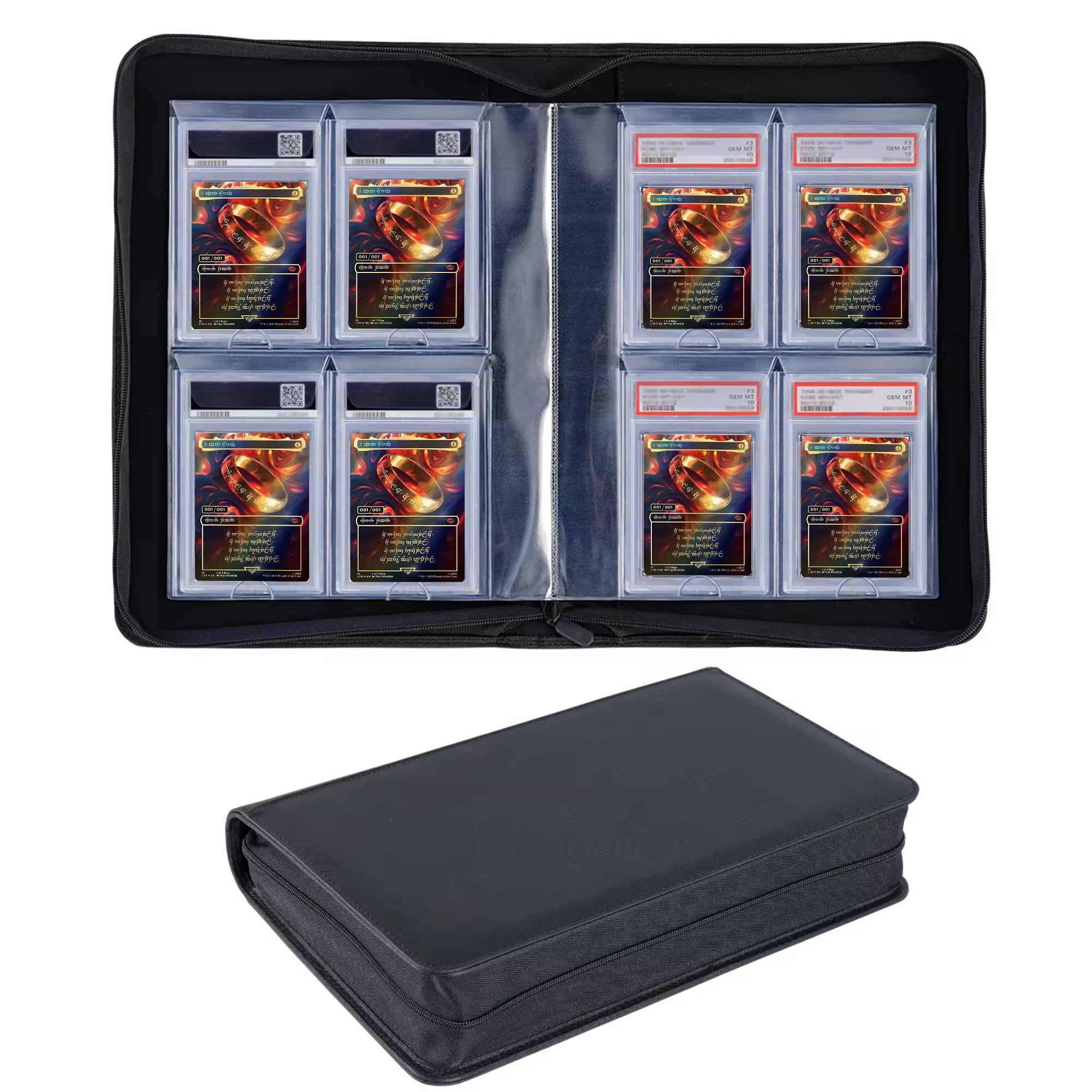
A graded card binder is a 3-ring or zippered album fitted with pocket pages engineered for the exact exterior dimensions of grading slabs — roughly 3.25 by 5.375 inches (82 x 136 mm) for a standard PSA holder. Four-pocket pages are the most common format: they use lock-in tabs to keep each slab from shifting, finger notches for easy removal, and standard 3-hole punching so you can add pages as the collection grows. Six-pocket pages pack more slabs per page at a slightly tighter fit, which is why many collectors choose them for larger collections.

Brands such as Ultra PRO and Nemesis publish binders built around these page formats, and most are compatible with PSA, BGS, CGC and similar slab sizes. Because the binder lies flat when open, you can display slabs face-up on a table or shelf without mounting anything — the main reason collectors reach for a binder first.
What Is a Graded Card Storage Box?
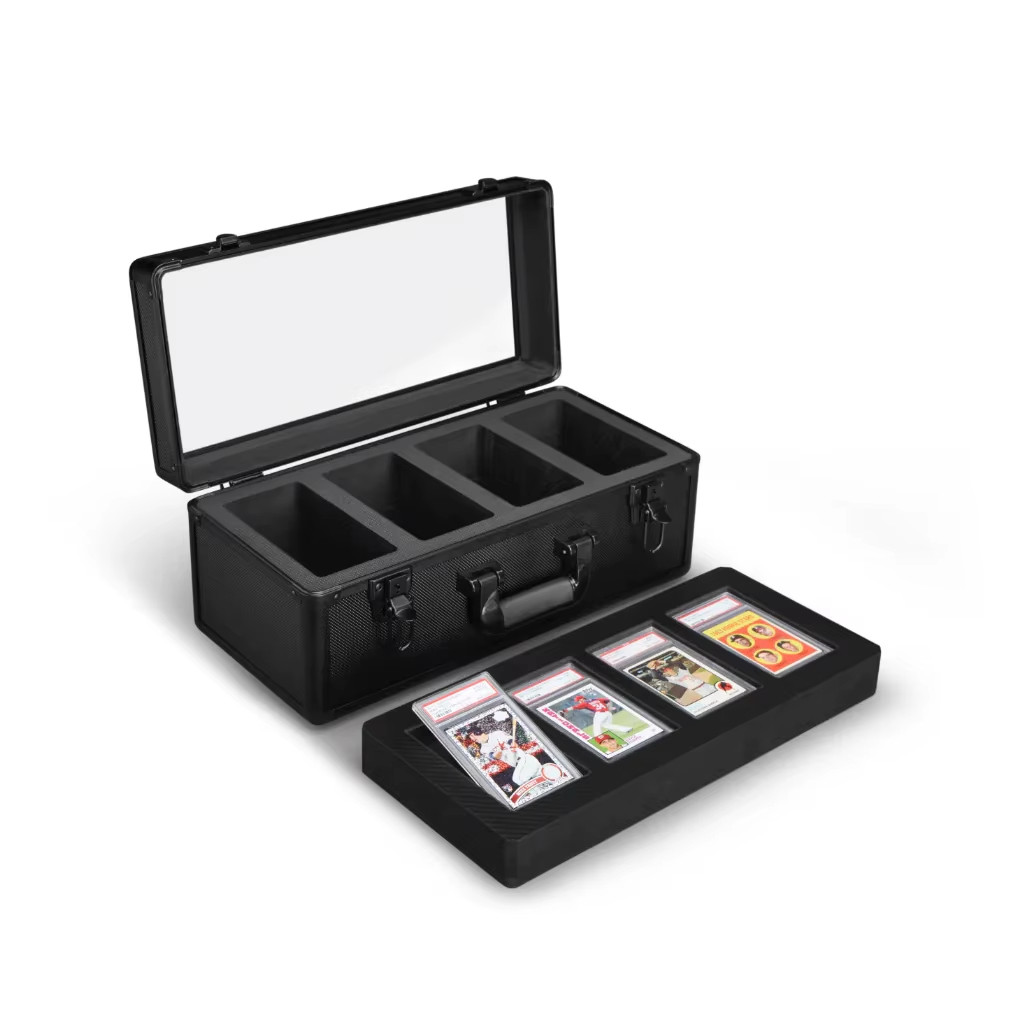
A graded card storage box is a rigid container with internal slots, foam channels or dividers sized to hold slabs upright, side by side. Two popular formats dominate the market: 100-count slab boxes with row spacing of at least 3.3 inches (84 mm) internal width, and hard cases (typically 25-84 slab capacity) with modular foam that protects mixed sizes. Waterproof, dustproof and impact-resistant hard cases are the standard recommendation for valuable collections, especially when slabs are transported or stored long-term.
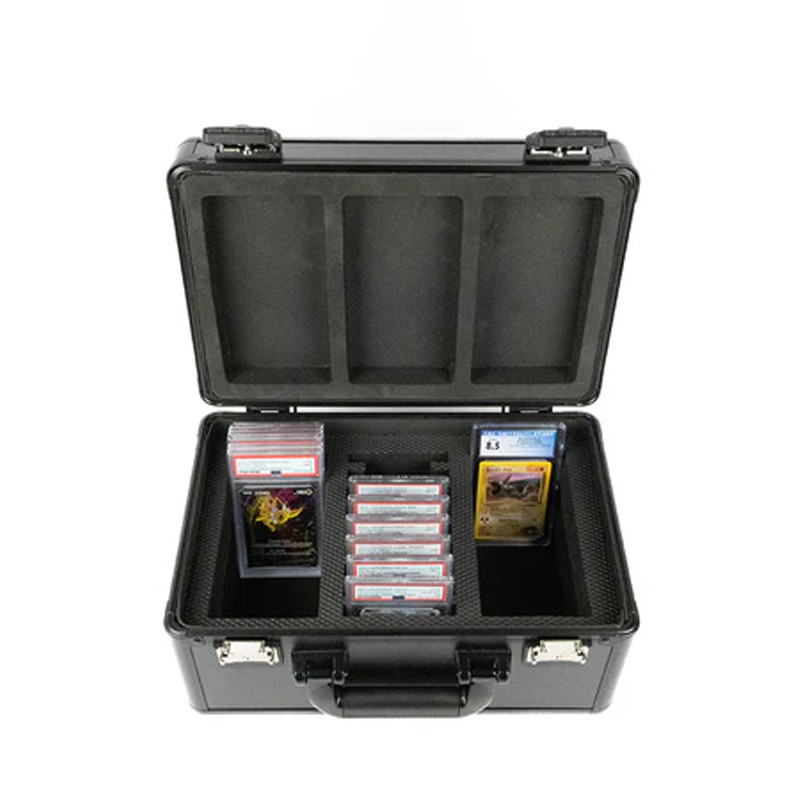
Storage boxes prioritize density and protection over display: slabs stay out of direct light, cannot scratch each other when properly slotted, and stack neatly on a shelf. If you own more than a couple dozen slabs, a box will almost always be part of your system.
Graded Card Binder vs. Storage Box: Key Differences
The right choice depends on how you interact with your collection. The table below compares the two systems across the factors collectors actually care about.
| Feature | Graded Card Binder | Slab Storage Box |
|---|---|---|
| Best for | Browsing, display, quick access | Bulk storage, archival, transport |
| Typical capacity | 16-60 slabs (4-6 pockets per page) | 25-100+ slabs per box or case |
| Display value | High — pages open flat for viewing | Low — slabs are hidden inside |
| Protection level | Good — dust and scratch resistance | Excellent — impact, stacking, humidity control |
| Cost per slab stored | Higher | Lower |
| Portability | Zippered binders travel well | Hard cases with handles; bulk boxes less portable |
| Space efficiency | Slim on a shelf | Compact and stackable |
| Organization tools | Divider tabs, inventory pages | Foam slots, dividers, labels |
Note that slab sizes differ between graders: SGC is the widest and tallest, and BGS is the thickest at roughly 9 mm, so a storage product that fits a PSA slab does not automatically fit every slab. As collectors like to say, a near fit is not a good fit — always check interior dimensions before buying.
Capacity: How Many Slabs Can You Store?
Capacity numbers are the easiest way to decide which system fits your collection. A standard 3-inch binder holds about four 4-pocket pages — roughly 16 slabs — while a dedicated 6-pocket slab binder with 10 pages holds around 60 slabs. On the box side, 100-count slab boxes are the everyday workhorse, and modular hard cases range from 25 to 84 slabs depending on the model and how many thick BGS-style slabs you mix in.
When planning capacity, remember that pages should close flat without bulging and boxes should not be overstuffed. Leave a few empty pockets or slots at the end of each unit so you can add new acquisitions without re-arranging everything.
Display vs. Long-Term Storage: Which Matters More?
Ask yourself how often you actually look at the slabs. If a slab sits in a drawer for years, display value is wasted on it; if you pull cards out to show friends or post photos, a binder earns its space. For long-term protection, environment matters more than the container: keep the room at roughly 65-70°F (18-21°C) with 40-50% relative humidity, keep slabs away from direct sunlight, handle them by the edges, and clean them only with a soft microfiber cloth — never alcohol, ammonia or abrasive cleaners.
Upright storage is the safest orientation for both systems. Avoid stacking loose slabs flat under pressure, which is the most common cause of corner and edge damage over time. Rigid storage boxes with dividers make upright, pressure-free storage easy.
How to Choose the Right Graded Card Storage System
Work through these four questions and the answer usually becomes obvious:
- How many slabs do you own? Under 30, a binder alone may be enough. Over 50, add at least one 100-count box.
- Do you display or just store? Display-driven collectors should prioritize a 4-pocket binder; pure storage needs point to boxes.
- Are your slabs mixed graders? If you hold SGC and BGS slabs, verify the product fits the largest and thickest holders in your collection.
- Will you transport them? Zippered binders and handled hard cases are travel-friendly; bulk boxes are not.
Browse the full range of rigid card protectors and graded card accessories in our product list to see what fits your collection size and budget.
The Best of Both: A Combined Binder + Box System
The strongest setup most collectors use is a two-tier system. Tier one is a graded card binder for the slabs you actively enjoy — your best grades, favorite players or recently returned submissions. Tier two is slab storage boxes for everything else: duplicates, bulk lots and long-term holds. This combination gives you display when you want it and dense, protected storage when you do not, and it scales cleanly from 20 slabs to 500.
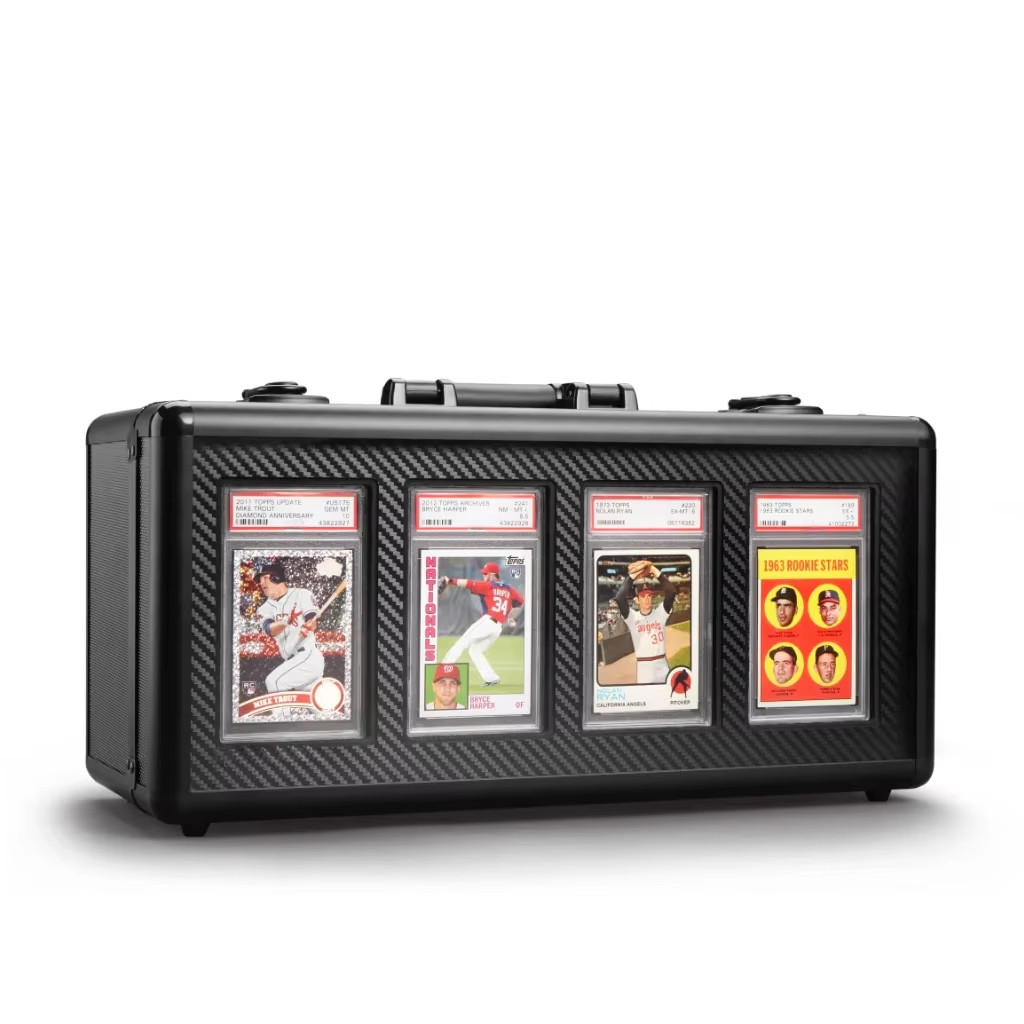
Use a simple sorting rule — by set, by grade, or by player — and label each box so you never have to open ten containers to find one slab. Adding an inventory sheet with the certification numbers printed on each PSA, BGS or CGC label turns your storage system into a full collection database.
About GUARD TCG
GUARD TCG is a professional trading card accessories manufacturer established in 2009, producing over 300 million protective products a year for more than 10,000 customers in 70+ countries through 500+ distributors. We supply card sleeves, toploaders, rigid graded card holders, binders and display solutions with OEM/ODM services, standard MOQ from 100 pieces, and worldwide shipping by DHL, FedEx or UPS in 5-12 days or by sea in 25-35 days. Every batch passes full QC inspection before it leaves the factory. Learn more about our factory and capabilities on our about page.
FAQ
Q1: Can I store PSA slabs in a graded card binder?
Yes. Choose 4-pocket or 6-pocket pages sized for standard slab exteriors (about 3.25 x 5.375 inches). The lock-in tabs and finger notches in quality pages keep slabs secure without pressing on the holder.
Q2: How many slabs fit in a 6-pocket binder?
A 10-page, 6-pocket binder holds 60 slabs. A standard 3-inch binder with 4-pocket pages holds about 16 slabs (four pages), so check the page count before you buy.
Q3: Which protects slabs better long-term — binder or box?
A rigid slab storage box generally wins for long-term protection because slabs stay upright, separated and out of direct light. Binders protect well but are better suited to active display and browsing.
Q4: Can I stack slab storage boxes?
Yes, if the boxes are rigid and not overloaded. Keep stacks modest and level, and never place heavy items on top of loose slabs. For questions about sizing or bulk orders, contact us — our team answers within one business day.
Conclusion
Graded card binders and slab storage boxes are not rivals — they solve different halves of the same problem. Binders make your PSA, BGS and CGC slabs browsable and presentable, while storage boxes protect the bulk of your collection efficiently and affordably. Start with a 4-pocket or 6-pocket binder for the slabs you love to look at, add 100-count boxes as the collection grows, keep the room cool, dry and dark, and store everything upright. With that system in place, every slab stays display-ready and archive-safe at the same time. For more storage and protection guides, visit our blog.
Wholesale and OEM Supply
Need this range in bulk? GUARD TCG manufactures graded card slab accessories and offers OEM/ODM custom card accessories for brands, card shops and distributors. Browse the graded card slab accessories range, or request a wholesale quote.