Trading Card Supplies: A Wholesale Buyer Guide to What Actually Sells
Trading Card Supplies: A Wholesale Buyer Guide to What Actually Sells
When buying trading card supplies wholesale, start with the four highest-turnover categories: penny sleeves, matte play sleeves, 35PT toploaders, and 9-pocket binders. Rank them by reorder frequency rather than unit margin, confirm MOQ and lead time in writing, and verify non-PVC material plus carton specs before the first order. Most shops see faster payback from sleeves and toploaders than from display hardware. This guide is written for retailers, distributors, and importers building or refreshing a supplies range, not for a single collector buying one pack at a time.
What Counts as Trading Card Supplies
Trading card supplies covers everything a card goes into before it goes into a collection: inner sleeves, play sleeves, rigid holders, binders, storage boxes, deck boxes, and display hardware. In wholesale terms it is a long, shallow catalogue — dozens of SKUs sold in small quantities to thousands of small buyers — and that shape drives how you buy it and how often it reorders.
The category grows with the cards themselves. ICv2 estimated the hobby games market grew about 40% to US$3.66 billion in 2025, while Grand View Research sizes the US trading card market at US$5.9 billion in 2025, projected to reach US$10.2 billion by 2033 at roughly 7.2% CAGR. Accessories track card volume more than card prices: when more packs are opened, more sleeves and toploaders move, whatever the singles market does that month. For a shop, that makes supplies the dependable line and sealed product the volatile one; for an importer, it means the winning SKUs are the boring ones that reorder every month.
Why Turnover Beats Unit Margin in Accessories
Accessories are a cash-flow product, not a margin product. A sleeve pack that clears 60 cents of gross margin and sells out weekly turns that money twelve times a year; a display case that clears eight dollars but sits six weeks on the shelf ties up shelf space, working capital, and the attention of staff who have to dust it. In a shop with limited peg space, the sleeve peg out-earns the display shelf per square metre in almost every layout we see quoted by retail buyers.
Turnover also shapes freight decisions. Light, low-value units are cheap to buy and expensive to ship per dollar of revenue, so the goal is to fill containers with high-frequency SKUs and let occasional heavy, slow items ride along. A distributor ordering 60% by unit count in sleeves, toploaders, and binders, and 40% in display hardware, usually lands a healthier mix than one who buys the catalogue evenly.
The practical test before you add a SKU is a reorder question: will a normal shop buy this again within ninety days? If not, it belongs in a range extension, not a core stocking position.
The Four Core Categories Every Buyer Starts With
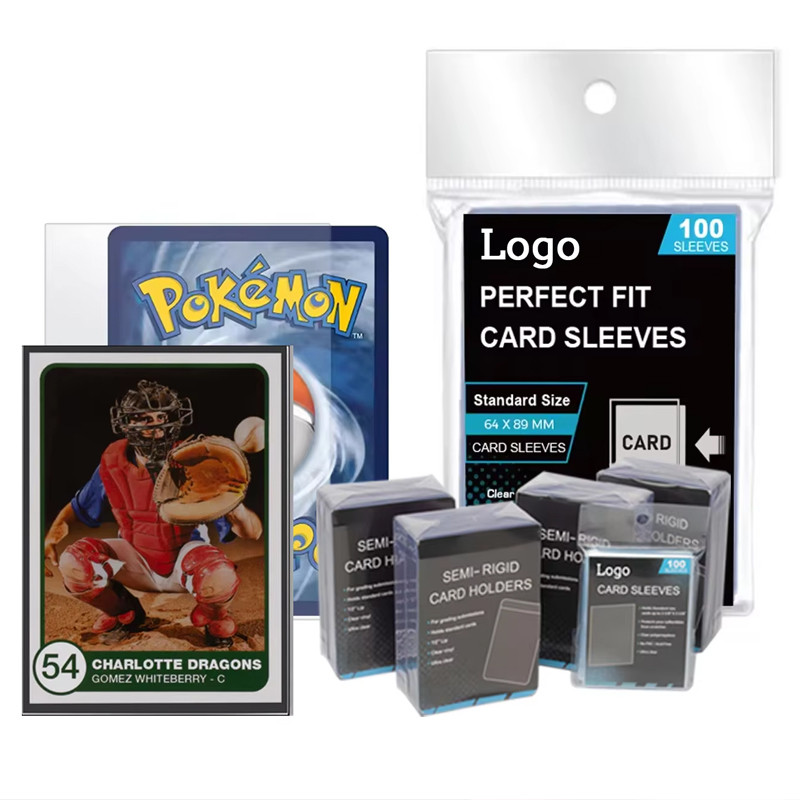
Penny sleeves. Thin polypropylene inner sleeves, typically 1-2 mil, with brand-name lines publishing around 45 micron. They cost cents, protect against surface wear and dust, and act as the default inner layer before anything rigid. Sold in 100-count packs, they are the highest-frequency reorder in the category and the first thing a shop runs out of.
Matte play sleeves. Thicker textured sleeves used for actual play, opaque-backed for tournament use, usually sold in 100-count packs. They carry the highest unit price of the sleeve family and the strongest repeat behaviour, since competitive players resleeve decks regularly; deck boxes and outer sleeves cluster around the same purchase.
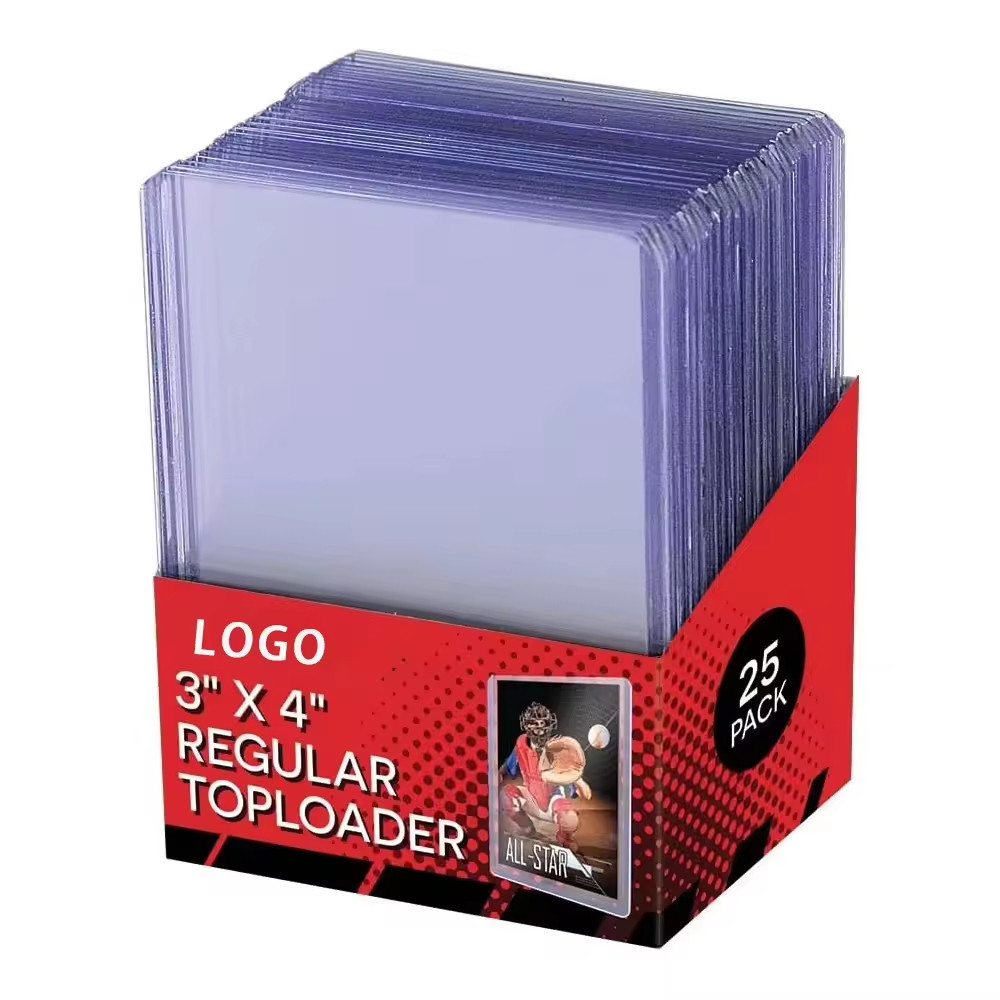
35PT toploaders. Rigid PVC-free holders sized 3 x 4 inches for standard cards, with 35 point (0.035 inch) walls as the common default, plus thicker 55PT to 130PT versions for memorabilia and thick stock. The adjacent SKU most buyers miss is the booster pack toploader, a wider holder for sealed foil packs — a small, high-margin add-on that sells to both collectors and shops.
9-pocket binders. Side-loading pages, 360-card capacity in the standard format, with 12-pocket and 16-pocket albums serving sports cards and toploader storage. Binders are the highest-ticket item in the core four: stitching, page clarity, and zip closure decide whether a shop reorders the same model or switches.
Wholesale vs. Retail Pricing Structures Compared
The two channels are not the same product with a different number on the invoice. A retail supply relationship is built around small, frequent, mixed orders and merchandising support; a wholesale program is built around cartons, price breaks, and specification control. Buying wholesale without changing your assumptions is how importers end up with 5,000 units of a pack size nobody wanted.
| Factor | Retail purchasing | Wholesale / direct import |
|---|---|---|
| Order size | Single packs, cases of 10-20 | Master cartons, 100-3,000 units per SKU |
| Price basis | Suggested retail less trade discount | Ex-works unit price by volume tier |
| Packaging | Retail-ready, barcoded, peg or shelf fit | Export cartons, retail packaging optional |
| Lead time | Days from a local distributor | 5-12 days express, 25-35 days sea |
| Freight owner | Distributor absorbs inbound | Buyer owns freight, duty, and insurance |
| Customisation | None, brand packaging only | Logo, pack count, header card, insert |
| Quality recourse | Return to distributor | Inspection clause, retained samples, rework |
| Cash cycle | Pay as you sell | Capital tied in stock for 6-10 weeks |
How to Choose a Trading Card Supplies Supplier: MOQ, Lead Time, Certificates
Shortlist on capability, then price. A supplier worth a container shows four things without being pushed: a real accessories line rather than generic packaging, a written material statement confirming polypropylene or polyethylene and no PVC, carton dimensions with units per carton and per pallet, and a documented inspection routine with retained samples. Compared with brand-name alternatives, a factory-direct program wins on pack-size flexibility and packaging control long before it wins on unit price.
Certificates matter less as decoration and more as a filter. Ask for the material datasheet, a migration or plasticizer statement for anything touching card faces, and a heavy-metals or REACH-style declaration if you sell into the EU. A supplier who answers "all our material is safe" without a document has told you they do not have one.
Then test the boring items. Who owns the tooling on a custom header card? Does the film gauge hold across reorders, or does the second shipment feel thinner? A trading company is fine for a mixed trial order; a factory relationship keeps a repeat SKU stable.
Building a First Order Within Budget
A first order should buy information, not inventory depth. Split the budget roughly 40% into sleeves and toploaders, 30% into binders, 20% into play accessories and deck boxes, and 10% held back for the reorder you will need in six weeks when one SKU outperforms. Depth in four proven SKUs teaches you more than breadth across twenty.
Model landed cost before you approve anything: unit price plus freight plus duty plus your own handling, divided by realistic sell-through for that pack size. A cheaper carton that cubes out badly can lose more on ocean freight than it saved on the invoice, and a 45-day production run at a good price can cost more in lost sales than 300 units landing in 15 days.

Best Practices for Reorder Points and Stock Levels
Set reorder points from lead time, not habit. For sea freight, lead time demand is roughly six weeks of average weekly sales; add two weeks of safety stock and that is your trigger. For express replenishment on the fastest SKU, three weeks of cover is usually enough. The point of the formula is that it survives a busy month without a formula in your head at 6pm on a Friday.
Track sell-through by SKU and pack size, not by category. "Sleeves are up" hides the fact that 100-count packs are flying and 50-count packs are dead stock. A weekly count on the top ten SKUs, written down, beats a quarterly stocktake that reports a problem three months late.
Store cartons off the floor, out of direct sun, and away from heat sources. Polypropylene softens with heat cycles, binder pages cloud, and adhesive on retail headers lets go in a warm stockroom. First-in-first-out rotation and one opened reference carton per SKU catch drift before your customer does.
Common Mistakes When Buying Trading Card Supplies in Bulk
The most expensive mistake is buying breadth instead of depth: twenty SKUs at one carton each, none of them deep enough to reorder, all of them competing for the same peg. The second is treating gauge as a detail — a sleeve quoted 20% below the market is usually thinner film, and thin film splits at the seam during packing, which is a return, not a saving.
Third is ignoring pack size: a 100-count and a 50-count pack at the same cost per sleeve behave completely differently at retail, because the smaller pack sells faster at a higher unit margin but doubles packaging cost per card protected. Fourth is skipping the inspection clause, then discovering on arrival that the carton count was short by 3%.
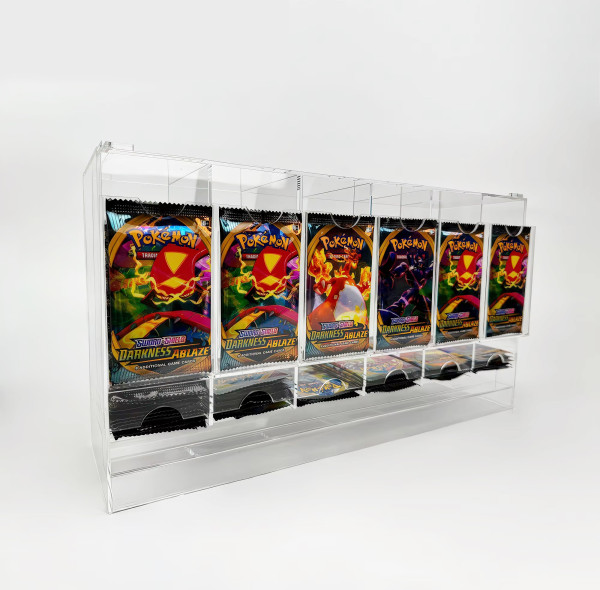
Finally, do not buy display hardware first. Acrylic cases and showcase boxes are the visible part of the category, but they are slow movers that eat cube. Build the disposable, repeat-purchase base first, then add display as the margin layer once sleeve and toploader reorders are predictable.
Wholesale and Retail Notes for Buyers (MOQ, Packaging, Lead Time)
MOQ. Stock sleeve, toploader, and binder formats typically start at 100 units per SKU, which is low enough to test a market without tooling spend. Custom printing, bespoke pack counts, logo header cards, and new binder tooling usually need 500-1,000 units because of setup cost. Mixed containers work well when several SKUs share a carton plan, so aggregate your range before you negotiate price.
Packaging. Decide early between retail-ready packaging — printed sleeve, hang tag, barcode, country of origin — and plain export cartons. Retail-ready adds cost and lead time but removes repacking at your warehouse and protects the margin you are trying to build. For e-commerce, request a mailer-grade outer that survives parcel handling without an overbox, and confirm packaged weight and dimensions for your shipping calculator.
Lead time. Allow 5-12 days for express samples, 25-35 days for sea freight, plus production time set by pack count and printing. Land the first order six to eight weeks before your season, and reorder on sell-through rather than on the calendar. On a repeat program, inspection rights and payment terms are worth more than a few cents of unit price.

About GUARD TCG
GUARD TCG has manufactured card protection and display products since 2009, producing more than 300 million units a year for customers in over 70 countries, with 10,000+ customers and 500+ distributors. We run OEM and ODM programs across sleeves, toploaders, binders, deck boxes, and acrylic display, with documented material statements, carton data, a 100-unit MOQ on stock formats, and full-batch inspection. For a trading card supplies quote, start with the OEM/ODM program page, browse the card sleeves catalog, the toploaders range, and the binders collection, or send your pack sizes and volumes through the inquiry page.
FAQ
Q1. What is a realistic MOQ for trading card supplies?
Stock formats commonly start at 100 units per SKU. Custom printing, bespoke pack counts, logo header cards, and new tooling typically need 500-1,000 units because setup and mould cost must be amortised.
Q2. Which SKUs should a new shop stock first?
Penny sleeves, 35PT toploaders, matte play sleeves, and 9-pocket binders, in that order of reorder frequency. Add deck boxes, booster pack toploaders, and acrylic display only after those four are turning predictably.
Q3. How thick should a penny sleeve be?
Standard penny sleeves run 1-2 mil, with major brands publishing around 45 micron. Below that, seams split during packing; much above it, the sleeve no longer fits comfortably inside a 35PT toploader.
Q4. Is sea freight worth it for low-value accessories?
Yes at carton volume, provided you engineer the cube. Accessories are light and bulky, so units per carton and cartons per pallet decide landed cost more than ex-works price. Use express only for the fast-moving SKU you run out of.
Q5. How do I verify material claims before ordering?
Ask for the material datasheet naming polypropylene or polyethylene, a plasticizer and migration statement for anything touching card faces, and a heavy-metals declaration for EU sales. Confirm the same grade in the pre-production sample.
Conclusion
Trading card supplies reward buyers who plan for the second order while placing the first. Lead with sleeves and toploaders, keep binders and play accessories as the margin layer, set reorder points from lead time, and write gauge, material, carton count, and inspection into the purchase order. To compare formats against your own shelf plan, browse the full catalog or request samples through the inquiry page.