Card Storage Boxes Explained: Cardboard, EVA Foam, and Lockable Cases
Card Storage Boxes Explained: Cardboard, EVA Foam, and Lockable Cases
Card storage boxes come in three practical tiers: cheap corrugated cardboard count boxes for bulk cards, EVA foam-lined cases that cushion valuable cards, and lockable hard cases with padlocks or TSA locks for high-value collections and travel. Cardboard is the budget workhorse — a 1,600-count box holds well over a thousand sleeved cards for a few dollars — while EVA foam absorbs shock and resists moisture, and lockable cases add security, dust, and water resistance. According to TCGplayer's community guides, most collectors need a mix of all three. This guide explains what each box type does, how many cards each holds, and how to pick the right card storage box for your collection.
What Is a Card Storage Box?
A card storage box is a container designed specifically to hold trading cards — Pokémon, Magic: The Gathering, Yu-Gi-Oh!, One Piece, or sports cards — in a way that keeps them organized and protected over time. Unlike a binder, which is built for browsing, a storage box is built for density: it packs hundreds or thousands of cards into a small footprint, protects them from dust, scuffs, and light, and stacks neatly on a shelf or in a closet. Storage boxes come in three main material families — plain cardboard, EVA foam-lined cases, and lockable hard cases — and each one solves a different problem. The right choice depends on what you store: bulk commons, expensive singles, graded slabs, or a collection you carry to shows.
Cardboard Storage Boxes: The Budget Workhorse
Cardboard count boxes are the classic bulk storage solution, and for good reason. They are made from acid-free corrugated board, cost almost nothing per card, and come in standard capacities (100, 400, 800, and 1,600 counts) sized to fit standard trading cards in sleeves. They stack well, accept cardboard dividers for sorting by set, and can be labeled on the outside so you never dig through five boxes looking for one card.
Two honest limitations: cardboard boxes offer basic protection only — they stop dust and scuffs but do not absorb impact or block moisture — and most standard count boxes do not fit toploaders, magnetic holders, or graded slabs, which are wider and thicker than raw cards. For true bulk commons and duplicates, cardboard is the smartest buy; for anything valuable, upgrade the container.
Sleeve cards before they go into any card storage box — penny sleeves keep bulk cards clean and scratch-free while the box keeps them together and organized.
EVA Foam Card Boxes: Cushioned Protection for Valuable Cards
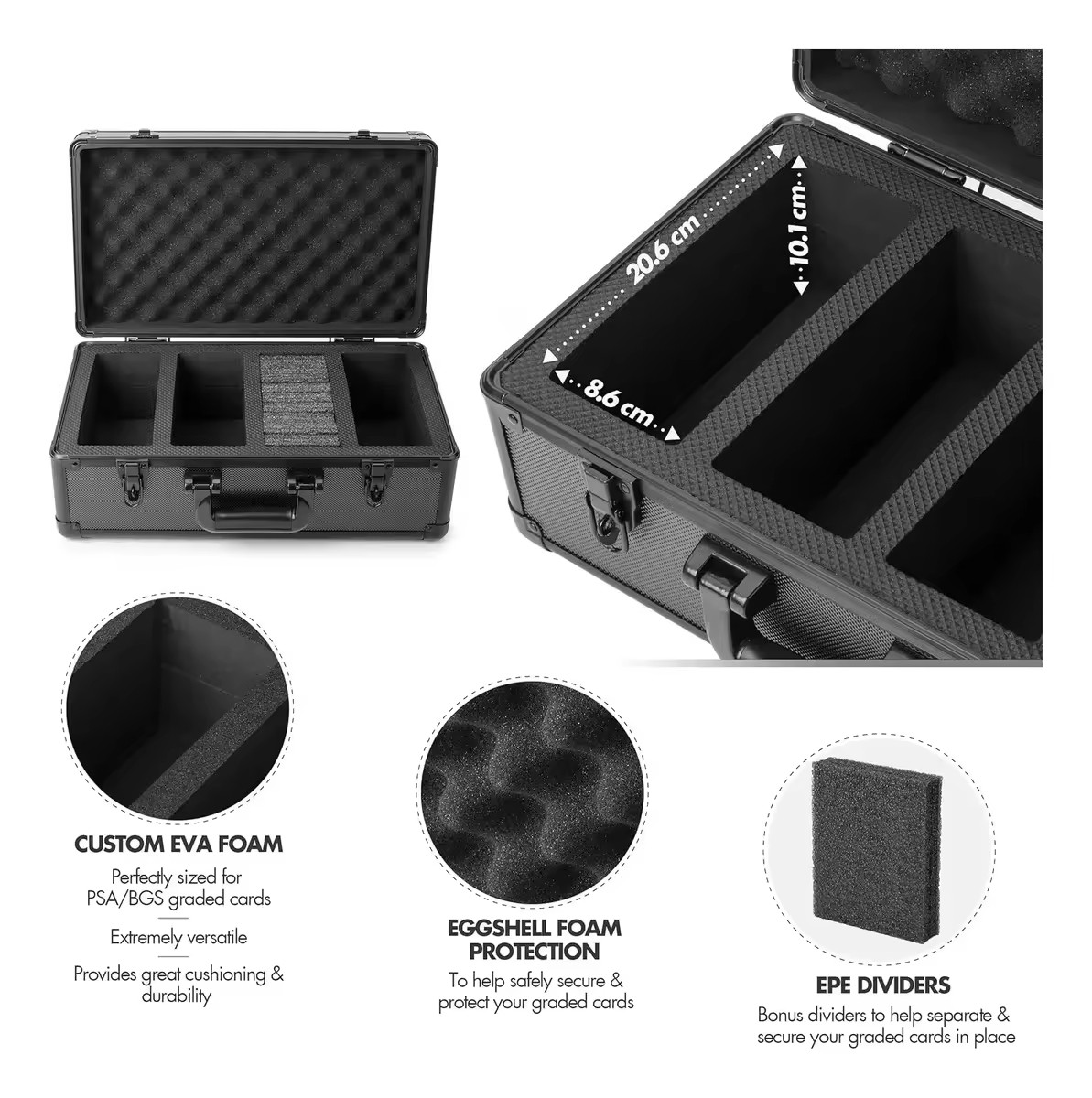
EVA (ethylene-vinyl acetate) foam is the material behind most premium card cases. Closed-cell EVA foam absorbs shock, resists moisture and wear, and is non-abrasive — it will not scratch the cards or holders it surrounds. EVA card boxes typically use pre-cut foam slots sized for toploaders, magnetic one-touch holders, or graded slabs, so each card sits in its own cushioned pocket instead of sliding around loose. This makes them the standard choice for graded-card storage: a 105-slot case holds 105 PSA/BGS/CGC slabs with foam cushioning between them.
One note for peace of mind: fresh EVA foam can release a mild odor (volatile organic compounds) right after manufacturing. Industry guidance — echoed by collector forums and case makers — is to air out a new EVA case for a few days in a ventilated room before long-term use, and always keep cards sleeved or in holders rather than touching foam directly. Reputable manufacturers produce low-VOC EVA, and aired-out EVA is generally considered safe for long-term card storage.
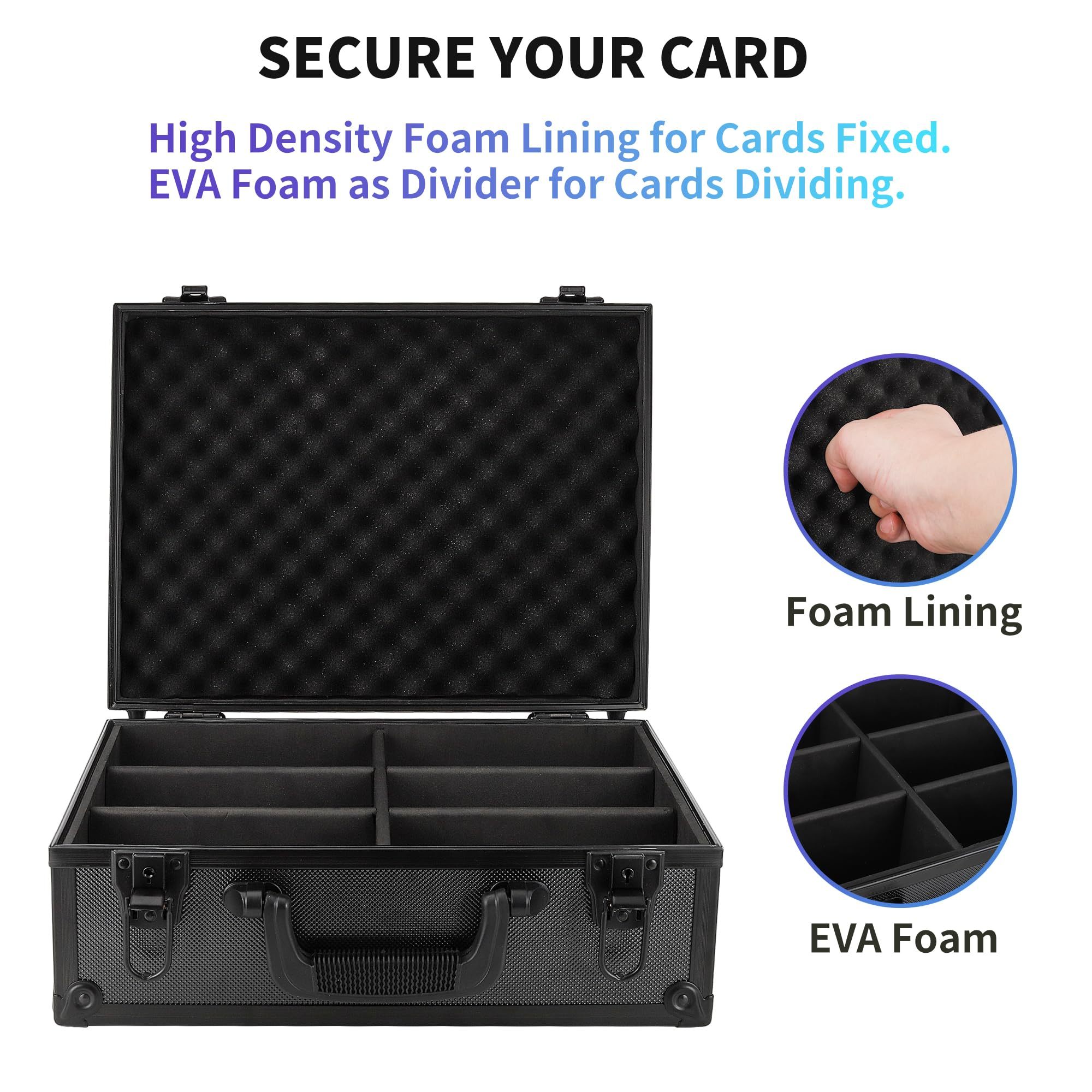
For graded cards, a slab holder inside a foam-lined case adds a layer of scratch protection on top of the PSA, BGS, or CGC shell — the standard setup collectors use for valuable slabs.
Lockable Card Cases: Security for High-Value Collections
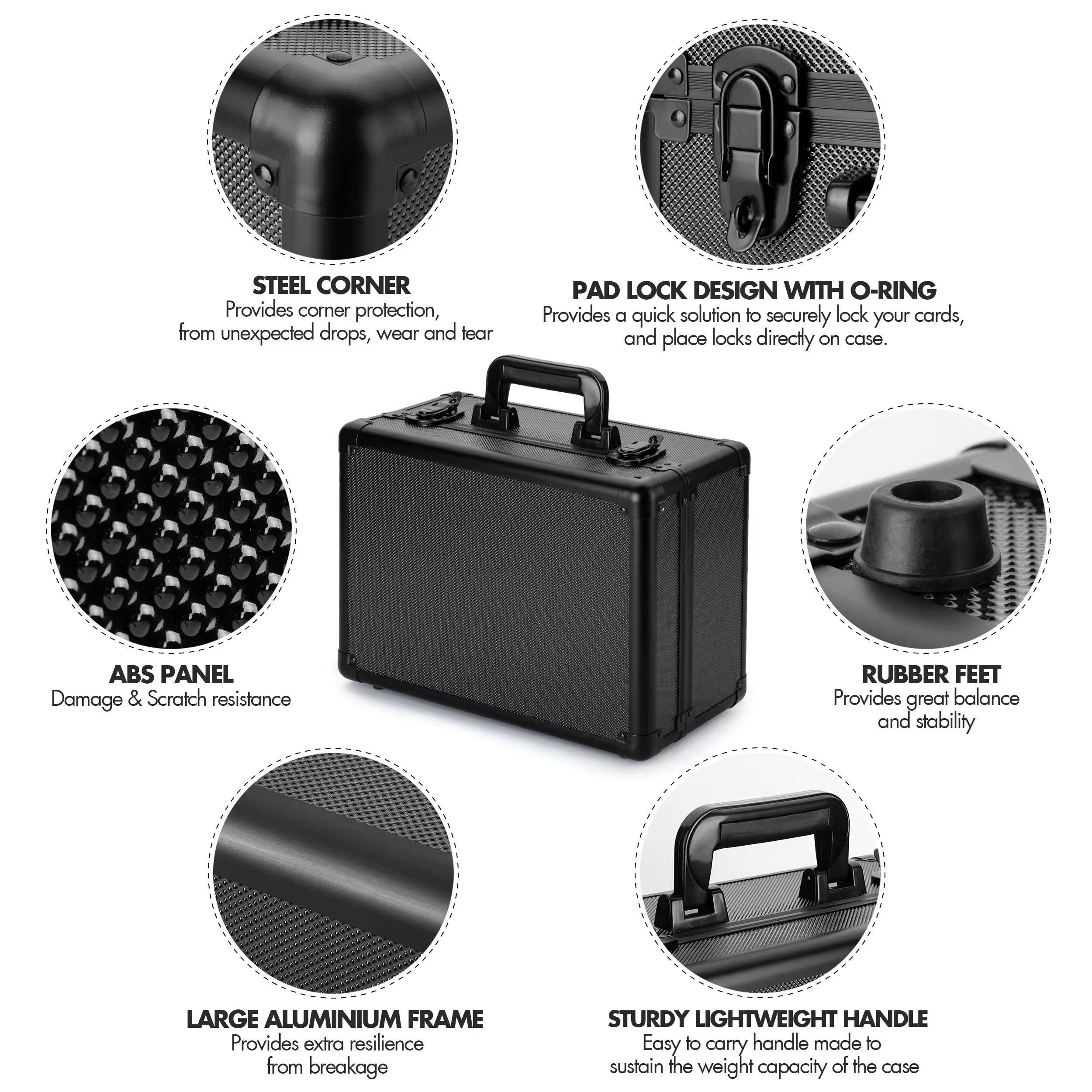
When your collection is worth more than the box it sits in, a lockable card case is the answer. Lockable cases pair a crushproof shell — typically hard plastic, aluminum, or ABS — with EVA foam interiors and a locking mechanism: combination padlocks, key locks, or TSA-approved locks for air travel. Premium models add waterproof O-ring seals that keep out moisture and dust, and pressure-release valves for altitude changes in the cargo hold.
These cases are built for three jobs: traveling to trade shows and conventions, shipping high-value cards safely, and giving a serious collection a secure home base. They cost more than cardboard — typically several times more — but when you are transporting slabs worth hundreds of dollars each, the case is cheap insurance. For home storage of a valuable collection, a lockable case also adds a practical layer of security and keeps curious hands out.
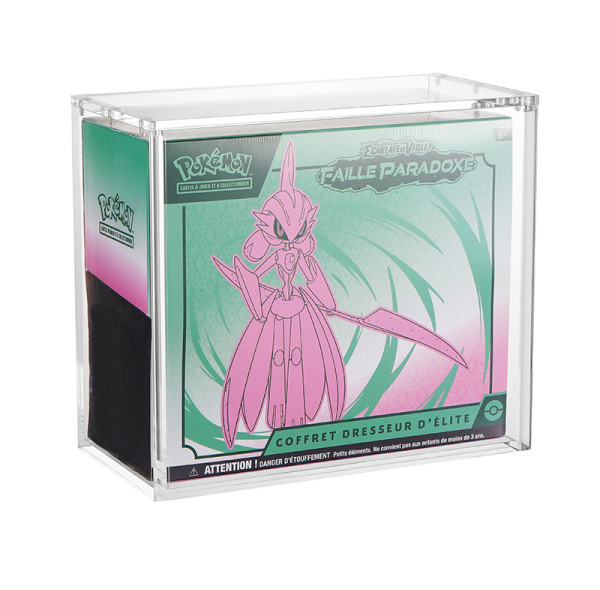
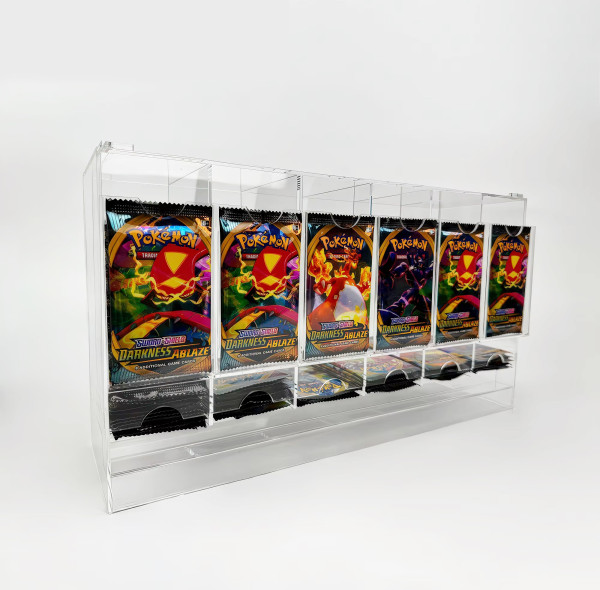
Acrylic display cases add another layer of protection for sealed product and display-grade items — keeping ETBs, booster boxes, and showcase pieces dust-free and UV-shielded while they sit in storage or on a shelf.
Cardboard vs. EVA Foam vs. Lockable Case: The Comparison
| Feature | Cardboard Box | EVA Foam Case | Lockable Hard Case |
|---|---|---|---|
| Best for | Bulk commons, duplicates, sorting by set | Valuable cards, toploaders, graded slabs | Travel, shipping, high-value collections |
| Protection level | Basic — dust and scuffs only | High — shock-absorbing, non-abrasive | Highest — crushproof shell + foam |
| Typical capacity | 400–1,600 raw or sleeved cards | 4–105 slots (slabs/toploaders) | 4–105 slots (slabs/toploaders) |
| Moisture resistance | Low — absorbs humidity | Good — closed-cell foam | Excellent — O-ring waterproof seals |
| Lock / security | None | None or simple latch | Padlock, key lock, or TSA lock |
| Price | Lowest — a few dollars | Mid-range | Highest |
| Stackability | Excellent — designed to stack | Good | Good, with handles |
| Portability | Stationary — shelf storage | Carry handle on most models | Rugged travel design |
There is no single "best" card storage box — the right one depends on what you are storing and where. Most collections end up with all three tiers working together.
Capacity Guide: How Many Cards Actually Fit?
Capacity numbers on storage boxes refer to standard-size cards (about 63.5 × 88 mm). Real-world math: a 400-count box holds roughly 350–400 sleeved standard cards, an 800-count box holds about 700–800, and a 1,600-count bin holds 1,500–1,600 — enough for several full sets of bulk. Sleeved cards take slightly more room than raw cards, so expect a small reduction from the printed number (industry estimate: 5–10%). Toploaders, magnetic holders, and graded slabs are much thicker than raw cards, so they get their own slot-based cases — a 105-slot graded card case holds exactly 105 slabs, each in its own foam pocket. If you store double-sleeved cards or cards inside toploaders inside a box, count conservatively: a "1,600-count" box realistically fits about 1,200–1,400 toploaded cards (industry estimate).
Travel and Transport Scenarios: Cases That Move With You
Where your cards travel changes the storage requirement. A collection that stays home can live in cardboard boxes; a collection that travels needs a case built for motion.
- Trade shows and conventions: a lockable hard case with foam slots protects slabs and toploaders from bumps in transit and in crowded halls, and the lock deters casual theft while the case sits on a vendor table.
- Air travel: choose a TSA-approved lockable case — TSA agents can open it for inspection without breaking it. Waterproof O-ring seals and pressure-release valves protect cards from cabin and cargo-hold conditions.
- Mailing and shipping: ship cards in a rigid container with foam padding, not a bare cardboard box — couriers handle parcels roughly, and graded slabs need crush protection. For international shipping, air express (DHL/FedEx/UPS) takes 5–12 days and sea freight 25–35 days, so pack for the longer journey with moisture protection.
- Car transport: a foam-lined case with a handle rides safely in a trunk or back seat without cards sliding around.
How to Choose the Best Card Storage Box
Work through these five questions before buying, and you will land on the right box every time:
- What are you storing? Raw bulk → cardboard. Toploaders or slabs → EVA foam slots. Anything you carry or insure → lockable hard case.
- How many cards? Count your collection and add 20% for growth. A 400-count box fits a small set; a 1,600-count bin suits a growing bulk pile.
- Does it fit your holders? Standard cardboard boxes do not fit toploaders or slabs. If you store cards in holders, buy a box or case with slots sized for them.
- Where will it live? Humid basement or garage → choose EVA or a sealed lockable case over plain cardboard, and add silica gel packs for humidity control.
- Do you need dividers and labeling? Dividers keep sets separate inside a box, and labels on the outside make any card findable. Look for boxes that accept standard dividers.
About GUARD TCG
GUARD TCG is the trading card accessories brand of a professional manufacturer founded in 2009, producing more than 300 million protective items every year for customers in 70+ countries, with 500+ distributors and 10,000+ retail partners worldwide. We manufacture card sleeves, toploaders, slab holders, and acrylic display cases under strict batch QC — every production batch is fully inspected — and we support OEM/ODM customization with a standard-product MOQ from 100 pieces. The storage guidance in this guide comes from two decades of building card protection products and from what collectors and retailers tell us every day. Browse the full range on our product list, read more storage guides on our blog, or send us an inquiry for wholesale and custom orders.
FAQ
Q1: Can EVA foam off-gassing damage my cards?
Fresh EVA foam can release a mild odor (VOCs) right after manufacturing. The safe practice is to air out a new EVA case for a few days in a ventilated room before long-term use, and keep cards sleeved or in holders rather than touching foam directly. Aired-out EVA from a reputable manufacturer is generally considered safe for long-term card storage.
Q2: Are cardboard storage boxes safe for long-term storage?
Yes, for bulk cards in a normal indoor environment — use acid-free corrugated boxes, keep them out of direct sunlight, and avoid damp basements or garages. In humid climates, add silica gel packs or choose an EVA or sealed lockable case instead.
Q3: Do toploaders fit in cardboard count boxes?
Usually not — standard count boxes are sized for raw or sleeved cards, and toploaders are wider and thicker. Store toploaded cards in boxes or cases designed for holder-sized cards, or in slot-based EVA cases.
Q4: How many cards fit in a 1,600-count box?
Roughly 1,500–1,600 standard cards, or about 1,200–1,400 when sleeved (industry estimate). For bulk commons and duplicates, this is the most economical large-capacity option on the market.
Q5: Is a lockable card case worth the price?
If your collection travels to shows, ships by mail, or is worth enough that you would insure it, yes — the crushproof shell, foam padding, and lock protect and secure cards in ways cardboard cannot. For stationary home storage of bulk, a cardboard box is still the smarter buy.
Conclusion
Card storage boxes are not one product — they are a tiered system. Cardboard count boxes keep bulk organized for pennies per card, EVA foam cases cushion the cards and slabs that matter, and lockable hard cases protect and secure high-value collections at home and on the road. Match the box to what you store: raw bulk in cardboard, toploaders and slabs in foam slots, and anything valuable or traveling in a lockable case. Sleeve your cards first, keep the environment cool, dry, and dark, and label everything — and your collection stays in the condition you worked to keep, whether it is 400 cards in a shoebox-sized count box or 105 slabs in a foam-lined case.
Wholesale and OEM Supply
Need this range in bulk? GUARD TCG manufactures graded card slab accessories and offers OEM/ODM custom card accessories for brands, card shops and distributors. Browse the graded card slab accessories range, or request a wholesale quote.