Card Subgrades Explained: Centering, Corners, Edges, Surface
Card Subgrades Explained: Centering, Corners, Edges, Surface
Card subgrades score four attributes: centering measures border symmetry on the front and back, corners rate sharpness and wear, edges judge chipping and whitening, and surface evaluates scratches, print lines and gloss. Final grades are weighted combinations, so one weak attribute, usually centering, caps the overall score even when the other three are near-perfect. This guide explains each subgrade, how the major graders combine them, and how to protect every attribute, written for retailers, importers and distributors who buy, stock and sell graded cards and want to advise customers on condition with confidence.
The Four Subgrade Categories Explained
Every professional grading company, whether it is PSA, BGS or CGC, breaks card condition into the same four pillars: centering, corners, edges and surface. The reason is practical rather than cosmetic. A card is printed in layers and then die-cut, so the factory process leaves telltale signs in exactly four places: where the image sits inside the border, where the four corners were cut, where the long sides were sheared, and across the printed face and foil. Scoring each pillar separately lets a grader explain why a card landed at a given number, and it lets a buyer understand where the value was won or lost.
For B2B buyers, the four-pillar model matters because it maps directly to price. A BGS 9.5 with all four subgrades at 9.5 sells differently from a BGS 9.5 held down by a 9.0 centering, even though the label reads the same. Retailers and distributors who understand card subgrades explained at this level can buy with precision, price condition honestly, and answer the customer question that always follows a sale: why is this one graded lower than that one.
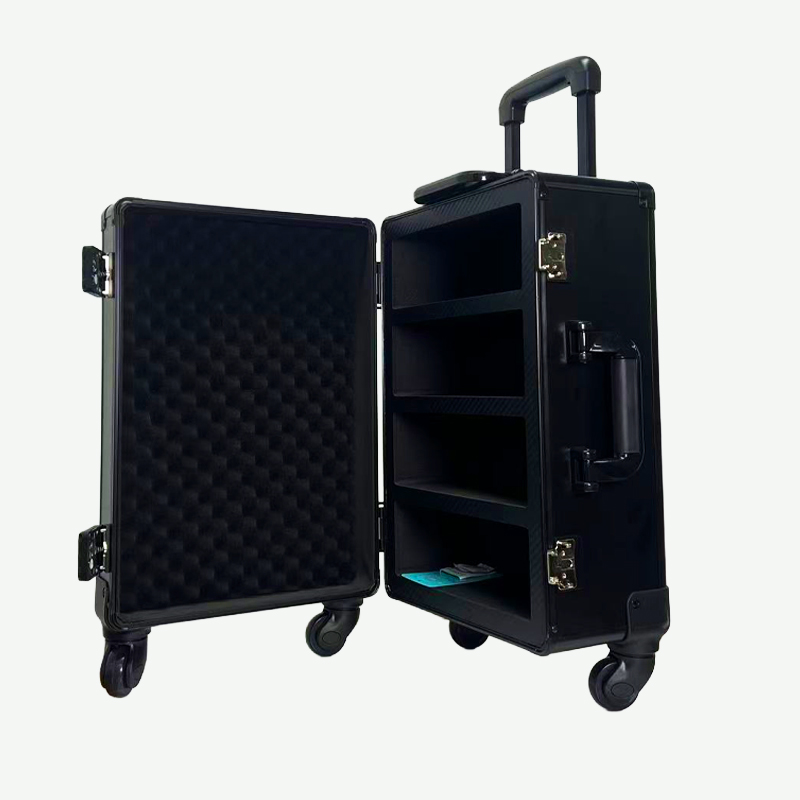
A four-row graded card storage box holds BGS, FGS and SGC slabs upright so the corners and edges that earned each subgrade stay protected through handling, retail display and shipping.
Centering: How Ratios Are Measured and What Scores Mean
Centering measures how evenly the printed image sits inside the border, expressed as a ratio of the wider side to the narrower side, such as 50/50, 55/45, 60/40 or 70/30. Graders check the front and the back separately, because a card can be well-centered on the front and noticeably off on the reverse. Centering is the most common hard ceiling on a grade: if a card falls outside the tolerance for a given number, no amount of perfect corners will push it higher.
The published tolerances differ by company. For a BGS 10 (Gold or Black Label), front centering must be roughly 50/50 to 55/45, while a BGS 9.5 allows up to about 60/40 front and 65/35 back. PSA states 55/45 or better on the front for a PSA 10, with the back allowed to fall to about 75/25. CGC sets its Pristine 10 at a stricter 50/50, its Gem Mint 10 at roughly 55/45 front, and a Mint 9 at about 60/40 front with the back as loose as 90/10. The back is consistently the more lenient side, which is why buyers should always inspect both sides before submitting.
Corners: Sharpness, Fuzzing, and Visible Wear
Corners are graded for sharpness first and wear second. A pack-fresh card has four crisp, well-defined corners with full color to the tip; graders look for rounding, fuzzing, whitening and dings under magnification. Whitening is the classic sign of a corner that has been touched, bumped or dropped, and it is one of the fastest ways to pull a would-be gem down to a mint or near-mint. Even a tiny ding that is invisible to the naked eye can cost a full point under a 10x loupe.
Corners are also where handling damage concentrates, which is why storage practice connects directly to the subgrade. A card that lives loose in a pocket or a deck box will take repeated corner contact and degrade over time, while a card in a rigid holder or graded slab keeps its corners intact. For a retailer selling raw singles, corner discipline is the difference between a card that grades and a card that disappoints.
Edges: Chipping, Whitening, and Trimming Flags
Edges are judged along the four long sides, where the die-cut sheared through the card stock. Graders look for chipping, edge whitening, rough cuts, notching and silvering, the last of which shows as a metallic glint where the foil or ink has worn along the cut. Edge whitening is the most common flaw on older or heavily handled cards, while rough cuts appear when the blade was dull or the cut was rushed at the factory.
Edges also function as a fraud checkpoint. A card that has been trimmed to hide a damaged or off-center border will often show an edge cut that does not match the era's factory standard, and graders are trained to flag it. For importers and distributors handling high-value vintage stock, understanding edge grading is part of authenticating what you are actually buying before it enters inventory.
Surface: Scratches, Print Lines, Gloss, and Staining
Surface is the most detail-heavy pillar because it covers everything on the printed face and reverse: scratches, print lines, dimples, stains, clouding and gloss breaks. On modern cards, foil and holographic finishes are graded strictly, because a micro-scratch on a foil card catches light and reads as a defect even when the underlying stock is perfect. Print lines and roller marks from the factory are common on vintage sets and are graded as flaws rather than dismissed as production quirks.
Surface is also the pillar most affected by how a card is stored. Finger oils, humidity and loose contact leave scratches and clouding that graders will see. A card in a clean rigid holder or slab keeps its surface pristine, which is why serious sellers protect raw cards before they ever reach the grading desk. The same discipline applies to finished product: graded slabs themselves scratch, so a storage box with soft interior material preserves the slab and the surface score printed on it.
How Subgrades Combine Into a Final Grade Compared
The way the four subgrades become one number is where the three majors diverge, and it is the single most useful thing to know when reading a slab. BGS prints all four subgrades and applies a rule that the final grade can be no more than 0.5 higher than the lowest subgrade, with an exception that two matching low subgrades cancel the bump entirely. A BGS Black Label 10 requires all four subgrades at 10. PSA does not print subgrades and uses a holistic judgment on a whole-number scale, while CGC discontinued printed subgrades in 2022 and now reports an overall grade only.
The comparison below summarizes how each company handles subgrades, increments and centering tolerances at the top of the scale.
| Feature | BGS | PSA | CGC |
|---|---|---|---|
| Subgrades shown on label | Yes, all four | No | No (discontinued 2022) |
| Grade increments | Half points | Whole numbers | Half points |
| Final grade method | Lowest subgrade plus 0.5 cap | Holistic, no formula shown | Internal four-pillar assessment |
| Top grade centering (front) | 50/50 to 55/45 | 55/45 or better | 50/50 (Pristine 10) |
| Back centering leniency | Stricter (60/40 at 10) | Lenient (75/25 at 10) | Lenient (75/25 Gem Mint) |
| Known for | Subgrade transparency, Black Label | Liquidity, brand recognition | Consistency, strong in TCGs |
For market value, the practical rule is that balanced subgrades command a premium: a BGS 9.5 with all 9.5s typically outsells a 9.5 held back by a single 9.0, and a Black Label 10 can multiply price because all-four-10s is genuinely scarce. Buyers building inventory should read subgrades as a condition map, not just a single number.
How to Choose What Matters Most
Choosing what to prioritize comes down to the card's era and finish. For modern cards, centering is the usual bottleneck, because factory tolerances are the one thing the buyer cannot fix, so a 55/45 card is worth screening before submission. For vintage cards, corners and edges dominate, because decades of handling wear accumulate there first, and surface condition separates the honest high grades from the rest. For foil and holographic cards, surface is the deciding pillar, since a print line or micro-scratch is common and graders are strict about it.
Retailers and distributors should also weigh liquidity against transparency. PSA is the most liquid and recognized market, which is why it is the default for resale, while BGS is chosen when a buyer wants the four subgrades printed and is chasing a Black Label, and CGC is a strong option in the trading-card-game space. The right call for a store is usually to carry a mix and explain the subgrade logic to customers rather than defaulting to one grader for everything.

A PU leather deck box sized for 20 graded card slabs keeps subgraded cards organized and cushioned, so the attributes behind the label survive travel to shows, store shelves and customer hands.
Best Practices and Common Mistakes When Reading Subgrades
The best practices are simple and repeatable: measure centering with a clear ruler or a centering tool on both sides, inspect corners and edges under a 10x loupe, and tilt the card under a directional light to catch surface scratches and print lines. Always check the back, because back centering and back surface are the most commonly overlooked flaws, and always read the lowest subgrade before the overall number.
The common mistakes are just as predictable. Do not average the four subgrades and call it the grade, because the lowest subgrade caps the result. Do not ignore back centering, which can be the difference between a Pristine 10 and a Gem Mint 10. Do not judge surface under ambient room light alone, because a foil micro-scratch only shows under a focused beam. And do not treat all 9.5s as equal, because a balanced 9.5 and a centering-capped 9.5 are two different assets in the market.
How to Store Cards to Protect Each Subgrade
Storage is the quiet half of grading, because every subgrade is a condition that storage either preserves or destroys. Raw cards belong in a rigid holder or sleeve-and-toploader combination that prevents corner contact, edge wear and surface scratches. Graded cards belong in a slab, and slabs belong in a purpose-built storage box with soft, non-abrasive interior material so the slab face does not cloud or scuff. Humidity control matters too, because moisture attacks surface gloss and can warp card stock over time.
For a retail or distributor operation, a line of graded card storage boxes and slab cases is not an afterthought; it is the product that lets customers preserve the value they just paid for. Stocking four-row storage boxes, two-row button-closure cases and slab deck boxes covers the common customer formats and cross-sells naturally against every graded card sold. Browse the full card storage boxes and carrying cases range to match the format to the buyer.

A four-slot graded card case holds BGS and FGS plastic slabs securely, protecting the corners, edges and surface that card subgrades are scored on.
Wholesale and Retail Notes for Buyers (MOQ, Packaging, Lead Time)
Graded card storage is a high-tie-in category for buyers who sell graded singles, and the wholesale economics are straightforward. Custom programs generally start at an MOQ of 100 pieces per design, with standard constructions running 15 to 25 days in production before transit. Packaging ships with protective film and corner support on rigid cases to keep them scratch-free, and carton gross weight, units per carton and pallet configuration should be confirmed before comparing quotes, because freight volume drives the landed cost of a bulky box line.
Lead time splits into sampling and production, then transit on top. Express air freight via DHL, FedEx or UPS typically runs 5 to 12 days, while sea freight runs 25 to 35 days, so a launch tied to a card show or a new release should build both windows into the schedule. For buyers building a house brand, sizes, colors, printing and packaging are all on the table through our OEM/ODM programme, which covers custom dimensions and branding on storage boxes and slab cases.

A two-row button-closure graded card case with a locking collector design keeps HGA and CSG slabs organized, a practical wholesale SKU for stores that move graded inventory.
About GUARD TCG
GUARD TCG is a trading card and collectible accessories manufacturer established in 2009, producing more than 300 million units a year for over 10,000 customers in 70-plus countries, including more than 500 distributors. Our range covers graded card storage boxes and slab cases, card sleeves, toploaders, rigid protectors, acrylic display cases, binders and storage solutions, with OEM and ODM programs for custom dimensions, colors, print and branding. Every order runs through full batch inspection before dispatch, we support express air freight (DHL, FedEx, UPS, typically 5 to 12 days) and sea freight (25 to 35 days), and custom programs generally start at an MOQ of 100 pieces. Learn more on our about page.
FAQ
Q1: What are the four card subgrades?
Centering, corners, edges and surface. Centering measures border symmetry front and back, corners rate sharpness and wear, edges judge chipping and whitening, and surface evaluates scratches, print lines, stains and gloss.
Q2: How does BGS combine subgrades into a final grade?
BGS prints all four subgrades and applies a rule that the final grade can be no more than 0.5 higher than the lowest subgrade. Two matching low subgrades cancel the bump, and a Black Label 10 requires all four subgrades at 10.
Q3: Does PSA show subgrades on the label?
No. PSA grades on a whole-number scale and does not print subgrades, evaluating the same four attributes holistically instead of publishing a formula. CGC also stopped printing subgrades in 2022.
Q4: Which subgrade usually caps the grade?
Centering is the most common hard ceiling, especially on modern cards, because it cannot be fixed after printing. A card outside the centering tolerance for a grade will not reach it regardless of how perfect the corners and edges are.
Q5: How should I store graded cards to protect the subgrades?
Keep slabs in a purpose-built storage box or slab case with soft, non-abrasive interior material, away from humidity, so the corners, edges and surface stay pristine and the slab face does not scuff or cloud.
Conclusion
Card subgrades are a condition map, not just a number. Centering, corners, edges and surface each measure a different factory or handling attribute, and the final grade is a weighted combination where the weakest pillar caps the result. For retailers, importers and distributors, reading card subgrades explained at this level is how you buy precisely, price honestly and protect value through storage. Review our product range for graded card storage, or send your formats through the inquiry form for a matched quote on the slab cases and storage boxes your customers need.