Factory-Direct vs. Trading Companies: How Sourcing Directly Saves You Money
Factory-Direct vs. Trading Companies: How Sourcing Directly Saves You Money
Factory-direct sourcing removes the middleman markup that trading companies add on top of the ex-works price — typically 15–40% depending on order size, according to industry estimates. On a $10,000 order that gap is roughly $1,500–$3,300. The trade-off is that you take on the work the trader did for you: factory vetting, quality inspection, logistics coordination, and communication in the supplier's language. Factory-direct is the lower-cost route once you have proven demand; trading companies still win on very small or highly fragmented orders.
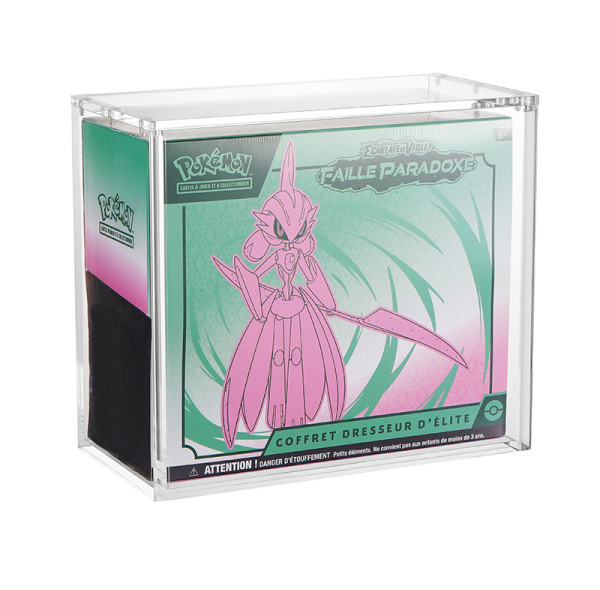
This guide breaks down where the money actually goes in each channel, what direct sourcing really costs you in time and risk, and how to decide which model fits your business. If you want to see the kind of factory-direct product range we are talking about — sleeves, toploaders, slab accessories, and acrylic display cases — start with the card accessories catalog and match it against your own SKU list.
What Is Factory-Direct Sourcing?
Factory-direct sourcing means buying from the manufacturer that physically produces the goods, rather than from a trading company, sourcing agent, or domestic wholesaler that buys from that manufacturer and resells to you. The factory quotes you an ex-works or FOB price, produces your order on its own lines, and ships under an Incoterm you agree — usually EXW, FOB, or CIF. Your landed cost is then the ex-works price plus freight, insurance, duties, and any inspection fees you commission yourself.
In the trading-company model, that same product arrives with an invisible layer on top. The trader negotiates with the factory, bundles your order with others, and quotes you a single number that already contains its margin. You may not even know which factory made your goods, because the trading company treats its supplier list as a trade secret.

Factory-direct purchasing means the supplier that quotes you is the supplier that runs the extrusion, printing, and packing lines — not a reseller between you and the machine.
Why Factory-Direct Sourcing Saves You Money
- No intermediary margin. You pay the producer instead of the producer plus a reseller, which is where the 15–40% difference comes from.
- Transparent cost breakdown. Factories quote material, tooling, printing, and packing separately, so you can see exactly what drives price and negotiate the parts that matter.
- Direct access to customization. OEM and ODM work — custom sizes, thicknesses, and printed artwork — is far easier when you talk to the people who own the tooling.
- Better quality feedback loop. Defects get reported to the line that caused them, which is how repeat orders improve instead of drifting.
- Scalable unit pricing. Price breaks at volume are real, and a factory can hold a specification stable across growing orders better than a trader juggling multiple suppliers.
- Supply-chain visibility. You know your capacity, your lead times, and your backup options, which matters when a season or a tournament calendar spikes demand.
As a factory, we see this on the other side every week: importers who move a proven SKU from a trading company to direct production usually keep the same specification and cut the unit cost, because the only thing that disappeared was the margin layer.
Factory-Direct vs. Trading Company: Cost Structure Compared
The table below summarizes the differences that affect your landed cost, your risk, and your control. Percentages are industry estimates drawn from published sourcing surveys and should be treated as ranges, not guarantees.
| Factor | Factory-Direct | Trading Company |
|---|---|---|
| Effective markup | 0% — you pay the ex-works price | 15–40% added (industry estimate) |
| Typical order size | From MOQ up to container volumes | Any size, including sub-MOQ lots |
| Minimum order | Factory MOQ applies (e.g., 100 pcs for standard items) | Lower, because stock is consolidated |
| Supplier identity | Known — you deal with the producer | Often undisclosed |
| Customization (OEM/ODM) | Full access to tooling and materials | Limited, filtered through the trader |
| Quality control | You set the standard; batch inspection available | Trader-dependent, harder to verify |
| Communication overhead | Higher — you manage the factory | Low — the trader handles it |
| Best for | Proven, high-volume SKUs | Testing, mixed containers, first orders |

A single specification, quoted directly by the line that produces it, is easier to hold stable across repeat orders — a 35PT toploader stays a 35PT toploader.
What Sourcing Direct Really Costs You
The markup you delete does not vanish; part of it turns into work you now own. Be honest about these costs before you switch:
- Supplier vetting. You have to verify that the factory is real, solvent, and capable — business license, production floor, references, and ideally an on-site or video audit.
- Quality inspection. Factories run their own QC, but a serious importer adds third-party inspection (SGS, Bureau Veritas, and Intertek are the names most buyers use) or commissions video verification of the batch.
- Logistics and documents. Freight booking, customs paperwork, and HS classification — plastic card accessories generally fall under HS Chapter 39, leather-and-paper goods elsewhere — land on your desk.
- Payment and currency risk. Deposits, balance terms, and exchange-rate movement are yours to manage; escrow-style protections such as Alibaba Trade Assurance can help on platform-sourced factories.
- Communication time. Time zones, language, and specification documents all cost hours that a trader used to absorb.
On a $10,000 order, a sourcing agent charging 3–10% leaves your total around $10,500–$10,700, versus roughly $11,500–$14,000 through a trading company at a 15–40% markup. That is the size of the prize — but only if you actually manage the extra work.
Trading Company vs. Sourcing Agent vs. Factory-Direct
There is a middle option between the two extremes. A sourcing agent works for you, not for the factory, and usually charges a transparent 3–10% fee on top of the ex-works price. You keep visibility of the supplier and the cost structure while someone else handles the logistics.
- Trading company: highest convenience, lowest transparency, 15–40% markup built into the quote.
- Sourcing agent: transparent fee, you own the supplier relationship, low double-digit savings.
- Factory-direct: lowest unit cost and highest control, but the most management work.
Most experienced importers end up hybrid: they use an agent or trader to test a new market, then move the SKUs that sell through to direct production once the volume justifies the switch.
When to Go Factory-Direct — and When Not To
Direct sourcing pays off when order volume is predictable and the specification is stable. It is a poor fit when you are still guessing.
- Go direct when: a SKU sells consistently, your order value is above roughly $5,000–$15,000, you order at least a few times a year, and you have (or can hire) someone who can manage a supplier.
- Stay with a trader when: your order is below the factory MOQ, you need 200+ mixed SKUs in one container, you need stock shipped immediately, you rely on a trader's existing certifications, or you simply have no China sourcing experience yet.
For a first order the sensible sequence is: test demand through a trader or agent, identify the winners, then negotiate directly for those winners. You keep the convenience where it matters and take the margin where you can.

Graded-slab accessories are a good example of a SKU worth moving to direct production once it proves itself — the specification is fixed, the demand is steady, and the tooling is stable.
How to Choose the Right Factory Partner
The savings only hold if the factory can actually deliver. Work through a short checklist before you send a deposit:
- Verify the entity. Business license, registered address, and a look at the actual production floor — not a brochure.
- Confirm the capability in writing. Materials, tolerances, and finishing should be specified in the quotation, not agreed verbally.
- Ask for the MOQ per item. Standard catalog items often start around 100 pieces, while custom tooling or printing pushes the minimum up.
- Test with a sample. Order pre-production samples and inspect them against your own reference before committing to a full run.
- Check the logistics terms. Confirm lead time, shipping method, and who books freight — express couriers such as DHL, FedEx, and UPS typically run 5–12 days, while sea freight is closer to 25–35 days.
- Read the QC clause. Look for batch-level inspection and a clear remedy if defects slip through.

OEM and ODM work is where direct sourcing becomes a competitive advantage: you are talking to the tooling owner, so custom display formats and UV-protective finishes can be scoped without a middleman re-interpreting your brief.
Best Practices for a Factory-Direct Sourcing Program
- Keep two suppliers per critical SKU. A second qualified factory is the cheapest insurance you can buy.
- Freeze the specification in writing. Material grade, thickness, print method, and packing all need to match across orders.
- Inspect every batch. A small per-batch inspection fee is trivial next to the cost of a returned container.
- Plan around Chinese New Year. Production slows for weeks; build inventory before it, not during it.
- Track landed cost, not unit price. Freight, duty, and inspection all belong in the same spreadsheet.
- Buy the sample before the container. Every good direct relationship starts with a paid sample.

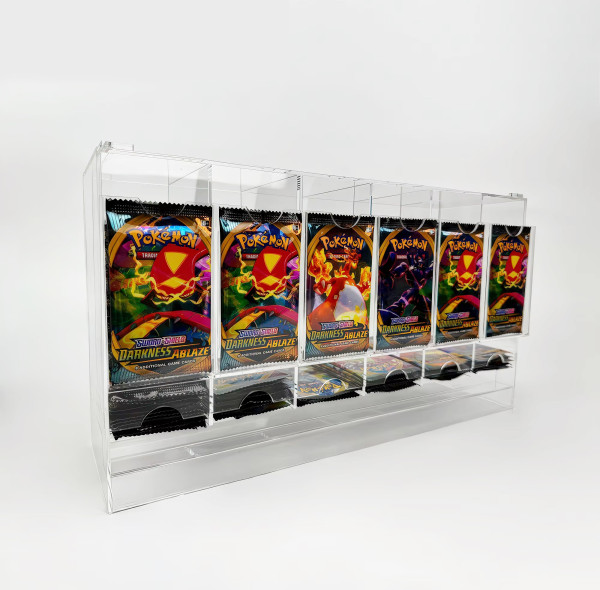
Retail display items are typically bought in container volumes, which is exactly where direct factory pricing separates from a trader's quote.
About GUARD TCG
GUARD TCG is a trading card accessories factory established in 2009, producing more than 300 million pieces a year for customers in over 70 countries. We work with more than 10,000 customers and 500+ distributors, and we offer both OEM and ODM programs alongside our standard catalog. Standard items start from an MOQ of 100 pieces, custom projects are quoted individually, and every batch is inspected before it leaves the line. We ship by DHL, FedEx, and UPS (5–12 days) or by sea (25–35 days), and we can quote EXW, FOB, or CIF depending on how you prefer to manage freight. You can read more on our about page or send specifications straight to our team via the inquiry form.
FAQ
Is factory-direct always cheaper than a trading company?
At the unit-price level, almost always — you are removing a 15–40% markup layer. At the landed-cost level it depends on what you spend on inspections, freight management, and your own time. For very small orders, a trader's consolidated stock can still come out ahead.
How do I find the actual factory instead of a trading company?
Verify the business license and registered address, ask production-capacity questions that only an operator can answer, request a live video walkthrough of the line, and compare the quoted ex-works price against the market. Suppliers that cannot show a production floor are usually resellers.
What markup do trading companies actually add?
Industry estimates place typical trading-company markups at 15–40%: roughly 30–40% on small orders under $5,000, 20–30% between $5,000 and $15,000, and 15–25% above that as volume grows. The exact figure depends on the category and how much consolidation the trader provides.
What is a normal MOQ for card accessories?
Standard catalog items commonly start around 100 pieces per SKU. Custom tooling, printed artwork, or bespoke packaging raises the minimum, because setup cost has to be amortized across the run.
Can I inspect goods before they ship?
Yes, and you should. Options range from third-party inspections by firms such as SGS, Bureau Veritas, or Intertek to a commissioned video inspection of the finished batch. Ask for the QC report with the shipping documents.
Conclusion
Factory-direct sourcing saves money for one straightforward reason: you stop paying a reseller's margin. Industry estimates put trading-company markups at 15–40%, which on a $10,000 order is $1,500–$3,300 that stays in your pocket. The price of that saving is the work a trader used to do — vetting, inspecting, and coordinating — so direct sourcing rewards importers who are ready to manage a supplier relationship. Test new products through a trader or agent, move your proven, high-volume SKUs to the factory, and keep every specification in writing. Do that and the margin you reclaim is real; skip the management work and a trading company may well be the cheaper option after all.