How to Choose a Trading Card Binder: 9-Pocket vs. 12-Pocket vs. Toploader Binders
How to Choose a Trading Card Binder: 9-Pocket vs. 12-Pocket vs. Toploader Binders
If you collect trading cards, a binder is the most efficient way to store, organize, and show off your collection — but the pocket layout you choose changes everything. For most collectors, a 9-pocket binder is the best all-around choice because it balances compatibility with every sleeve size and stores roughly 360 to 540 cards per binder; if you want maximum capacity, a 12-pocket (or even 16-pocket) binder stores 480 to over 1,000 cards in the same footprint; and if you store cards in rigid toploaders, you need a dedicated toploader binder with oversized pockets. This guide compares the three formats on capacity, protection, cost, and real-world use so you can pick the right trading card binder for your collection.
What Are 9-Pocket, 12-Pocket, and Toploader Binders?
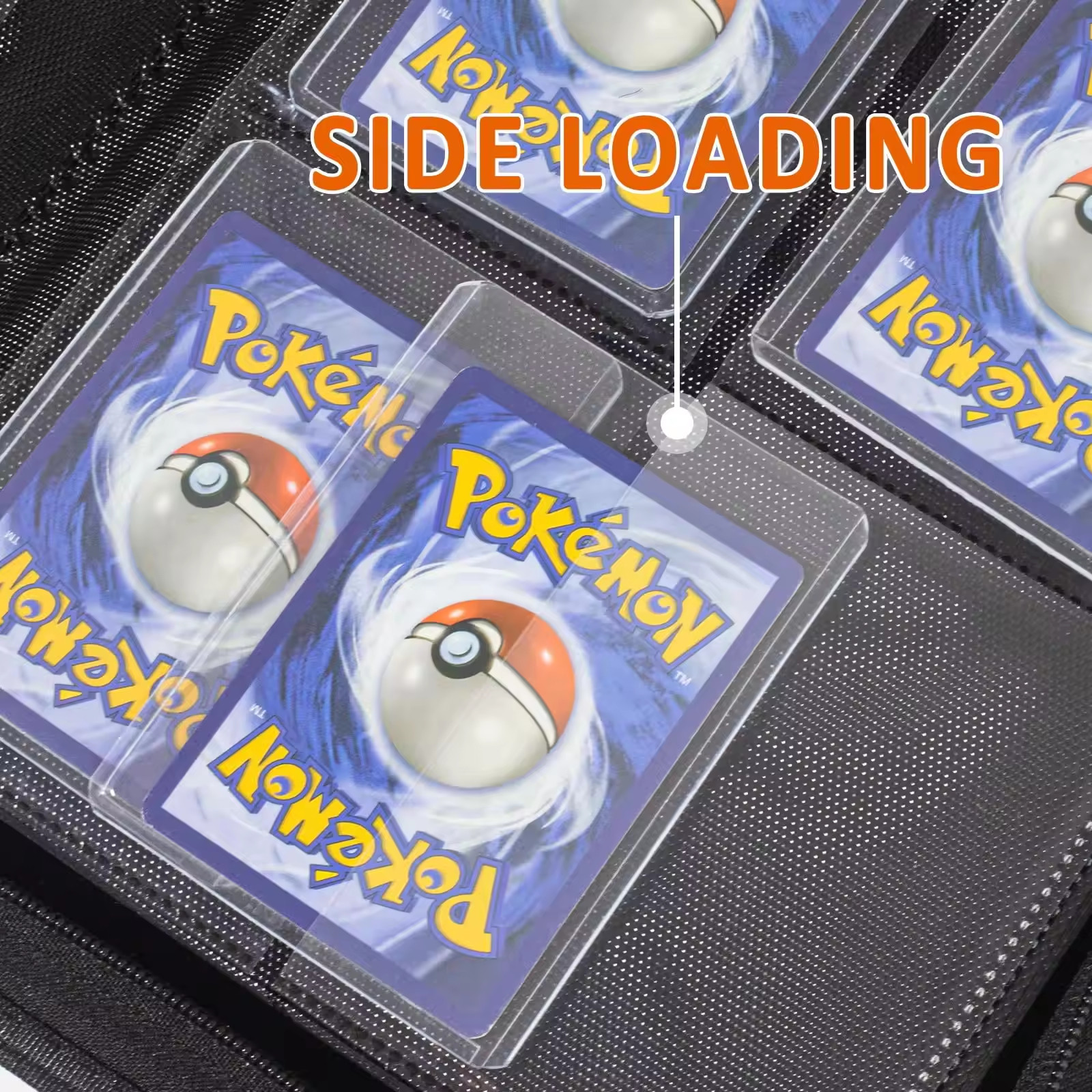
A 9-pocket binder has pages with nine side-loading pockets — three columns by three rows — sized for standard TCG cards (about 63 x 88 mm, the size used by Pokémon, Magic: The Gathering, Yu-Gi-Oh!, and most sports cards). Each page holds nine cards per side, so a 20-page binder stores 360 cards, and a 40-page binder stores 720. It is the industry-standard layout, which means every sleeve brand, page brand, and accessory is designed around it.
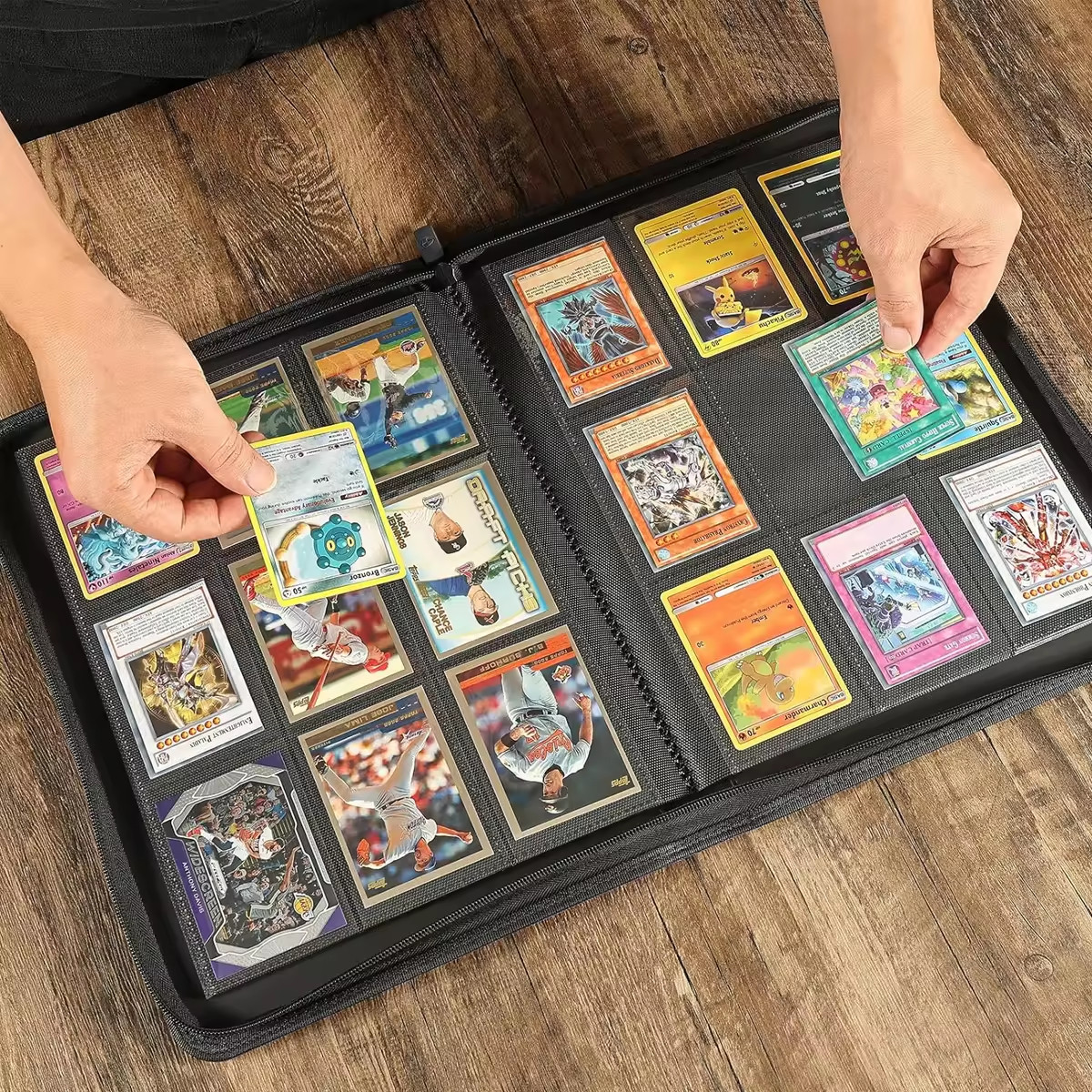
A 12-pocket binder uses pages with four columns by three rows, holding 12 cards per side and about 480 cards in a typical 20-page binder. The pockets are the same standard card size, just arranged more densely, so a 12-pocket binder stores about 33% more cards than a 9-pocket binder of the same page count. Some 16-pocket models push capacity past 1,000 cards, which makes them popular for complete Pokémon master sets.
A toploader binder is a different animal: its pockets are built to fit rigid 35PT toploaders (which measure about 3" x 4"), not raw cards. Because toploaders are much thicker than sleeved cards, toploader binder pages are oversized and hold far fewer cards — typically 216 to 288 toploaders in a full 9-pocket toploader binder, or around 112 in a 4-pocket model. You use it when your valuable cards already live in rigid protectors.
9-Pocket vs. 12-Pocket vs. Toploader Binder: Full Comparison Table
The table below compares the three binder formats on the factors collectors care about most.
| Feature | 9-Pocket Binder | 12-Pocket Binder | Toploader Binder |
|---|---|---|---|
| Cards per page | 9 per side (18 per page) | 12 per side (24 per page) | 4-9 toploaders per page |
| Typical capacity (20 pages) | 360 cards | 480 cards | 216-288 toploaders |
| Pocket size | Standard card (63 x 88 mm) | Standard card (63 x 88 mm) | Oversized (fits 3" x 4" toploaders) |
| Fits sleeved cards? | Yes (penny, perfect fit, standard) | Yes (penny, perfect fit, standard) | No — designed for toploaders only |
| Protection level | Good (with sleeves) | Good (with sleeves) | Maximum (rigid shell + pocket) |
| Relative cost | Lowest per card | Low per card | Highest per card |
| Best for | Set building, bulk storage, everyday carry | Large collections, master sets, space saving | High-value cards, graded-ready cards, travel |
Why Toploader Binders Cost More (and When They Are Worth It)
Toploader binders are consistently more expensive than regular binders, and the reason is simple physics: the pockets are physically larger. A pocket built to hold a rigid 35PT toploader needs extra material on every side, which means bigger pages, thicker spines, and sturdier covers to support the extra weight of 200+ rigid cases. Factory data from our own production line confirms the pattern — a toploader binder uses roughly twice the PVC-free page material and a heavier cover board than a standard 9-pocket binder of the same page count.
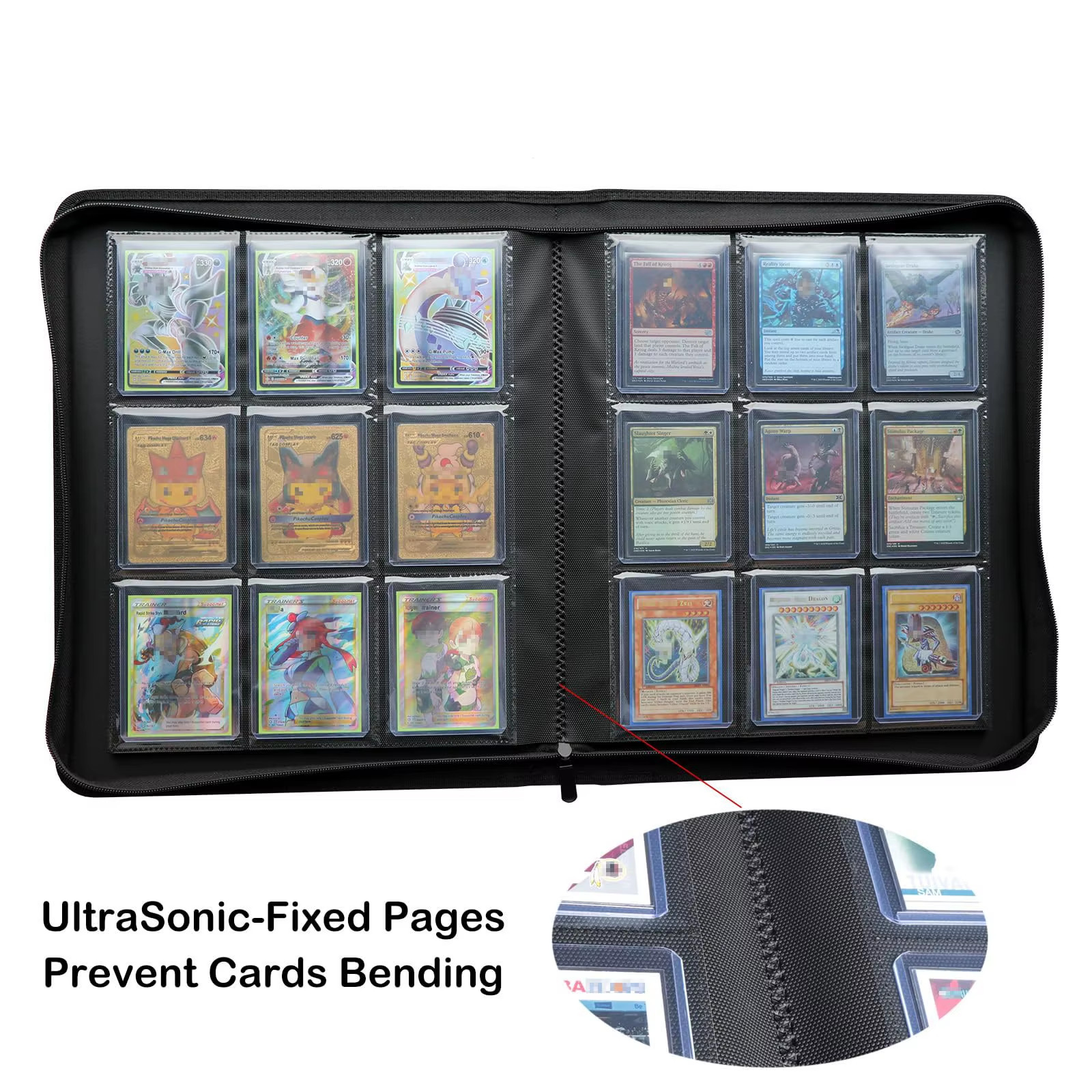
Is it worth the premium? Yes, if your collection is built around toploaders. A toploader binder replaces stacks of loose toploaders, makes your cards instantly browsable, and prevents the corner-to-corner pressure that can crack toploaders when they are piled up. It is also the standard choice for cards worth $50 or more, cards you plan to grade, and cards you carry to trade nights or card shows. If you only own a handful of toploaded cards, a small 4-pocket toploader binder is usually enough.
Materials and Closures: PU Leather vs. PP Covers, Zippers vs. Straps
The cover and closure determine how long a binder survives daily use. Three choices matter most:
- Cover material: PU leather binders have padded, rigid covers that protect pages from impact and look premium on a shelf; polypropylene (PP) binders are lighter, cheaper, and water-resistant but offer less crush protection. If a binder will travel, choose PU leather or a padded cover.
- Closure: zippers give the best dust and spill protection and are the safest for transport; elastic straps are lighter and faster to open but leave the top edge exposed; magnetic or snap closures look clean but seal less completely.
- Page material and rings: look for acid-free, non-PVC, archival-safe pages, and for large binders, D-rings that let pages lie flat without bending cards near the spine.
One rule applies across all three formats: always put cards in a sleeve before loading them into binder pockets. Sleeves prevent edge scuffing when pages rub together and protect against fingerprints during handling — our factory recommends pairing any binder with penny sleeves or perfect-fit inner sleeves for long-term storage, and our 50-micron premium sleeves are a common OEM pairing with GUARD TCG binder programs.
How to Choose a Binder by Collection Size
Your collection size is the fastest shortcut to the right decision:
- Under 100 cards: a 9-pocket binder with 10-20 pages (90-360 cards of headroom) is plenty. Buy one that leaves room to grow so you do not rebuy later.
- 100-500 cards: a 9-pocket binder still works, but if your collection is growing fast, a 12-pocket binder stores the same set list in about 25% less shelf space.
- 500-1,000+ cards: move to 12-pocket or 16-pocket binders, or split your collection into multiple 9-pocket binders by set or by rarity. Complete master sets of 1,000+ cards are the classic use case for 16-pocket mega binders.
- High-value or graded-ready cards: use a toploader binder regardless of total count — protection beats density when cards are worth protecting.
Many serious collectors run a hybrid system: 9-pocket or 12-pocket binders for commons, uncommons, and set completion, plus a toploader binder for hits, chase cards, and vintage pieces. That combination gives you density where it is safe and rigid protection where it matters.
Best Practices for Loading and Storing Binders
How you load and store a binder matters as much as which binder you buy:
- Always sleeve cards before loading — never put raw cards into pockets.
- Load from the bottom of each pocket and use side-loading pages so cards cannot slide out when the binder is handled.
- Do not overfill pockets; a card that is forced in will bend at the edges.
- Store binders upright on a shelf, not stacked flat, to avoid spine compression and page creasing.
- Keep binders away from direct sunlight and humidity swings — UV light fades card faces, and moisture warps pages and cards over time.
- For long-term storage, keep the binder zipped (or strapped) and consider a dust cover or storage box.
About GUARD TCG
GUARD TCG is the trading card accessories brand of a manufacturer founded in 2009, producing over 300 million card protection items per year for customers in more than 70 countries. We serve over 10,000 clients through 500+ distributors, offering OEM/ODM customization with standard-product minimum orders from 100 pieces, DHL/FedEx/UPS delivery in 5-12 days or sea freight in 25-35 days, and batch-level QC inspection on every production run. From penny sleeves, toploaders, and binder programs to full custom packaging, everything is made in our own factory so quality and lead times stay under our control. This article was written by the GUARD TCG Team based on our production experience and industry research.
FAQ
Q1: Can a toploader binder hold double-sleeved cards?
No — toploader binder pockets are sized for rigid toploaders, so regular cards (even double-sleeved) will slide around inside them. Use a standard 9-pocket or 12-pocket binder for sleeved cards and reserve the toploader binder for cards in rigid cases.
Q2: How many cards fit in a 9-pocket vs. a 12-pocket binder?
A 20-page 9-pocket binder holds 360 cards; a 20-page 12-pocket binder holds 480 cards. Page counts vary by brand, so multiply pages by pockets to get the exact capacity.
Q3: Do binder pages damage cards?
Archival-safe, acid-free, non-PVC pages do not damage cards, provided cards are sleeved and pockets are not overfilled. Cheap PVC pages, by contrast, can off-gas and degrade cards over years of storage.
Q4: Which binder is best for Pokémon cards?
For standard Pokémon cards, a 9-pocket binder is the most compatible choice; for complete master sets, a 12-pocket or 16-pocket binder; and for valuable or graded-ready cards, a toploader binder. The same advice applies to Magic and One Piece collections.
Q5: Can I use a toploader binder for cards in Card Saver semi-rigids?
Usually yes, because semi-rigids are close to toploader dimensions, but always check the pocket size — 35PT toploader pockets are designed for standard 3" x 4" rigid holders.
Conclusion
The right trading card binder depends on how you store your cards, not on which binder is most popular. Choose a 9-pocket binder for everyday collection building and maximum compatibility; choose a 12-pocket or 16-pocket binder when you need maximum capacity in minimum space; and choose a toploader binder for high-value cards that already live in rigid protectors. Sleeve everything before it goes into any binder, store binders upright away from sunlight, and buy from a manufacturer you can trust — at GUARD TCG, every binder program is backed by factory QC and OEM/ODM support, whether you need one binder or a full retail line.
Wholesale and OEM Supply
Need this range in bulk? GUARD TCG manufactures card binders and albums and offers OEM/ODM custom card accessories for brands, card shops and distributors. Browse the card binders and albums range, or request a wholesale quote.