How to Organize a Pokémon Card Collection: Binders, Boxes, and Systems
How to Organize a Pokémon Card Collection: Binders, Boxes, and Systems
To organize a Pokémon card collection, sort your cards into three tiers first — master sets and favorites go into a 9-pocket binder, bulk commons and duplicates go into storage boxes, and high-value cards go into toploaders or graded holders. Sleeve every card before it touches a page or box, keep each tier separate, and track everything in a spreadsheet or collection app. According to TCGplayer's community guides, collectors who separate "display, bulk, and money cards" into different storage systems keep collections organized far longer than those who store everything together. This guide walks through the exact sorting, sleeving, and storage system we recommend.
Why Your Pokémon Collection Needs a Storage System
Pokémon collections grow fast: a single modern set has 250+ cards, and a year of opening booster packs can easily add thousands. Without a system, cards end up stacked loose in drawers, sleeves get reused on the wrong cards, and the one card you actually wanted — that secret rare you pulled last month — becomes impossible to find. An organized collection does three things at once: it protects card condition (which directly protects value), it makes cards findable, and it turns a chaotic pile into something you actually enjoy flipping through. The goal is not perfection — it is a system simple enough that you keep using it after every new pack opening.
Step 1: Sort Your Cards by Set, Rarity, or Purpose
Before buying any storage, sort everything into piles. There are three proven ways to classify a Pokémon collection, and most serious collectors use a blend:
- By set and number (master-set method): arrange cards in official set order (e.g., Scarlet & Violet 151, numbers 1–165, then secret rares). This is the standard for master set completion and the easiest to check for gaps.
- By rarity: split commons/uncommons, rares, holos/reverse holos, and secret rares. Valuable cards end up together, which makes protection decisions obvious.
- By purpose: playable cards for decks, collectible cards for display, and duplicates for trade or sale. This works best if you play competitively as well as collect.
Once sorted, count each pile. Knowing roughly how many cards are in each tier tells you exactly how many binder pages and boxes you need — which stops you from buying a binder that is too small (or a box that swallows your room).
Step 2: Sleeve Every Card Before It Touches a Binder or Box
The single most important habit in Pokémon collection organization is sleeving before storing. Cards loaded raw into binder pages slide around and pick up micro-scratches; bulk cards stored unsleeved rub against each other every time the box moves. A penny sleeve (our non-PVC sleeves are about 50 microns thick) protects the surface from scratches, fingerprints, and minor moisture — and costs fractions of a cent per card. For master-set pages, sleeve every card before loading; for bulk, sleeve at least the rares, holos, and any card you might trade later.
Non-PVC penny sleeves are the foundation of any card organization system — they keep master-set cards clean and scratch-free before they go into binder pages or storage boxes.
Master Sets and Favorites: The 9-Pocket Binder
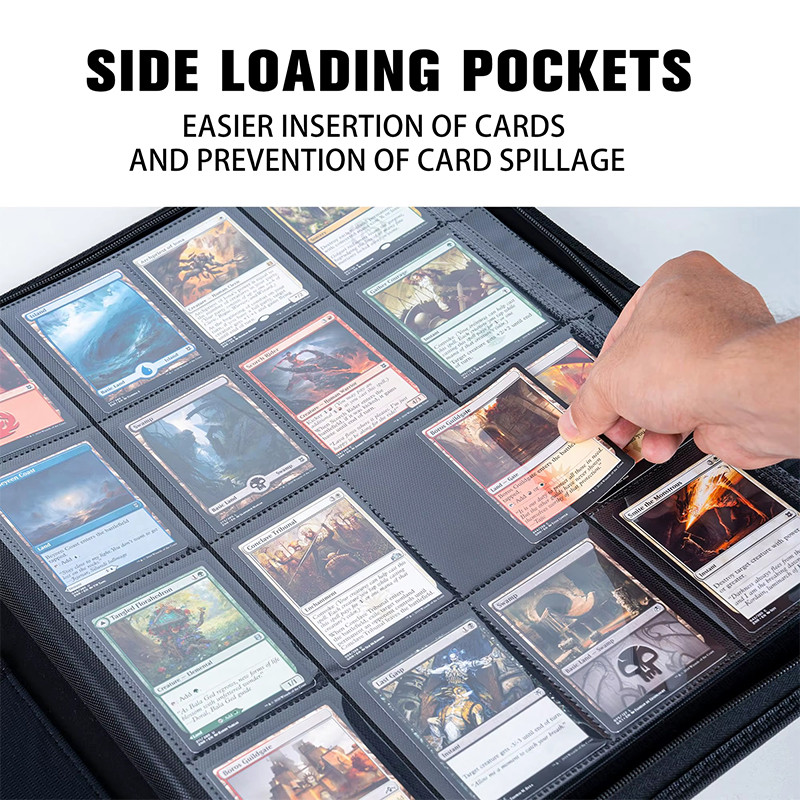
The 9-pocket binder is the workhorse of Pokémon collection organization. Each page holds nine cards in a 3×3 grid — 18 cards per two-sided page, or 540 cards in a standard 60-page binder when loaded on both sides. A 9-pocket page fits standard-size Pokémon cards in penny sleeves perfectly, and most modern binders use side-loading pockets that keep cards from sliding out. Use dividers or index tabs between sets, and leave a few empty pages at the end of each set section so new pulls have a home. For cards worth $50+, many collectors switch to 4-pocket pages for extra breathing room and less handling — a tip echoed across collector community guides.
Bulk Commons and Duplicates: Storage Boxes
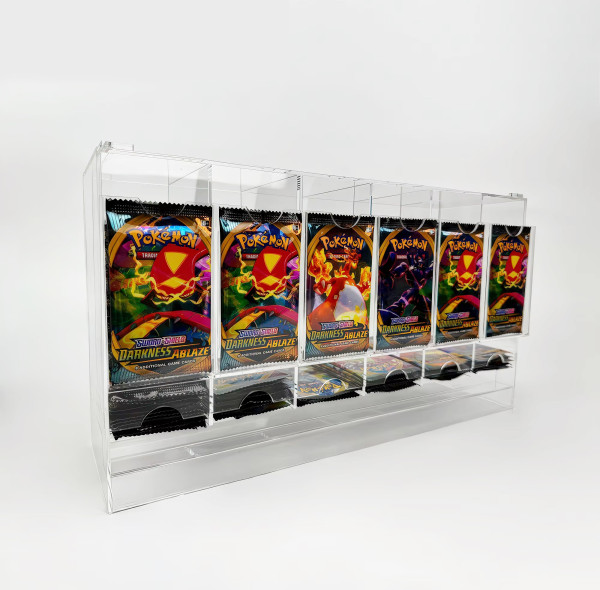
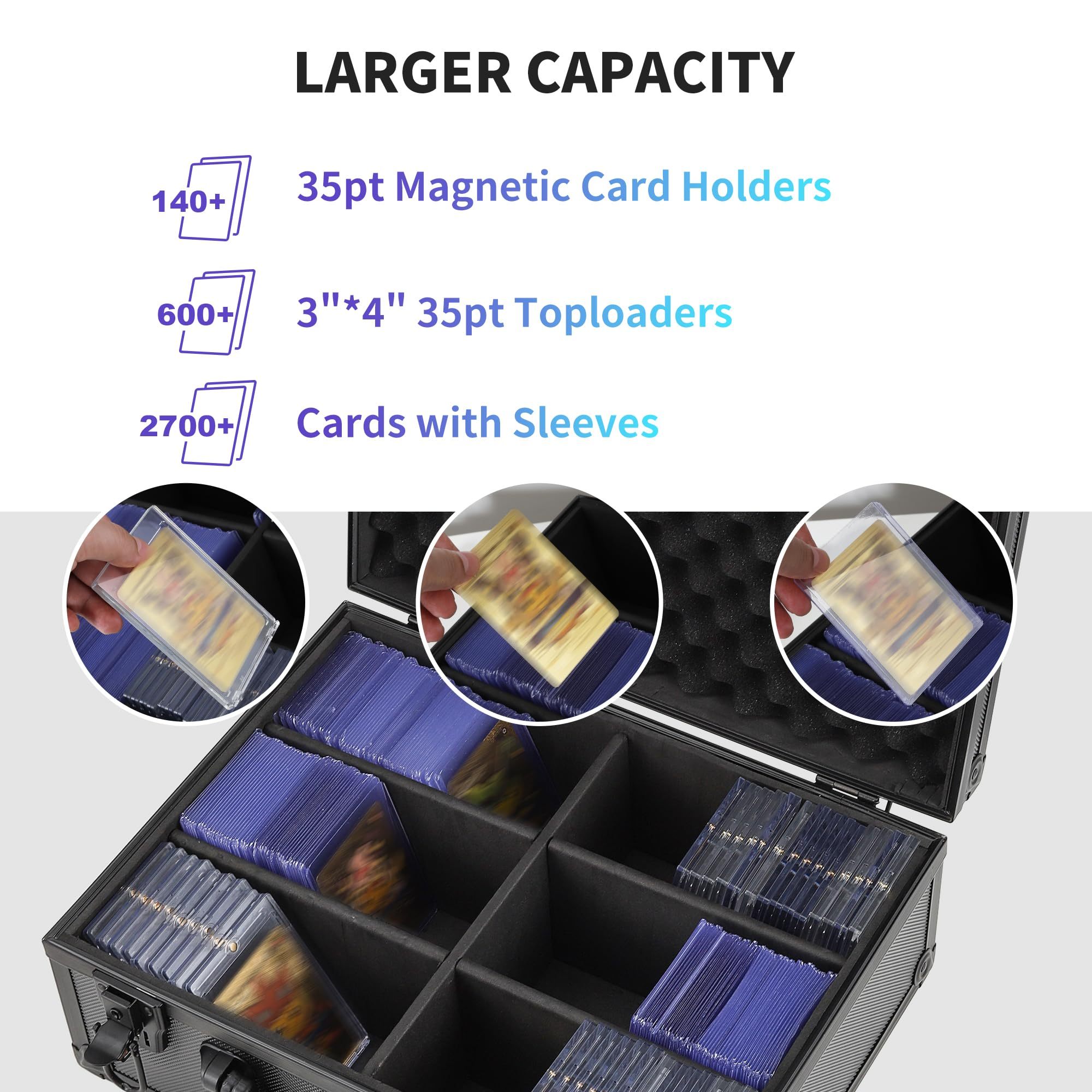
Everything that is not in the master-set binder — spare commons, duplicates, deck leftovers — goes into storage boxes. White cardboard storage boxes (400–1,600 card capacity) are the classic choice: cheap, stackable, and sized to fit standard cards in sleeves. If you want more protection, EVA-lined boxes cushion cards and lockable hard cases add dust and moisture resistance, which matters in humid climates. Sort bulk by set inside the box using cardboard dividers, and label the outside of each box — "Scarlet & Violet era" or "Trade fodder" — so you never open five boxes to find one card. Bulk is where collections get out of control; boxes with dividers keep it contained.
Sleeving bulk cards in bulk keeps boxes neat and cards trade-ready. Label each box by set and era so your bulk stays findable as the collection grows.
High-Value Cards: Toploaders, One-Touch Holders, and Slabs
Your most valuable cards deserve a third tier of protection beyond sleeves and binder pages. The standard hierarchy:
- Toploaders (35PT): rigid plastic holders that stop bending and corner damage. The default for cards worth $10–100 in your collection.
- One-touch magnetic holders: rigid two-piece cases for display-grade cards; ideal for a favorite card on a desk or shelf.
- Graded slabs (PSA/BGS/CGC): once a card is graded, the slab itself is the protection — store slabs flat in a graded-card storage box, never stacked too high.
Keep high-value cards together in one dedicated box or drawer, separate from bulk. A common collector rule of thumb: if you would be upset to lose the card, it gets a toploader at minimum.

A 35PT toploader keeps your best pulls rigid, flat, and safe — the standard home for high-value cards between binder and slab.
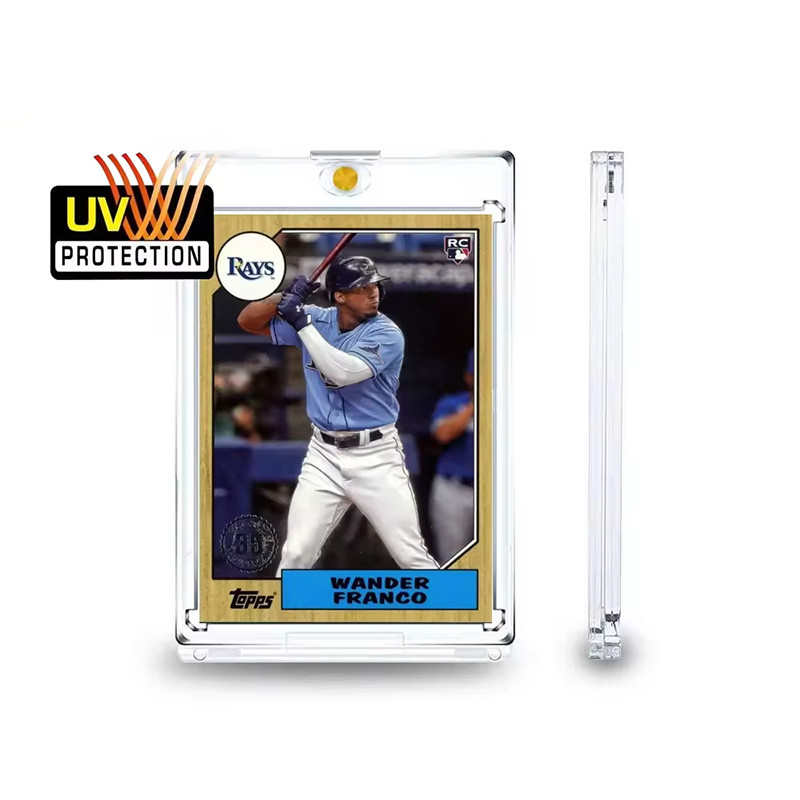
For graded cards, a clear slab holder adds an extra layer of scratch protection on top of the PSA, BGS, or CGC shell while the slab sits in storage.
Sealed Products: ETBs and Booster Boxes
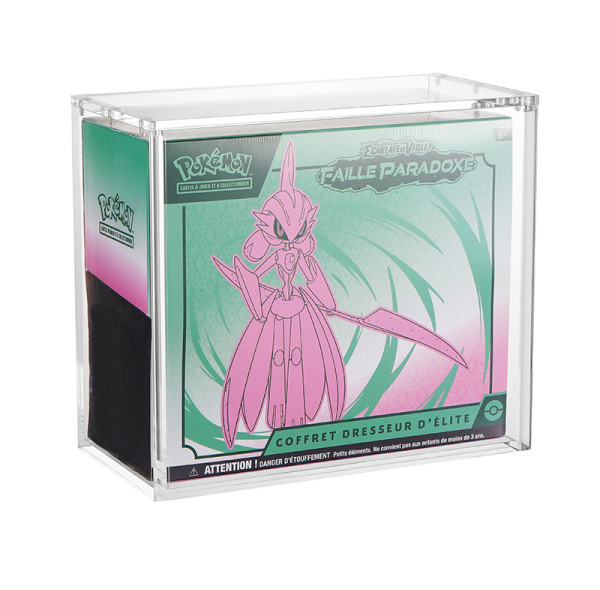
If you collect sealed product — Elite Trainer Boxes, booster boxes, or collection tins — treat them as a fourth category. Sealed product value depends almost entirely on condition, so protect the box itself: keep it out of direct sunlight, store it upright, and never stack heavy items on top. Acrylic display cases sized for ETBs and booster boxes protect against dust, scuffs, and UV while keeping the product visible — the best of both storage and display. Pokémon.com and TCGplayer guidance agree on the environment: cool, dry, and dark is the safe zone for sealed product.

An acrylic case keeps sealed ETBs and booster boxes clean, UV-shielded, and display-ready — protecting the product while you can still see it.
Binder vs. Storage Box vs. Toploader: Where Every Card Lives
| Feature | 9-Pocket Binder | Storage Box | Toploader |
|---|---|---|---|
| Best for | Master sets, favorites, display | Bulk commons, duplicates, trade stock | High-value singles, between binder and slab |
| Typical capacity | 540 cards (60-page, double-sided) | 400–1,600 cards per box | 1 card per holder |
| Protection level | Good when sleeved; pages stop dust and handling | Good; EVA/lockable versions add impact and moisture resistance | Highest — rigid, stops bending and corner damage |
| Space efficiency | Excellent — binder stands on a shelf | Excellent — boxes stack | Poor for volume — one card per holder |
| Ease of browsing | Best — flip pages to view | Fair — dig through dividers | Fair — must handle each holder |
| Cost per card | Low (pages hold 9 cards) | Lowest per card | Highest per card |
| Best used with | Penny sleeves, dividers, index tabs | Penny sleeves, cardboard dividers, labels | Penny sleeves, team bags |
The rule is simple: binders for what you want to see, boxes for what you want to store, toploaders for what you want to protect. Most collections need all three — they are not competitors, they are layers of one system.
Digital Organization: Apps and Spreadsheets
Physical organization pairs well with a digital inventory. A simple spreadsheet with columns for card name, set, number, rarity, condition, and location ("Binder 2, page 14" or "Box 3, divider B") makes any card findable in seconds. Dedicated collection apps — including Pokémon TCG-specific trackers and general TCG inventory tools such as Cardrake — automate set lists, market prices, and duplicate detection. Community guides consistently recommend the same workflow: scan or log cards when you sort them, update the log when you trade or sell, and photograph high-value cards for insurance records. Digital tracking turns a one-time organization project into a system that stays current.
Maintaining the System: Habits That Keep It Working
- Sort as you open: when you open packs, immediately drop cards into the right tier — binder pile, bulk pile, or toploader pile. Do not let a "pending" pile grow.
- Store binders upright: keep binders standing on a shelf in a cool, dry, dark place; avoid attics, garages, and direct sunlight.
- Revisit twice a year: schedule a quick re-sort after each major set release or a couple of times a year — collections drift, and ten minutes keeps them clean.
- Upgrade as value climbs: when a card's market value rises, move it up a tier — from binder to toploader, or toploader to grading.
- Label everything: boxes, dividers, and binder spines. Labels are what make a system survive contact with real life.
About GUARD TCG
GUARD TCG is the trading card accessories brand of a professional manufacturer founded in 2009, producing more than 300 million protective items every year for customers in 70+ countries, with 500+ distributors and 10,000+ retail partners worldwide. We manufacture the penny sleeves, toploaders, storage boxes, and acrylic display cases used in this guide under strict batch QC — every production batch is fully inspected — and we support OEM/ODM customization with a standard-product MOQ from 100 pieces. Our organization advice comes from building storage products for two decades and from what we hear from collectors and retailers across the globe. Browse the full range on our product list, read more storage guides on our blog, or send us an inquiry for wholesale and custom orders.
FAQ
Q1: Should I organize Pokémon cards by set or by rarity first?
Sort by set and number for your master-set binder — that is the standard collectors use to track completion. Within each set, keep rare and holo cards together at the end (matching official set numbering), and pull any card worth $10+ into a toploader regardless of category.
Q2: How many cards fit in a 9-pocket binder?
A standard 60-page 9-pocket binder holds 540 cards when loaded on both sides (18 per page). For master sets, load one side per set and use dividers — this leaves room to expand without reshuffling everything.
Q3: Do I need to sleeve cards before putting them in a binder?
Yes. Unsleeved cards slide inside binder pockets and pick up scratches over time. A penny sleeve (about 50 microns) protects the surface while still fitting standard 9-pocket pages comfortably.
Q4: What is the best way to store bulk commons?
Cardboard storage boxes with dividers, sorted by set and labeled on the outside. Sleeve anything you might trade or sell; leave true bulk commons unsleeved in divider sections to save money.
Q5: How should I store graded cards?
Store slabs flat in a dedicated graded-card storage box, and avoid stacking them more than a few high — the weight of tall stacks can stress the holders. Keep them in a cool, dry place out of direct sunlight, just like the rest of the collection.
Conclusion
Organizing a Pokémon card collection comes down to one idea: sort first, sleeve everything, and give each tier its own home — a 9-pocket binder for master sets and favorites, storage boxes for bulk, and toploaders or graded holders for the cards that matter most. Add dividers, labels, and a simple digital log, and the system keeps itself alive after every pack opening. An organized collection is easier to enjoy, easier to trade from, and easier to protect — and with cards in sleeves, pages, and boxes from a factory that has made 300 million-plus of them, your collection stays in the condition you worked so hard to keep.
Wholesale and OEM Supply
Need this range in bulk? GUARD TCG manufactures card binders and albums and offers OEM/ODM custom card accessories for brands, card shops and distributors. Browse the card binders and albums range, or request a wholesale quote.