How to Start Your Own TCG Accessories Brand: A Step-by-Step OEM Guide
How to Start Your Own TCG Accessories Brand: A Step-by-Step OEM Guide
To start your own TCG accessories brand, follow six steps in order: define a clear market position (category, customer, and price band), build a product mix of traffic, profit, and image items, choose an OEM or ODM factory you can verify, order and approve samples, run mass production with quality control checkpoints, and cold-start your sales channels. The fastest route for most founders is private label card accessories: take a proven standard product such as penny sleeves or toploaders, put your own brand on it, and scale from there. With card accessories OEM minimums that can start around 100 pieces for standard items, a focused first order is affordable enough to test a niche before you commit to custom tooling.
Why the TCG Accessories Market Is a Smart Entry Point
Trading card games have grown from a niche hobby into a global collectibles industry. Pokémon, Magic: The Gathering, Yu-Gi-Oh!, and newer games such as One Piece and Lorcana keep bringing in new players, and every player needs sleeves, toploaders, binders, deck boxes, and playmats to protect and carry their cards. Market observers and platforms such as TCGplayer and eBay consistently report that accessories sell alongside cards in steady volume, independent of single-card price swings. The key insight for a new brand owner is that card protection products are consumables with repeat purchases: players buy new sleeves every time a deck changes, and collectors buy storage every time their collection grows. This recurring demand makes the accessories category a more predictable business than speculating on card prices, which is why private label card accessories are one of the most common first products for new TCG brands.
Step 1: Define Your Positioning Before You Pick a Product
The most common mistake new brand owners make is choosing a product first and a market second. Reverse the order. Decide which customer you serve, which problem you solve, and what price band you operate in, because every product decision follows from that position.
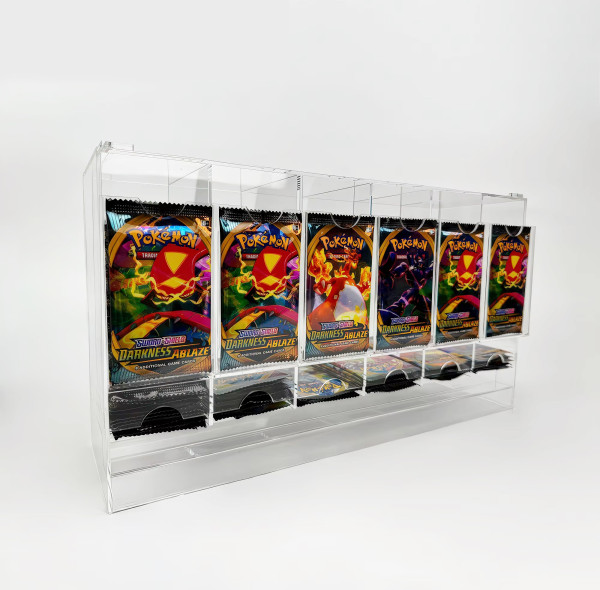
- Category: Competitive players (who buy deck protection and playmats), collectors (binders, toploaders, graded card storage), game stores (wholesale accessories and display units), or gift buyers (premium display cases). Pick one primary category for your first batch.
- Customer: Define the buying persona in detail – a tournament player replaces sleeves monthly; a sealed-collection investor needs UV-blocking display cases; a store owner cares about margin and shelf appeal. Your packaging, branding, and pricing all speak to this person.
- Price band: Budget (basic penny sleeves), mid-range (branded premium sleeves and toploaders), or premium (custom acrylic display cases and gift-ready packaging). The price band decides which factory capabilities and materials you need, not the other way around.
When you position first, your brand has a reason to exist beyond "another sleeve company." For example, a brand focused on tournament players can justify a mid-premium price with matte finish sleeves and crush-resistant toploaders, while a brand aimed at parents buying gifts for young collectors needs playful packaging more than tournament durability.
Step 2: Build a Product Mix with Traffic, Profit, and Image Products
Experienced sourcing teams plan a small portfolio instead of a single SKU. A classic structure has three layers:
- Traffic products: Cheap, high-volume items that bring people to your store – penny sleeves, standard toploaders, and basic deck boxes. Margins are thin but demand is constant, and these products earn reviews and search visibility.
- Profit products: Items where your brand can command better margins – matte sleeves in original designs, magnetic one-touch holders, graded card binders, and bundle kits. Customers who found you through traffic products buy these at higher value.
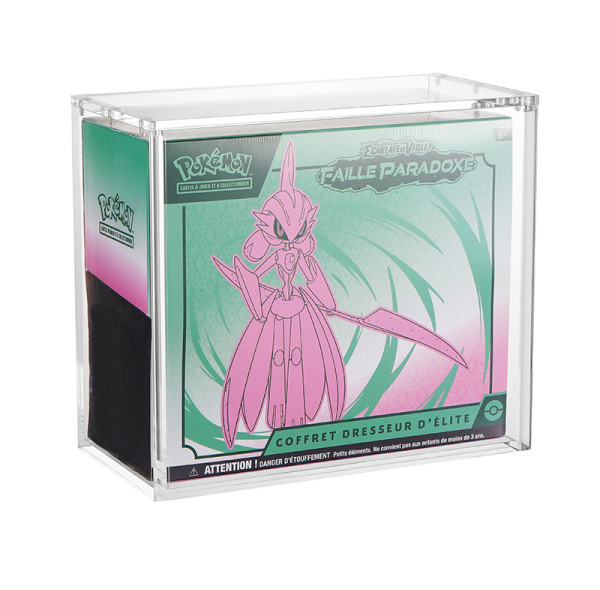
- Image products: Signature pieces that make your brand memorable – custom acrylic display cases, premium playmats, or limited colorways. These sell in smaller volume but support premium pricing across the whole range and get shared on social media.
For a first order, most founders start with one traffic product and one profit product, then add an image product once sales data arrives. This keeps your cash tied up in inventory that is proven to sell while your brand identity matures.

OEM vs. ODM vs. Private Label: Which Model Fits a New Brand?
New founders often use the three terms interchangeably, but they mean different levels of control and investment. The model you choose determines your minimum order quantity, your design workload, and how unique your product can be.
| Feature | Private Label | OEM (Contract Manufacturing) | ODM (Design + Manufacturing) |
|---|---|---|---|
| Who designs the product | Factory's existing design | Your drawings and specs | Factory designs to your brief |
| What you customize | Branding and packaging | Materials, dimensions, printing | Full product concept |
| Typical minimum order | Lowest – from ~100 pcs | Medium – hundreds to thousands | Higher – often thousands |
| Design work required from you | Almost none | High – you provide specs | Brief and approvals only |
| Uniqueness in the market | Low – same base product | Medium – your specs | High – exclusive design |
| Best for | First-time brand owners | Brands with clear specs | Brands launching signature items |
For a first brand, the usual recommendation is to start with private label or light OEM (your logo, your packaging) on a standard product, validate demand, and move to OEM tooling or ODM exclusivity for later SKUs. This path keeps upfront risk low and gives you negotiating history with the factory.
Step 3: Screen and Verify Your Card Accessories Manufacturer
Not every supplier you find online is the factory it claims to be, so verification matters more than a pretty website. A credible card accessories manufacturer should pass these checks:
- Business credentials: Ask for business registration, export licenses, and proof of the factory address. Cross-check that the address matches the facility you are shown.
- Production capability: Confirm they actually make the category you want – film sleeves, rigid PVC toploaders, and acrylic fabrication are different production lines. A "full-range" supplier should be able to show you the relevant line running.
- Scale signals: Annual output, number of production lines, and years in business indicate whether they can handle repeat orders. For reference, GUARD TCG's manufacturing group was established in 2009 and produces more than 300 million card protection items per year for customers in over 70 countries.
- Sample quality: Order samples before any bulk commitment. Check material feel, transparency, dimensional accuracy, and edge finishing against your expectations.
- QC process: Ask how quality is checked per batch. Batch-level full inspection – not just random spot checks – is the standard a serious manufacturer applies to card sleeves and protectors where 0.1 mm differences matter.
- Communication: Response speed and clarity in the inquiry stage predict how the relationship will feel during production. If a supplier is slow before you pay, they will not get faster after.

Step 4: Sampling – What to Expect and What It Costs
Sampling is where your brand starts to feel real. For standard private label products, the factory usually sends a blank or existing sample quickly so you can evaluate the base item, then produces a branded sample with your logo and packaging. For custom OEM work, sampling is a two-stage process: a development sample confirms materials and construction, and a final pre-production sample confirms your exact design before mass production begins.
- Sample fees: Many factories charge a sample fee that is credited back when you place a production order. Expect blank samples to be cheap or free, while custom printed or custom molded samples carry tooling and setup costs.
- Lead time: Standard product samples typically ship within days; custom printed sleeves and acrylic products need 7–15 days for sampling, plus courier time. Factor this into your launch calendar.
- What to check on a sample: Material thickness and feel, print color accuracy, logo registration, size tolerance, packaging quality, and whether the product protects a real card exactly as intended. Put an actual card inside sleeves and toploaders during evaluation – fit is everything in this industry.
- Document approvals: Approve samples in writing with photos and notes. A signed sample approval prevents disputes about color or finish when the bulk order arrives.
Step 5: Mass Production and Quality Control Checkpoints
Once your sample is approved, production quality depends on clear specifications and agreed checkpoints. Set expectations in writing before the order starts: material spec, dimensions and tolerances, color standard, packaging, carton markings, and the inspection method.
Professional manufacturers build QC into the process rather than only at the end. For card sleeves and films, production checks cover film gauge consistency, print registration, and scratch resistance. For rigid protectors such as 35PT toploaders, the checks focus on dimensional accuracy so cards fit without rattling or binding. For acrylic display cases, clarity, edge polish, and precise fit matter most. A manufacturer that performs batch-level inspection of every production lot – rather than sampling a few pieces – gives you the confidence to sell under your own brand name, because a defect shipped under your label becomes your reputation problem.
Two practical rules: always request pre-shipment inspection results or third-party inspection for your first few orders, and keep a physical production sample from the approved batch as the reference for future reorders. Consistent quality is what turns a first customer into a repeat customer.

Step 6: Cold-Start Your Sales Channels
Production is only half the business; the other half is distribution. Most new TCG accessory brands choose one primary channel first and expand once it proves itself.
- E-commerce marketplace (Amazon, eBay): Fastest way to reach buyers searching for card protection products. Winning the buy box on core keywords such as "card sleeves" and "toploaders" requires competitive pricing and review velocity, which is why traffic products are a good marketplace entry.
- Own online store: Best for brand building and margins. Combine it with content marketing – the kind of education-first articles collectors actually search for – to attract organic traffic. Link your store pages from the content so readers can buy the exact product they just learned about.
- Social and community: Pokémon, MTG, and sports card communities on YouTube, TikTok, Reddit, and Discord are where collectors discover new brands. Honest protection tests and unboxings outperform traditional ads in this audience.
- Wholesale to game stores: Local game stores are a reliable B2B channel. A clean wholesale sheet with margin-friendly pricing and low order thresholds can put your brand on real shelves, and display-ready packaging helps stores say yes.
- Trade shows: For B2B brands, shows focused on toys, collectibles, and games are where distributors are found. Bring samples, a price list, and a simple line sheet.
Whichever channel you start with, keep the first product range tight. A focused launch with excellent listing quality beats a wide catalog with thin listings every time.

About GUARD TCG
GUARD TCG is the trading card accessories brand of a manufacturing group established in 2009 that produces more than 300 million card protection items per year and exports to over 70 countries. With more than 10,000 customers and 500+ distributors worldwide, we support new brands through OEM and ODM programs: private label card sleeves and toploaders with low minimums for your first order, custom printing and packaging, and fully custom acrylic display products for signature SKUs. Our standard-product minimum order quantity starts around 100 pieces, every batch passes in-house QC inspection, and our logistics partners (DHL, FedEx, and UPS express in 5–12 days, sea freight in 25–35 days) ship worldwide. If you are ready to start your own TCG accessories brand, browse our full product range, read more in our blog, learn about our factory background, or send us an inquiry for OEM and private label pricing.
FAQ
Q1: How much startup capital do I need for a TCG accessories brand?
A lean first launch is realistic with a few thousand dollars: sample fees, a first small production order of one or two SKUs, packaging design, and marketplace or store setup. Private label standard products with a low minimum order quantity keep the first inventory investment small. Reserve extra budget for samples of multiple suppliers and for shipping, because those costs are easy to underestimate.
Q2: How many SKUs should my first order include?
Start with two: one traffic product (such as penny sleeves or toploaders) to generate volume and reviews, and one profit product (such as matte sleeves or a storage bundle) to build margin. Add an image product later once you have sales data. A tight first range keeps your cash in inventory that is proven to move.
Q3: Do I need to pay for samples, and is the fee refundable?
Most reputable manufacturers charge a small sample fee, and many credit it back against your first production order. Blank samples of standard products are often low-cost or free; custom printed or custom molded samples cost more because they require setup. Always confirm the sample fee policy and whether it is deductible before ordering.
Q4: Can I start with private label and move to custom products later?
Yes, and this is the recommended path for most founders. Start with private label on a proven standard product to validate demand with minimal risk, then progress to OEM specifications and eventually ODM-exclusive designs as your sales volume gives you negotiating power. Factories like GUARD TCG support this full journey under one account.
Conclusion
Starting your own TCG accessories brand is a step-by-step process: position your brand around a specific collector or player, choose a product mix of traffic, profit, and image items, select and verify an OEM or ODM manufacturing partner, approve samples before committing, run mass production with batch-level QC checkpoints, and cold-start one focused sales channel. The smartest first move is private label card accessories on a proven product with a low minimum order, which lets you test the market before investing in custom tooling. The demand for card protection is recurring and global, and a well-made product under your own brand can grow from a single SKU into a full range. When you are ready to take the first step, GUARD TCG's OEM team works with first-time brand owners every day – contact us for a quote, or start with our private label penny sleeves.
Wholesale and OEM Supply
Need this range in bulk? GUARD TCG manufactures trading card sleeves and offers OEM/ODM custom card accessories for brands, card shops and distributors. Browse the trading card sleeves range, or request a wholesale quote.