OEM vs. ODM vs. Private Label: What's the Difference for Card Accessories?
OEM vs. ODM vs. Private Label: What's the Difference for Card Accessories?
OEM (Original Equipment Manufacturing) means a factory builds a product to your drawings and specifications; ODM (Original Design Manufacturing) means the factory designs and manufactures the product while you supply the brief and your brand; Private Label means you take a factory's existing, proven product and simply put your own logo and packaging on it. The three models differ mainly in customization depth, design workload, mold and tooling cost, and minimum order quantity – from the lowest-entry private label card accessories (standard items can start around 100 pieces) to fully exclusive OEM tooling. Understanding OEM vs. ODM vs. private label before you order is what separates a clean brand launch from months of rework and unexpected mold bills.
What Is OEM in Card Accessories Manufacturing?
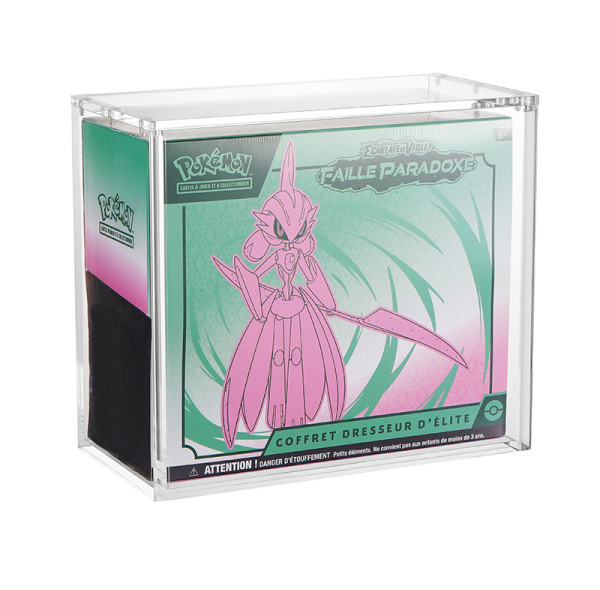
OEM, short for Original Equipment Manufacturing, describes a relationship in which you are the designer and the factory is your production arm. You specify the material, the dimensions, the print, the packaging, and the quality standard, and the factory manufactures exactly what your documents describe. In the card accessories world, OEM work covers everything from a custom-thickness toploader with your tolerances and logo, to a custom acrylic display case cut to the dimensions of a product you sell, to a deck box in a color you will not find in any standard catalog.
The trade-off is ownership and cost. Because the design, and often the tooling, belongs to you, an OEM product can be genuinely unique in the market – but you carry the development cost and a higher minimum order quantity to amortize the setup. Industry practice in contract manufacturing (the same model Apple uses with Foxconn, as business glossaries such as Investopedia explain) is that the buyer owns the intellectual property and the molds, and pays for both.

What Is ODM? When the Factory Designs and You Brand It
ODM, Original Design Manufacturing, flips the design responsibility. Instead of handing the factory your blueprints, you hand them a brief – "I want a display case for Pokémon Elite Trainer Boxes with UV protection and crystal-clear acrylic" – and the factory's own design and engineering team develops the product for you. You approve samples, add your branding, and sell the result under your name.
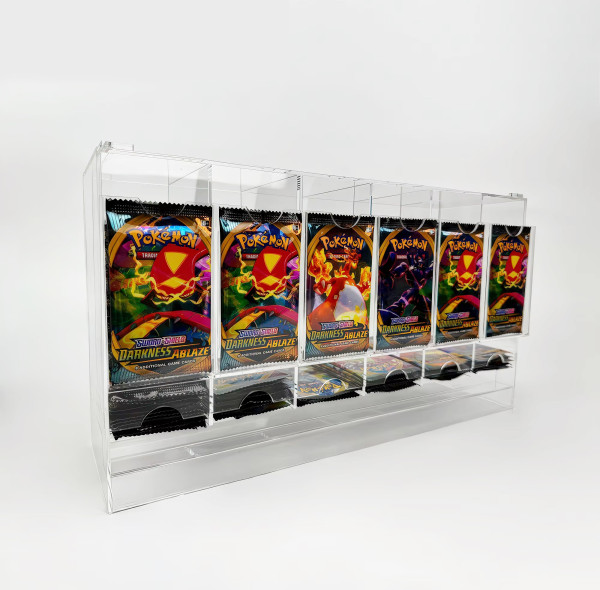
ODM is popular in the trading card accessories industry because the tooling-heavy products – magnetic one-touch holders, custom acrylic cases, and graded card storage – require engineering experience that most new brands do not have in-house. The factory's existing molds and design libraries keep both cost and lead time far below a from-scratch OEM project, and exclusivity can often be negotiated: many ODM suppliers will grant you exclusive rights to a design within your market or channel for an agreed volume commitment.
What Is Private Label? The Fastest Route to Your Own Brand
Private label is the simplest of the three: the factory makes a standard product it already sells – penny sleeves, toploaders, deck boxes – and you buy it with your brand printed on the packaging (and often on the product itself). You are not changing the engineering; you are changing the label.
This is why private label trading cards accessories are the classic first step for new brands. There is no mold cost, no design cycle, and the minimum order is the lowest of the three models – at GUARD TCG, standard-product MOQs start around 100 pieces. The trade-off is that the base product is the same one competitors can access, so your differentiation comes from branding, packaging, and service rather than the product design itself.

OEM vs. ODM vs. Private Label: Side-by-Side Comparison
The fastest way to see which model fits your situation is to compare them on the decisions that actually matter: who designs, who owns the tooling, what you pay upfront, and how long the whole process takes.
| Feature | Private Label | ODM (Factory Design) | OEM (Your Design) |
|---|---|---|---|
| Who designs the product | Factory's existing product | Factory's design team, from your brief | You – drawings and specifications |
| What you customize | Logo and packaging | Concept, features, branding | Material, dimensions, print, everything |
| Who owns the design/tooling | Factory | Factory (exclusivity negotiable) | You, if agreed in the contract |
| Mold and tooling cost | None – stock molds | Usually factory or shared (industry estimate) | You pay; varies with complexity (industry estimate) |
| Typical minimum order | Lowest – from ~100 pcs (GUARD TCG standard) | Medium – hundreds to low thousands | Highest – often 1,000+ units for new tooling |
| Time to market | Fastest – weeks | Medium – design plus sampling | Longest – development and mold lead time |
| Product uniqueness | Low – same base product | Medium to high – exclusive designs possible | High – built to your spec only |
| Best for | First-time brands testing a niche | Brands that want exclusive products without an engineering team | Brands with clear specs and volume |
One practical note: in the trading card accessories industry, the line between ODM and private label is often blurry – many suppliers advertise "OEM/ODM" and will happily do a color change, a logo print, or a small design tweak on a standard product. Ask exactly what is included before you assume a model.

How Card Accessories Brands Actually Use These Three Models
Real brands rarely use one model exclusively – they mix them by product line. Here is how the models show up in practice across the categories a typical TCG accessories range covers:
- Color and logo changes (light ODM): Standard penny sleeves, 35PT toploaders, and deck boxes printed in your colors with your logo. You are not redesigning anything, but the product looks like yours on a store shelf.
- Exclusive molding (OEM/ODM): Products like graded card slabs, magnetic one-touch holders, and custom acrylic cases often start from an existing factory mold with your dimensions and branding, then move to a mold opened exclusively for you once volume justifies it.
- Print-on-demand style private label: Playmats and printed card sleeves where the factory's production method (sublimation or digital printing) allows short runs with your artwork – a low-risk way to test designs before committing to inventory.
- Hybrid ranges: The most common structure among successful brands we see: private label basics for volume and cash flow, an ODM signature product for differentiation, and one OEM project for the flagship item that defines the brand.

How to Choose: Budget, Design Capability, and Timeline
Three questions decide between OEM vs. ODM vs. private label for your card accessories project:
- Do you have a complete, documented design? If yes, OEM lets you execute it exactly and own the result. If you only have an idea or a reference photo, ODM gives you the factory's engineers to close the gap. If you have neither and just want to sell, start private label.
- What is your budget for tooling and inventory? Private label has no mold cost and the smallest minimums (GUARD TCG standard items start around 100 pieces). ODM usually shares or absorbs tooling in exchange for volume commitments. OEM means you pay for molds and typically commit to the highest quantities, so it belongs in the plan once you have sales data – not before.
- How fast do you need to launch? Private label can reach your store in weeks because the product already exists. ODM needs a design and sampling cycle. OEM with new tooling carries the longest lead time. If a promotion or season has a hard date, choose the model whose timeline fits it.
A simple rule used by many importers: if you are answering "what is OEM ODM private label" for your first order, the answer is almost always – start with private label or light ODM on a standard product, validate demand, and progress to exclusive OEM tooling with the revenue you earn.
A Realistic Roadmap: From Private Label to Exclusive Tooling
Most GUARD TCG customers who now run exclusive molds started exactly where you are. A typical progression looks like this:
- Step 1 – Private label basics: Order branded penny sleeves and toploaders (from ~100 pieces) to test your niche, your packaging, and your sales channel with minimal cash at risk.
- Step 2 – Light ODM: Add a product where the factory adjusts an existing design – a deck box in your colors, a display case sized for the specific sealed product your audience collects – and negotiate exclusive rights in your market.
- Step 3 – OEM flagship: Once a SKU proves itself with reorders, invest in tooling for a product built entirely to your specification, so the design and mold become an asset of your brand rather than a catalog item any competitor can copy.
Each step builds on the last: the sales data from step 1 justifies the exclusivity of step 2, and the volume from step 2 pays for the tooling of step 3. Brands that try to start at step 3 usually pay for molds twice – once for a product nobody has tested, and again after redesigning it.

About GUARD TCG
GUARD TCG is the trading card accessories brand of a manufacturing group established in 2009 that produces more than 300 million card protection items per year and exports to over 70 countries. With more than 10,000 customers and 500+ distributors worldwide, we run full OEM, ODM, and private label programs for card sleeves, toploaders, acrylic display cases, graded card storage, and more. Standard-product minimums start around 100 pieces for private label orders, every batch passes in-house QC inspection, and shipping runs DHL/FedEx/UPS express in 5–12 days or sea freight in 25–35 days. Browse our full product range, read about our factory background, check more buying guides on our blog, or send us an inquiry to discuss which model fits your brand.
FAQ
Q1: How much does mold or tooling cost for custom card accessories?
Tooling cost depends on the product's complexity. Simple projects such as printing plates for card sleeves are inexpensive, while injection molds for products like magnetic holders or custom slab cases range widely – from a few hundred to several thousand dollars depending on cavity count and material (industry estimate, since every mold is quoted individually). Always ask the factory for a written tooling quote including ownership terms before committing.
Q2: Can an ODM product be exclusive to my brand?
Yes, in most cases. Factories can grant exclusivity for an ODM design within your market, channel, or customer type, usually in exchange for a minimum volume commitment over an agreed period. Put the exclusivity terms in writing and confirm whether the mold can be transferred to you later if you want to take the product OEM.
Q3: What is the minimum order for private label card accessories?
At GUARD TCG, standard-product private label orders start around 100 pieces, which makes branded penny sleeves and toploaders an affordable first test. Custom printed or custom molded products require higher quantities because of setup and tooling. Ask for the MOQ per product type, not a single number, because sleeves, toploaders, and acrylic cases all differ.
Q4: If I pay for an OEM mold, do I own it?
Only if your contract says so. In OEM arrangements the buyer usually owns the tooling they paid for, but ownership must be written into the agreement along with where the mold is stored and what happens if you change factories. In ODM and private label, the factory owns the design and molds unless exclusivity or transfer terms are negotiated separately.
Conclusion
OEM, ODM, and private label are three different levels of the same relationship: private label puts your brand on a factory's proven product with the lowest cost and minimum order; ODM gives you factory-designed products with exclusivity options and no engineering team required; OEM builds products to your own specifications with full ownership and the highest investment. For card accessories, the practical answer to OEM vs. ODM vs. private label is rarely "pick one forever" – successful brands start with private label trading cards accessories to test the market, add ODM exclusivity as products prove themselves, and graduate to OEM tooling for their flagship SKUs. Whatever your starting point, choose a manufacturing partner who is honest about MOQs, mold costs, and ownership terms before you sign – contact GUARD TCG for a private label quote or an OEM/ODM consultation, and see our product catalog for the standard items you can brand today.
Wholesale and OEM Supply
Need this range in bulk? GUARD TCG manufactures acrylic display cases and offers OEM/ODM custom card accessories for brands, card shops and distributors. Browse the acrylic display cases range, or request a wholesale quote.