One-Touch vs. Toploader: Which Card Protector Should You Actually Buy?
One-Touch vs. Toploader: Which Card Protector Should You Actually Buy?
For everyday bulk protection, buy toploaders: they cost roughly $0.15–$0.30 per holder, are light, stackable, and are the shipping standard for trading cards. For high-value singles you want to display, buy a magnetic one-touch holder: it costs about $1.40–$3.00 or more but offers a crystal-clear, UV-blocking case with a secure magnetic closure. The short answer: 90% of your collection belongs in toploaders, and the top 5–10% of cards you actively show off deserve one-touch holders.
What Is a One-Touch Holder?
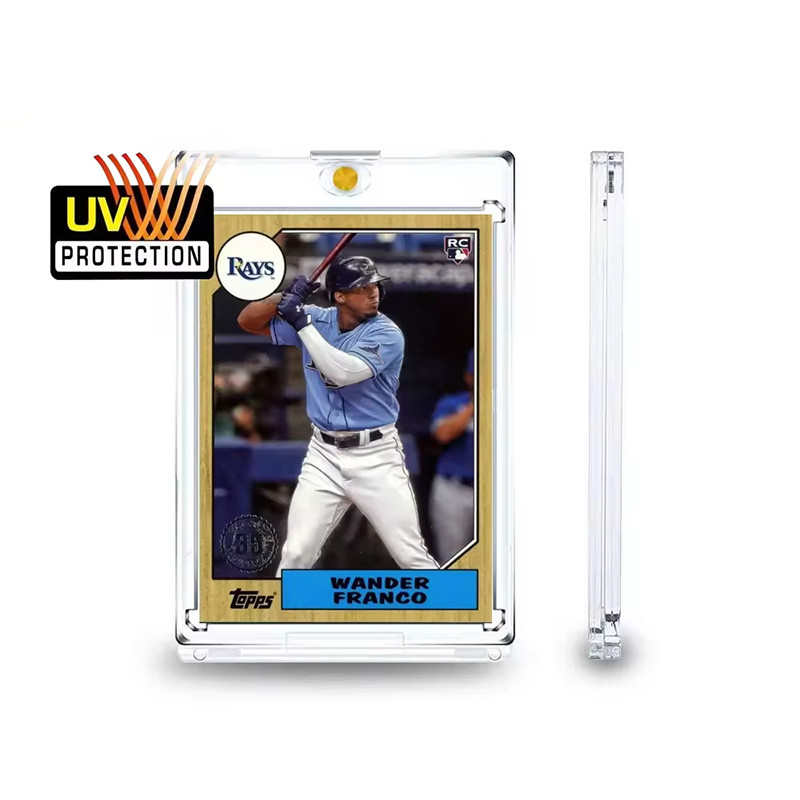
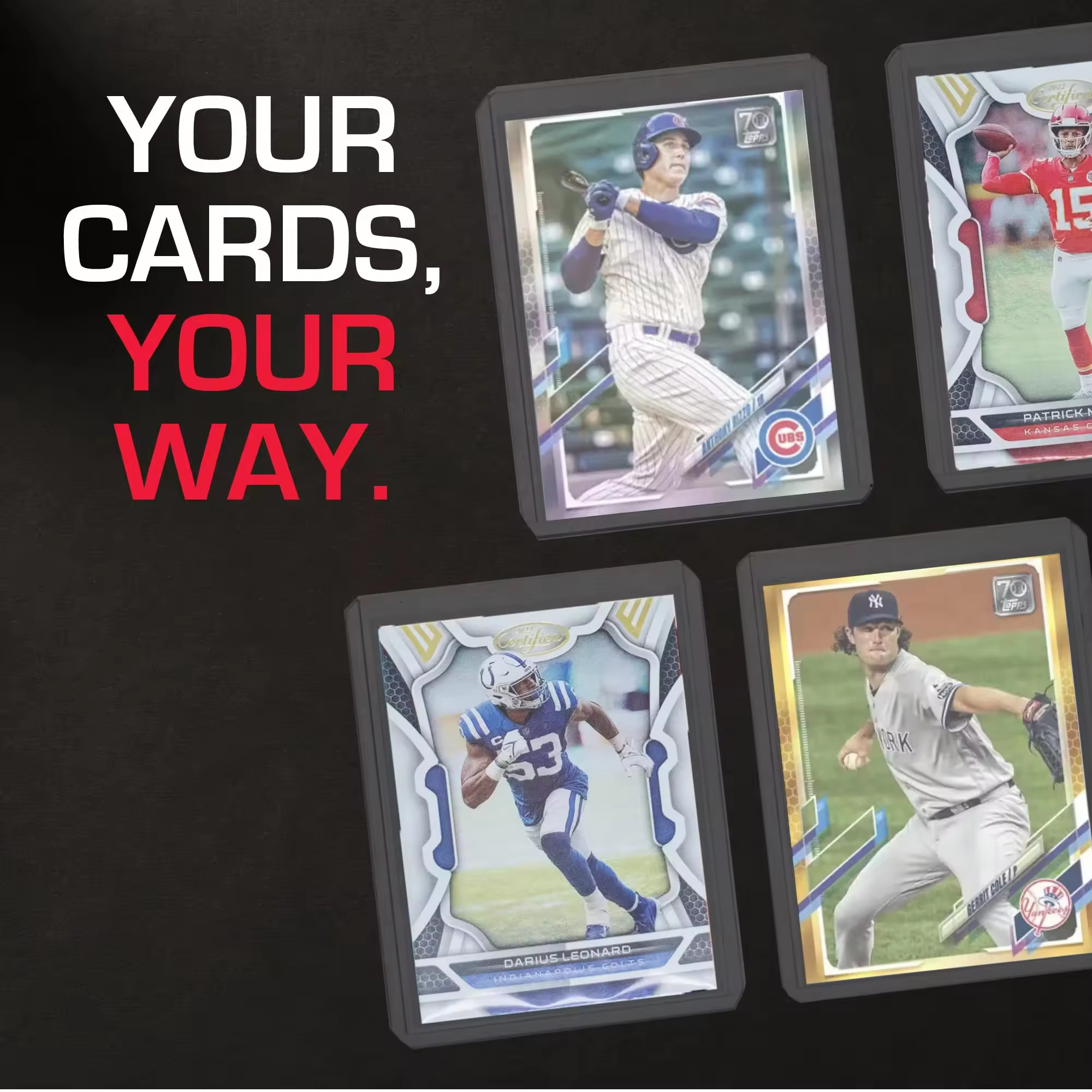
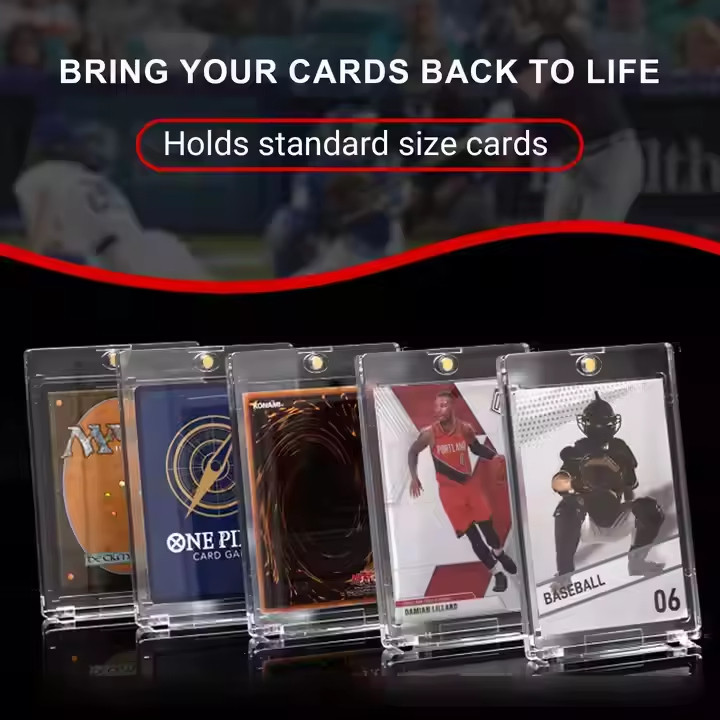
A one-touch holder (often written ONE-TOUCH, and sometimes called a magnetic card holder or mag holder) is a rigid, two-piece clear case that snaps shut with an embedded magnetic closure. Unlike toploaders, no tape is needed: you place the card in the recessed cavity and close the lid, and strong magnets hold it shut. Premium one-touch holders from brands such as Ultra Pro add UV-blocking additives, non-PVC acid-free materials, and diamond-shaped corner guards to preserve card corners in mint condition.
One-touch holders are made in multiple cavity depths measured in PT: 35PT for standard sleeved cards, 55PT for autographs or perfect-fit-sleeved cards, and 75PT up to 360PT for jersey relics, patches, and booklet cards. Choosing the right depth matters, because a cavity that is too shallow presses on the card and a cavity that is too deep lets the card shift and rattle.
What Is a Toploader?
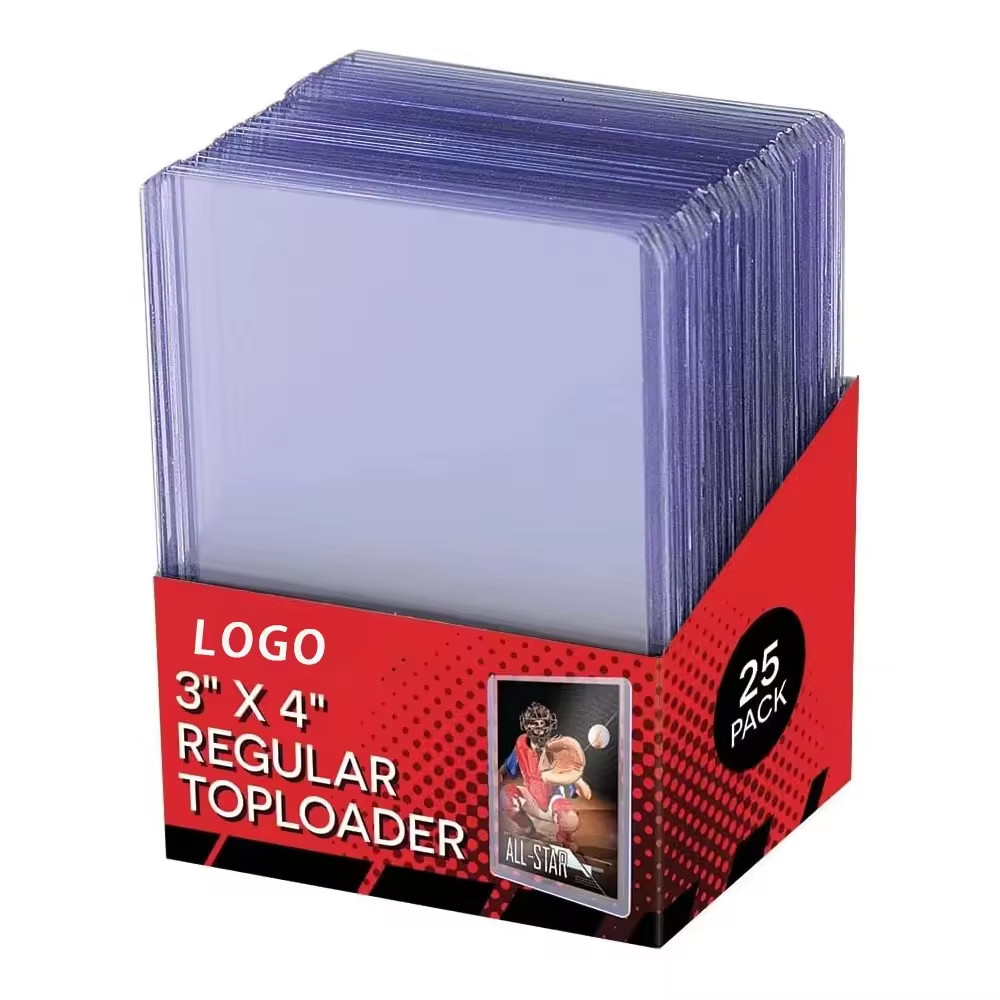
A toploader is a rigid, one-piece protector made of clear polypropylene (PP) or PVC-free plastic, open at one end so the card slides in from the top (hence the name). Standard 35PT toploaders measure about 3" x 4" and fit a standard 63.5 x 88 mm trading card inside a penny sleeve, while thicker 55PT to 180PT+ sizes handle chrome cards, relics, and patches.
Toploaders are the default protector in the hobby for three reasons: they are cheap, they are light, and they are universally accepted for shipping. Most collectors keep bulk commons and mid-value cards in toploaders inside a card box, then upgrade only their showcase cards to pricier protection.
One-Touch vs. Toploader: Side-by-Side Comparison
Here is how the two protectors compare across the factors that actually drive buying decisions (prices are retail estimates from major card accessory sellers):
| Feature | Toploader | One-Touch Holder |
|---|---|---|
| Price per holder | ~$0.15–$0.30 | ~$1.40–$3.00+ |
| Closure | Open top, tape or team bag needed | Built-in magnets, no tape |
| Protection level | Good against bending, dust, scratches | Excellent; sealed cavity, corner guards |
| UV protection | Rarely offered | UV-blocking models available |
| Display quality | Functional, utilitarian look | Premium, shelf- and frame-ready |
| Weight and shipping | Light, cheap to mail | Heavier and thicker, costlier to mail |
| Stacking and storage | Stacks neatly in card boxes | Bulkier, takes more space |
| Best use case | Bulk storage, shipping, grading prep | Displaying and handling premium singles |
Neither option is "better" in absolute terms; they solve different jobs. The rest of this guide helps you decide which job you are actually solving.
The Cost Math: Protecting 100 Cards Each Way
Money is the clearest differentiator. Assume each card gets a penny sleeve plus a rigid protector, at typical retail prices (industry estimate based on major card accessory retailers):
- Toploader route (100 cards): 100 penny sleeves (~$3–$5) + 100 toploaders (~$15–$30) = roughly $18–$35 total.
- One-touch route (100 cards): 100 penny sleeves (~$3–$5) + 100 one-touch holders (~$140–$300) = roughly $143–$305 total.
- Hybrid route (recommended): toploaders for ~95 bulk cards (~$20) + one-touch holders for 5 showcase cards (~$10–$15) = about $30–$35 total with display value where it counts.
Spending $3 to protect a $10 card rarely makes sense; spending $3 to protect a $500 card you handle and show off often does. That is the core financial logic behind the hybrid approach most serious collectors end up using.
Which One Should You Use for Storage and Organization?
For storage, toploaders win for almost everything except a small display shelf:
- Bulk boxes and binders: toploaders stack efficiently in two-row and four-row card boxes, and they fit neatly in most storage systems.
- One-touch in drawers: one-touch holders are bulkier and heavier, so a drawer of 100 one-touch holders takes roughly twice the space of 100 toploaders.
- Display shelf or desk: one-touch holders look premium and stand on their own; toploaders lean or need a stand and look utilitarian.
- Climate control: both store well in a cool, dry environment (roughly 18–24°C, 40–50% relative humidity). Sealed one-touch holders add a bit more protection against dust and light.
Our factory recommendation: keep your working collection in toploaders inside labeled card boxes, and reserve one-touch holders for the handful of cards you rotate onto a shelf or desk.
Which One Should You Use for Shipping and Grading Prep?
For shipping, toploaders (or card savers) are the standard, and one-touch holders are usually overkill:
- Mailing singles: a sleeved card in a toploader, wrapped in a team bag and slid between two pieces of stiff cardboard, is the classic safe-shipping sandwich. It is light, cheap, and easy to replace if damaged in transit.
- One-touch for mail: one-touch holders add weight and thickness, which raises postage, and they are expensive to lose to rough handling.
- Grading prep: according to PSA's official submission guidelines, cards should be shipped in a penny sleeve inside a semi-rigid card saver rather than a standard toploader. Either way, the card comes out of its toploader or one-touch holder before grading, so don't buy premium holders for cards that are heading to a grading service.
The exception: if you ship a high-value raw card and want maximum crush resistance, a one-touch holder inside a rigid mailer is a defensible choice, but it raises cost and postage for marginal extra safety.
How to Choose the Right One-Touch Holder (If You Go That Route)
If your card justifies a one-touch holder, match the holder to the card in four ways:
- Cavity depth (PT): use 35PT for a standard sleeved card, 55PT for autographs or perfect-fit-sleeved cards, and 75PT+ for relics and patches. When in doubt, go one size up, but not so loose that the card rattles.
- Sleeve compatibility: decide first whether the card stays sleeved inside the holder. A sleeved card needs a deeper cavity than a bare card.
- UV protection: if the card sits in sunlight or under display lighting, pick a UV-blocking model to slow ink fading.
- Magnet strength: choose a holder whose magnets hold the case firmly closed when you shake it gently, so the card cannot fall out if the case is knocked over.
For cards that will eventually be graded, skip the one-touch step entirely and keep them in a penny sleeve inside a card saver until submission.
Best Practices: Building a Hybrid Protection System
Collectors who protect both their budget and their cards use a tiered system. This is the pattern we see from thousands of customers (and the one we recommend from the factory floor):
- Tier 1 – bulk commons: penny sleeve only, stored in a binder or box.
- Tier 2 – mid-value cards (~$10–$200): penny sleeve + toploader, stored upright in a card box.
- Tier 3 – high-value or frequently handled cards ($200+): penny sleeve + one-touch holder with UV protection.
- Tier 4 – shipping: downgrade to penny sleeve + card saver or toploader with cardboard reinforcement for transit.
This system keeps your average cost per protected card near toploader prices while giving your best cards the display-grade protection they deserve.
About GUARD TCG
GUARD TCG is the trading card accessories brand of a manufacturer founded in 2009, producing over 300 million card protection items per year for customers in more than 70 countries. We serve over 10,000 clients through 500+ distributors, offering OEM/ODM customization with standard-product minimum orders from 100 pieces, DHL/FedEx/UPS delivery in 5–12 days or sea freight in 25–35 days, and batch-level QC inspection on every production run. From 35PT toploaders and premium penny sleeves to magnetic-style holders and graded slab cases, everything is made in our own factory, so quality and lead times stay under our control. This article was written by the GUARD TCG Team based on our production experience and industry research.
FAQ
Q1: Can one-touch holders be stacked?
Yes, but keep stacks short and even. One-touch holders are heavier than toploaders, so stack them flat in modest piles or store them upright in a dedicated box to avoid pressure on the bottom cases.
Q2: Which one should I use for shipping cards?
Use a toploader (or a semi-rigid card saver for grading submissions). Toploaders are lighter, cheaper to mail, and easier to reinforce with cardboard. Reserve one-touch holders for display.
Q3: Will a magnet in a one-touch holder damage my card?
No. Trading cards have no magnetic media, so the closure magnets pose no risk to the card itself. Keep magnetic holders away from items that do use magnetic storage, such as credit cards or hard drives.
Q4: What PT one-touch holder do I need for a sleeved card?
Most standard sleeved cards fit a 35PT cavity; if the card is in a thicker perfect-fit plus outer sleeve, move up to 55PT so the card is not pressed.
Q5: Can I put a toploader inside a one-touch holder?
No. Use one layer of protection at a time: a penny sleeve inside the one-touch holder, or a penny sleeve inside a toploader, but never stack both rigid cases.
Conclusion
Buy toploaders for the bulk of your collection: they are the cheapest, lightest, and most shipping-friendly rigid protector in the hobby, and they handle 90% of cards perfectly. Buy one-touch holders for the top 5–10% of your cards, the high-value or frequently handled singles you want to display in a premium, UV-blocking case. Match the one-touch cavity depth (35PT standard, 55PT for sleeved autos, 75PT+ for relics) to your card, keep shipping and grading prep on toploaders or card savers, and you get full protection without paying premium prices for every single card. At GUARD TCG, every toploader, sleeve, and case is factory-made with batch QC and backed by OEM/ODM support for collectors and retailers alike.
Wholesale and OEM Supply
Need this range in bulk? GUARD TCG manufactures magnetic one-touch card holders and offers OEM/ODM custom card accessories for brands, card shops and distributors. Browse the magnetic one-touch card holders range, or request a wholesale quote.