Penny Sleeves vs. Perfect Fit vs. Double Sleeving: The Complete Guide
Penny Sleeves vs. Perfect Fit vs. Double Sleeving: The Complete Guide
Penny sleeves, perfect-fit inner sleeves, and double sleeving are three levels of the same protection ladder: a penny sleeve is the cheap, loose-fitting first line of defense; a perfect fit is a precise, snug inner sleeve; and double sleeving stacks a perfect fit inside a standard outer sleeve for tournament-grade protection. On a budget, penny sleeves are fine for bulk storage. For cards you actually care about, double sleeving with a perfect-fit inner sleeve delivers the best protection per dollar. This complete guide compares all three across fit, cost, durability, and real-world use cases, with the exact steps to double sleeve correctly.
What Are Penny Sleeves, Perfect Fit Sleeves, and Double Sleeving?
Penny sleeves are the classic thin, soft card protectors, usually made of clear polypropylene around 40-50 microns thick and cut slightly larger than the card so the card slides in and out easily. They guard against dust, fingerprints, and surface scratches, but they offer almost no rigidity, so a penny-sleeved card can still bend. The name comes from the old street price of about one cent per sleeve, and they remain the cheapest protection you can buy in bulk.
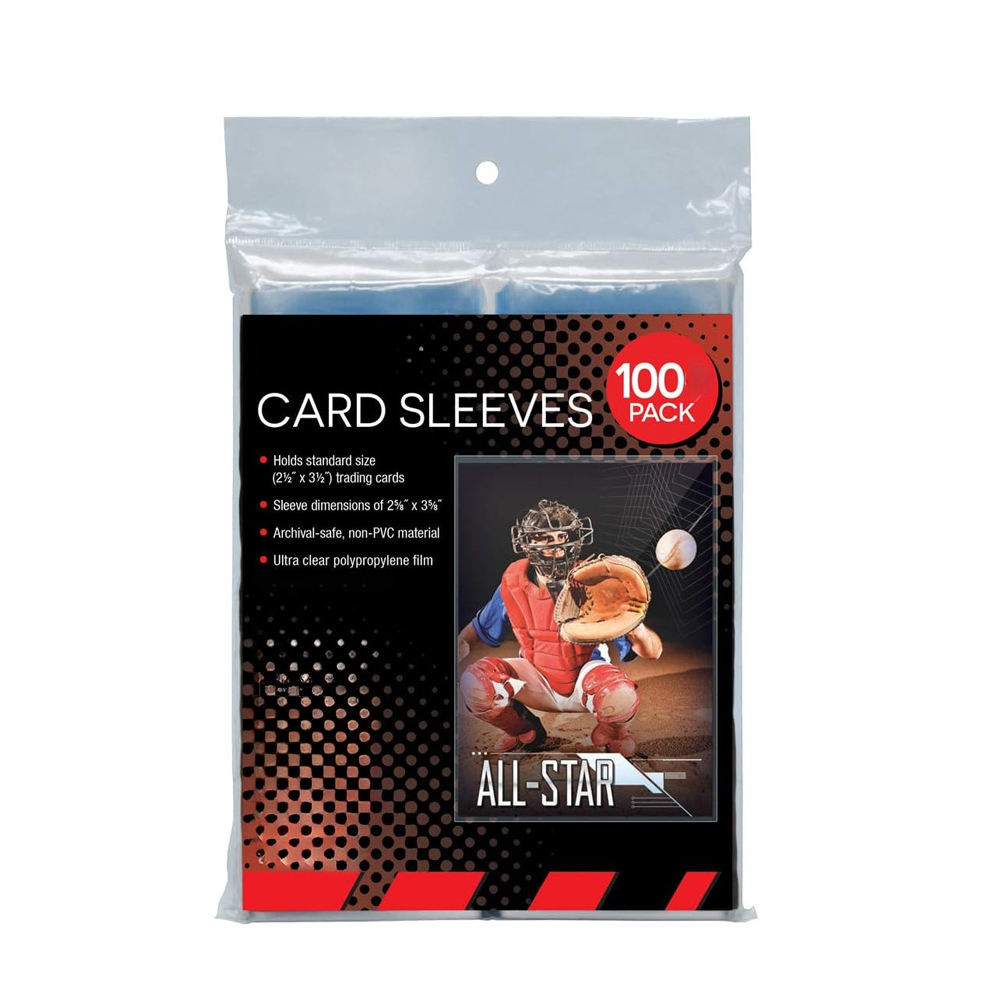
Perfect-fit sleeves (also called inner sleeves) are cut to nearly exact card dimensions, so the card is hugged on all four sides with almost no play. They are the standard first layer in double sleeving and are often sold as "perfect size" or "precise fit" sleeves. Because they fit so tightly, they seal better against dust, moisture, and edge wear than a loose penny sleeve.
Double sleeving is the practice of putting a card in a perfect-fit inner sleeve first, then sliding that into a larger, more durable outer sleeve (a standard deck sleeve or a premium matte sleeve). The two sleeve openings face opposite directions, which effectively seals the card inside. It is the protection level used by serious competitive players and collectors of high-value cards.
Penny Sleeves vs. Perfect Fit vs. Double Sleeving: Full Comparison Table
The table below compares the three approaches on the factors that matter most when protecting trading cards.
| Feature | Penny Sleeve | Perfect Fit (Inner) | Double Sleeving |
|---|---|---|---|
| Fit | Loose, easy slide-in | Snug, hugs all edges | Tight inner + roomy outer |
| Typical thickness | 40-50 microns | 25-40 microns | Inner + outer combined |
| Protection level | Scratches, dust, fingerprints | Tighter seal, better edge defense | Highest: sealed two-layer barrier |
| Bend resistance | None (needs a rigid holder) | Minimal on its own | Good; add a toploader for full rigidity |
| Cost per 100 (industry estimate) | $1-4 | $3-7 | $7-15 (inner + outer) |
| Binder compatibility | Excellent, slim profile | Excellent, slimmest fit | Good; pockets get tight when full |
| Tournament legal | Only as inner layer in most formats | Only as inner layer | Yes, when deck stays shuffleable |
| Best for | Bulk storage, shipping prep, budget | First layer of double sleeving | High-value decks and rare singles |
Cost Comparison: What Does Each Option Cost per 100 Cards?
Price is where the penny sleeve earns its name. A pack of 100 penny sleeves typically costs between $1 and $4 depending on thickness and brand, which is why collectors use them for bulk commons and storage boxes. Perfect-fit inner sleeves cost more per sleeve, roughly $3-7 per 100, because the precise cut and tighter tolerance are harder to manufacture consistently. A full double-sleeving setup (100 inner + 100 outer sleeves) lands around $7-15 per 100 cards, or roughly $0.07-0.15 per card — a small premium when the card itself is worth $20, $100, or more.
- Penny sleeve: cheapest per card, ideal for high-volume protection.
- Perfect fit alone: mid-price, usually bought as an inner layer.
- Double sleeving: highest cost, justified for valuable decks and rare singles.
- Factory note: buying wholesale from a manufacturer with a 100-piece MOQ drops the per-sleeve cost well below retail, which is how shops and leagues stock up.
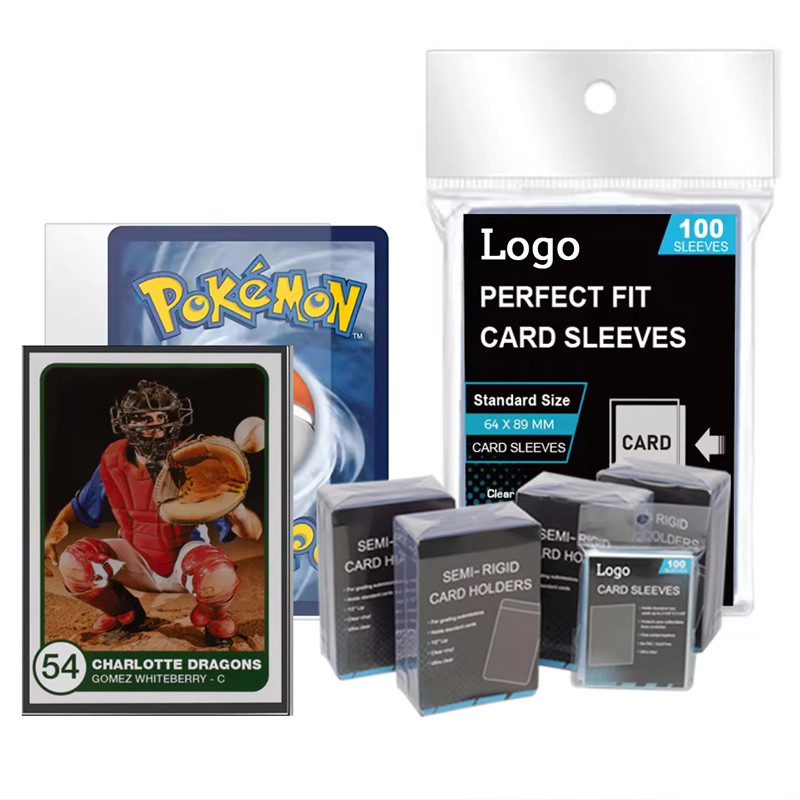
Think of it as insurance: the more the card is worth, the more the extra $0.05-0.10 per card is worth paying. For a $1 common, a penny sleeve is the correct financial decision; for a chase card, double sleeving is the correct one.
Which Protection Level Do You Actually Need? A Scenario Guide
There is no single "best" option — there is a best option for each job. Match the protection to the card and how it is used.
- Bulk storage of commons and duplicates: penny sleeve alone, then into a card storage box. Perfectly adequate.
- Binder display: penny sleeve or perfect fit, then into a 9-pocket page. The slim profile keeps pockets from bulging.
- High-value single in a toploader: perfect fit (or penny) inside a 35PT toploader for surface protection plus rigidity.
- Competitive deck: double sleeve with a perfect-fit inner and a matte outer sleeve. This is the tournament standard.
- Grading submission: clear penny sleeve inside a semi-rigid Card Saver-style holder, following PSA's official shipping requirements.
- Long-term sealed storage: double sleeve, then store flat in a sealed box away from humidity and sunlight.
How to Double Sleeve Correctly: Step by Step
Double sleeving only works if the two openings face opposite directions. Here is the exact sequence used by competitive players.
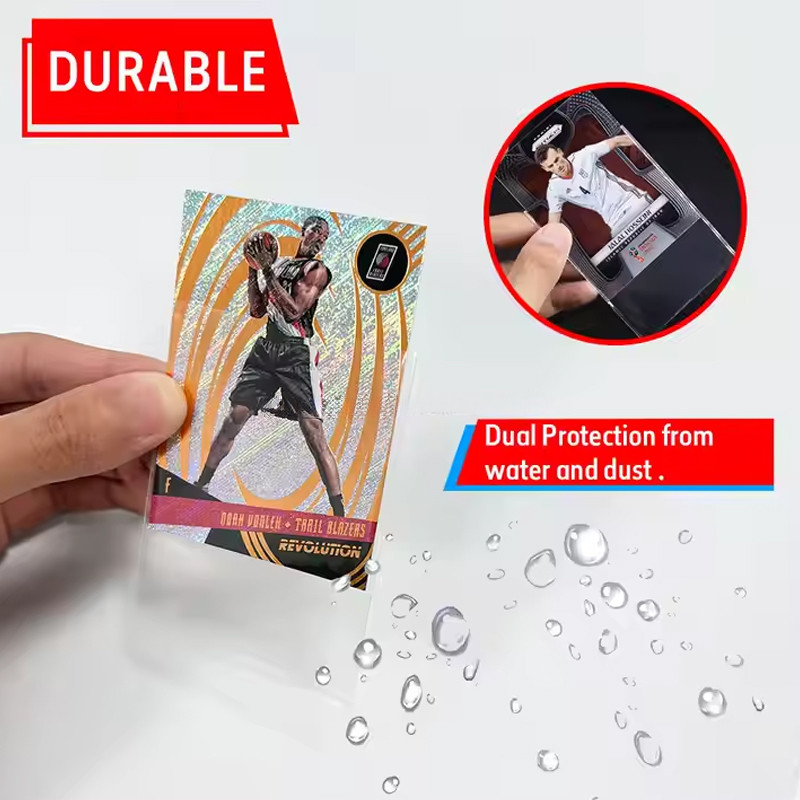
- Step 1: Slide the card top-first into the perfect-fit inner sleeve, so the sleeve opening sits at the bottom of the card.
- Step 2: Pinch the bottom of the inner sleeve (the card's top edge) to hold it in place.
- Step 3: Slide the card bottom-first into the outer sleeve, so the outer sleeve opening sits at the top.
- Step 4: Push the inner sleeve down gently with a fingertip to remove trapped air and stop it riding up.
- Step 5: Press the card flat on a clean surface for a second to seat both sleeves; check that no sleeve edge overlaps the card face.
With the openings opposite each other, dust and spills have no straight path to the card. This is the same logic that makes double sleeving the default for high-stakes tournaments like Magic: The Gathering competitive REL events.
Common Double Sleeving Mistakes (and How to Avoid Them)
Most double-sleeving problems come down to direction, size, and air.
- Wrong direction: both openings at the top means dust and liquids can still reach the card. Always alternate.
- Wrong size: Yu-Gi-Oh! cards are smaller than Pokémon and MTG standard cards. A Pokémon-size inner sleeve will be baggy on a Yu-Gi-Oh! card, and a Yu-Gi-Oh! outer sleeve can be too tight for a double-sleeved Pokémon card.
- Trapped air: air bubbles make the card look puffy and can lift the inner sleeve. Press air out toward the opening before play.
- Overstuffing binders: a full page of double-sleeved cards gets thick. Leave a few empty pockets so the page does not bow.
- Skipping the check: after sleeving, hold the card up to the light; if the inner sleeve edge shows at the top, redo it — that edge is exactly where wear starts.
Penny Sleeves, Perfect Fit, and PSA Submissions
If you are shipping cards to PSA, BGS, or CGC for grading, the rules are specific. According to PSA's official submission guidelines, each card must be placed in a clear penny sleeve (opaque sleeves can cause delays) and then into a semi-rigid card holder such as a Card Saver I, with cardboard dividers between cards. Penny sleeves are mandatory but not sufficient on their own: they protect the surface, while the semi-rigid holder protects against bending and corner impact in transit. Perfect-fit sleeves are excellent for long-term storage, but for submissions, stick to what the grading service asks for — a clear penny sleeve inside a semi-rigid holder, never tape, pull tabs, or sticky notes on the holder.
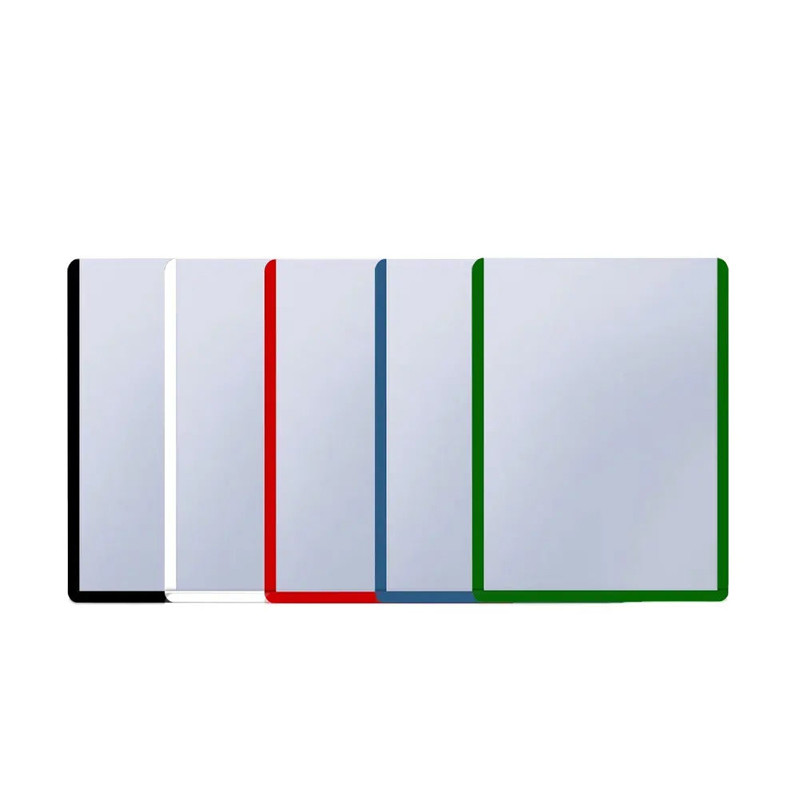
For everyday display and protection, a sleeved card also slides into a 35PT toploader for rigidity. Note that a double-sleeved card is thicker than a single-sleeved one; most 35PT toploaders still accept a standard double-sleeved card, but if the fit feels tight or the card was printed thicker (some Japanese foils), step up to a 55PT holder.
How to Choose the Right Sleeve Setup for Your Collection
Work through these five questions and you will land on the right setup every time.
- What is the card worth? Under $5 → penny sleeve; $5-50 → perfect fit plus toploader; over $50 or competitive play → double sleeve.
- How will it be used? Shuffled → double sleeve with matte outer; displayed → single slim sleeve; stored → sleeve plus box.
- What size is the card? Standard 63.5 × 88 mm (Pokémon, MTG) vs. smaller 59 × 86 mm (Yu-Gi-Oh!) — buy the matching size.
- Is it foil or textured? Foils scratch easily, so always use a sleeve layer; perfect fit gives the tightest barrier.
- Are you submitting to grading? Follow the service's official guidelines: clear penny sleeve plus semi-rigid holder.
Quality also matters more than people think. A poorly cut sleeve can scratch the card as it slides in. Buy from manufacturers that run batch-by-batch QC and use non-PVC, acid-free film, which is why GUARD TCG specifies 50-micron non-PVC material for its premium penny sleeves.
About GUARD TCG
GUARD TCG is the factory behind this guide. Founded in 2009, we manufacture penny sleeves, perfect-fit inner sleeves, toploaders, binders, and display cases with an annual output of over 300 million pieces, serving more than 10,000 customers and 500+ distributors across 70+ countries. We offer OEM/ODM and private-label programs with a standard MOQ of 100 pieces, batch-by-batch QC inspection, and shipping via DHL, FedEx, or UPS in 5-12 days or by sea in 25-35 days. Browse the full lineup on our card protection products page, explore the trading card sleeves category, or start with our premium penny sleeves and 35PT toploaders.
FAQ
Q1: Can double-sleeved cards fit in a toploader?
Usually yes. Most 35PT toploaders accept a standard-size double-sleeved card, though the fit is snugger. If the card is thick or the sleeves are premium-weight, use a 55PT toploader so you never force the card in.
Q2: Which sleeve goes on first — inner or outer?
Inner first. Slide the card into the perfect-fit sleeve (opening at the bottom), then into the outer sleeve (opening at the top). The opposite openings are what make double sleeving effective.
Q3: Is double sleeving allowed in official tournaments?
Yes. Double sleeving is permitted in most sanctioned events, including Pokémon TCG and Magic: The Gathering, as long as the deck remains shuffleable and all sleeves are uniform. Check the current tournament rules for your game before the event.
Q4: Do I need perfect-fit sleeves if I only use penny sleeves?
No. Penny sleeves are a complete, cheap protection layer for bulk storage and display. Perfect-fit sleeves only earn their cost when you double sleeve high-value cards or want the tightest dust seal.
Q5: Can I reuse sleeves after removing a card?
Penny sleeves can usually be reused if they are clean and unwrinkled. Perfect-fit sleeves stretch slightly and are cheap enough to replace. For graded or high-value submissions, always use fresh, clean sleeves.
Conclusion
Penny sleeves, perfect-fit sleeves, and double sleeving are not competing products — they are a progression. Penny sleeves give you the cheapest possible protection for bulk storage and display; perfect-fit sleeves add a precise, tight seal; and double sleeving combines both for tournament-grade, long-term protection. Match the level to the card: pennies for commons, perfect fit plus toploader for valuable singles, and full double sleeving for the cards that matter most. Whatever level you choose, buy non-PVC, acid-free sleeves from a manufacturer that tests its own products, and your collection will stay clean, flat, and protected for years.
Wholesale and OEM Supply
Need this range in bulk? GUARD TCG manufactures trading card sleeves and offers OEM/ODM custom card accessories for brands, card shops and distributors. Browse the trading card sleeves range, or request a wholesale quote.