UV Damage on Trading Cards: What It Looks Like and How to Prevent It
UV Damage on Trading Cards: What It Looks Like and How to Prevent It
UV damage on trading cards appears as faded ink, washed-out colors, and yellowed edges, and it is permanent and irreversible. Ultraviolet light breaks down the pigments and paper fibers in card stock, with reds and yellows fading first, and holographic foils, autographs, and older cards are the most vulnerable. Prevention is the only cure: store cards away from sunlight, keep displays out of direct light, and use UV-blocking display cases with a verified UV blocking rate of 92–99% when you want to show cards off. This guide explains what UV damage looks like, which cards are at highest risk, and how to layer protection from budget storage to museum-grade acrylic.
What UV Damage on Trading Cards Looks Like
UV damage is a slow, cumulative process that most collectors notice only when it is too late. The first signs are usually on the card's borders and background: white borders start to look dull or slightly yellow, and vibrant areas lose their punch. Over months or years of exposure, the card's colors shift toward a washed-out, faded look — the image that once popped now looks flat and lifeless next to a mint copy of the same card.

Technically, this is photodegradation: UV photons carry enough energy to break the molecular bonds in chromophores — the chemical structures that give ink its color. When those bonds break, the color is gone for good. Reds and yellows are the first to go because their pigments are less stable, which is why faded cards often keep a greenish-blue cast while warm colors disappear. The paper itself also degrades: fibers weaken, the surface becomes brittle, and edges can turn yellow or brown — what collectors call "foxing" when it appears as small brown spots.
Why UV Damage Is Permanent (and Why It Lowers Value)
Unlike a crease or a scratch, faded ink cannot be restored. There is no cleaning method, no pressing service, and no restoration technique that can rebuild a broken pigment molecule. Once a card's colors are gone, the card is permanently damaged, and that damage shows up directly in resale value — a faded copy of a chase card can sell for a fraction of the price of a bright, unaffected copy, even if the card is otherwise perfect.
Grading makes the difference visible and quantified. Companies like PSA, BGS, and CGC evaluate surface, edges, corners, and centering, and color vibrancy is part of the overall eye appeal graders weigh when assigning a grade. Two cards with identical physical condition can grade differently if one has been sun-faded, and collectors routinely pay premiums for "bright" copies. According to PSA's official submission guidelines, condition is evaluated against near-mint standards — faded cards simply do not qualify.
Which Cards Are Most Vulnerable to UV Damage
- Holographic and foil cards: the metallic foil layer reflects light, which makes holo foils stunning — but the foil and the inks printed over it degrade faster under UV, leaving dull, patchy surfaces.
- Autographed cards: most sharpies and ballpoint inks fade quickly in sunlight, and a faded signature can cut a card's value by more than half.
- Vintage cards: older card stock and 1980s–90s inks were not formulated for longevity, so they fade and yellow faster than modern prints.
- White-bordered cards: the white borders show yellowing and dulling most clearly, making damage obvious at a glance.
- Cards displayed near windows: any card on a shelf, desk, or wall display in a sunlit room is being exposed every single day.
Do PSA, BGS, and CGC Slabs Block UV Light?
No — and this is one of the most misunderstood facts in the hobby. Graded card slabs are designed for physical protection: they prevent bending, scuffing, and tampering. Standard PSA, BGS, and CGC holders are made from clear plastic that blocks very little UV, and collector testing has repeatedly shown that slabs do not stop sunlight from fading the card inside. A card in a slab on a sunny shelf is still fading, just more slowly.
This is why the hobby community's consensus, echoed by professional framers and preservation specialists, is that UV protection is the owner's responsibility. If a card is displayed, it needs either a UV-filtering display case, UV-blocking window film, or a position out of direct light entirely.
UV Protection Levels Compared: From Curtains to Museum-Grade Acrylic
| Protection Level | UV Blocking | Best For | Limitations |
|---|---|---|---|
| Dark storage (box, drawer) | ~100% in total darkness | Long-term storage of bulk collections | Cards cannot be viewed |
| Curtains / blinds | Blocks direct sun when closed | Controlling room light | Diffuse light still reaches cards; UV reflects off walls |
| Sleeves + toploaders | Minimal UV block | Physical protection from dust, scratches, bending | Clear plastics let most UV through |
| Standard acrylic display case | ~30–50% UV block | Everyday display in low-light rooms | Not enough for sunlit rooms or long-term display |
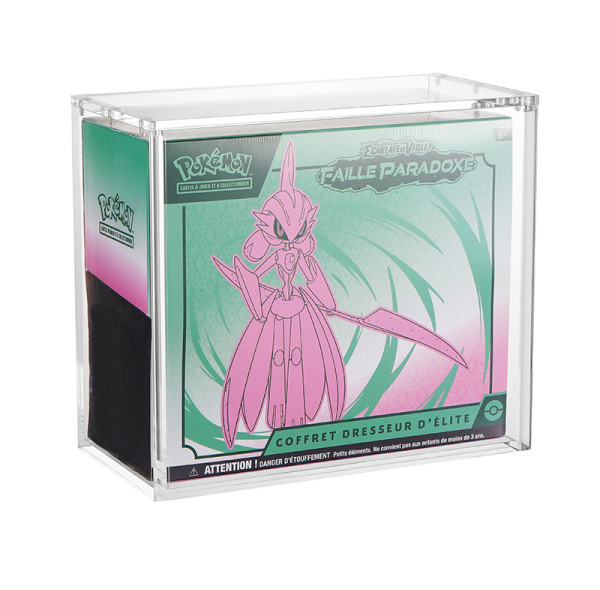
| UV-coated acrylic case | 92–99% UV block (300–380 nm) | Displaying valuable cards and sealed products | Verify the percentage — vague "UV safe" claims mean little |
| Museum-grade cast acrylic | 99–99.9% UV block | Highest-value cards, long-term display | Highest cost; still avoid direct sun exposure |
As the table shows, protection is layered, not binary. Dark storage is the gold standard for anything you do not need to see every day. When you do display cards, a UV-blocking acrylic case with a verified UV blocking rate is the practical middle ground — it cuts 92–99% of the damaging wavelengths while keeping the card fully visible.
How to Choose a UV-Blocking Display Case
- Ask for the number, not the slogan: a credible product states its UV blocking rate (for example, 92–99% in the 300–380 nm range). Vague claims like "UV safe" or "anti-UV" without a percentage should be treated with suspicion.
- Prefer cast acrylic over extruded: cast acrylic resists yellowing and stays clear for decades, while cheaper extruded sheets can cloud or yellow over time.
- Check thickness and rigidity: thicker panels (4.5 mm and up) hold their shape, resist warping, and protect against physical bumps as well as light.
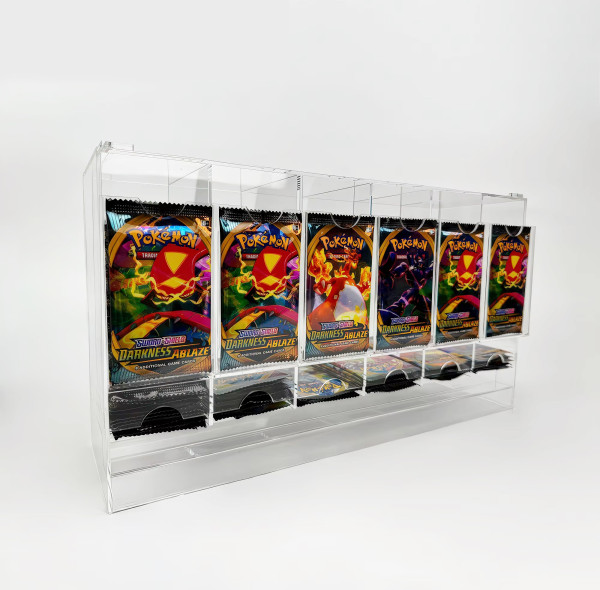
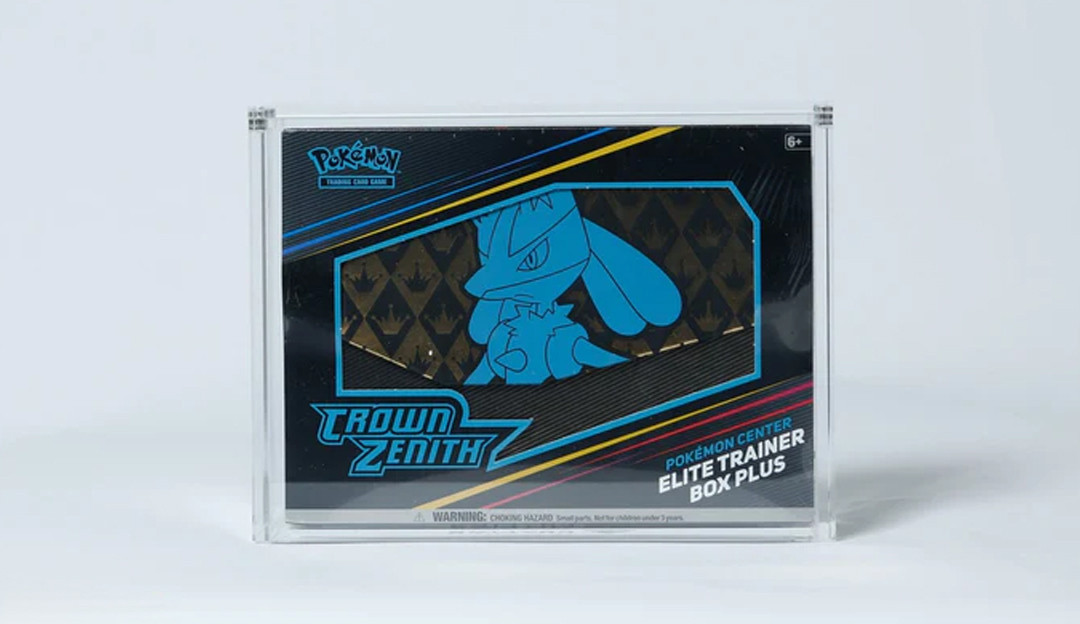
- Match the case to the item: a sealed booster box, an ETB, or a graded slab each need a case sized to their exact dimensions — a loose case lets dust in and looks sloppy on a shelf.
- Keep the environment sensible: even a 99% UV-blocking case slows fading dramatically but does not make a card immortal — place the display away from direct sun and keep humidity at 40–50%.

Best Practices for Protecting Cards from Sunlight
- Store raw cards sleeved, in boxes, out of light: a penny sleeve plus a toploader handles dust and dings; the dark box handles UV. Use premium non-PVC penny sleeves as the base layer so plasticizers never touch your cards.
- Never display in direct sun: window-filtered sunlight is still harmful — standard window glass blocks only a portion of UV.
- Use LED lighting near displays: LEDs emit almost no UV, while halogen and some fluorescent bulbs do. This is one of the cheapest upgrades you can make.
- Rotate displayed cards: if you rotate your displayed cards every few months, no single card accumulates continuous exposure.
- Add window film in display rooms: 99% UV-blocking window film protects every card in the room at once, including cards you forgot about.
- Keep cards out of cars: the greenhouse effect plus sunlight inside a parked car is one of the fastest ways to ruin a card.

About GUARD TCG
GUARD TCG is a professional trading card accessories manufacturer founded in 2009, producing 300 million+ pieces per year for collectors and retailers in 70+ countries. Our in-house factory serves 10,000+ customers and 500+ distributors with OEM/ODM services, standard-product MOQ from 100 pieces, QC batch inspection on every order, and shipping via DHL, FedEx, or UPS in 5–12 days or sea freight in 25–35 days. Our display and protection range includes UV-protection acrylic display cases, 35PT toploaders, and penny sleeves — everything from dark storage to UV-blocking display. Learn more on the About Us page, browse the full range on Products, or contact our team for bulk pricing and custom branding.
FAQ
Does indoor lighting damage trading cards?
Standard LED lighting emits almost no UV and is safe for normal display. Halogen bulbs and some fluorescent tubes emit more UV, so prefer LEDs near your collection. Regular indoor light, however, is nothing compared to direct or window-filtered sunlight — that is the real enemy.
Can a UV-blocking acrylic case sit in direct sunlight?
No. A UV blocking rate of 92–99% slows fading dramatically, but it does not stop heat and long-term visible-light degradation. Place UV display cases away from direct sun, in a stable-temperature room, to get the full protection the acrylic is designed to provide.
Do standard PSA slabs block UV?
Effectively no. PSA, BGS, and CGC slabs protect against physical damage, not light. The card inside a slab on a sunny shelf will still fade over time, so graded cards displayed long-term need a UV-blocking display case or a shady spot.
Can faded cards be restored?
No. UV damage breaks pigment molecules at a chemical level, and no restoration method can rebuild them. This is why prevention — dark storage, LED lighting, and UV-blocking display cases — is the only effective protection.
How long does it take for cards to fade?
It depends on exposure. Cards displayed in direct sunlight for a few months can show noticeable fading; cards in a bright room without direct sun may take years. The damage is cumulative and permanent, so earlier protection always wins.
Conclusion
UV damage on trading cards shows up as faded ink, washed-out colors, and yellowed edges — and once pigment molecules are broken, the damage is permanent and unrepairable. Reds, yellows, holo foils, autographs, and vintage cards fade fastest, and standard grading slabs do not block UV. The solution is layered: keep cards in dark storage when possible, use sleeves and toploaders for handling, prefer LED lighting, and when you display cards, use an acrylic display case with a verified UV blocking rate of 92–99% placed out of direct sunlight. A few dollars of UV protection today is far cheaper than watching a favorite card fade into a shadow of itself.
Wholesale and OEM Supply
Need this range in bulk? GUARD TCG manufactures acrylic display cases and offers OEM/ODM custom card accessories for brands, card shops and distributors. Browse the acrylic display cases range, or request a wholesale quote.